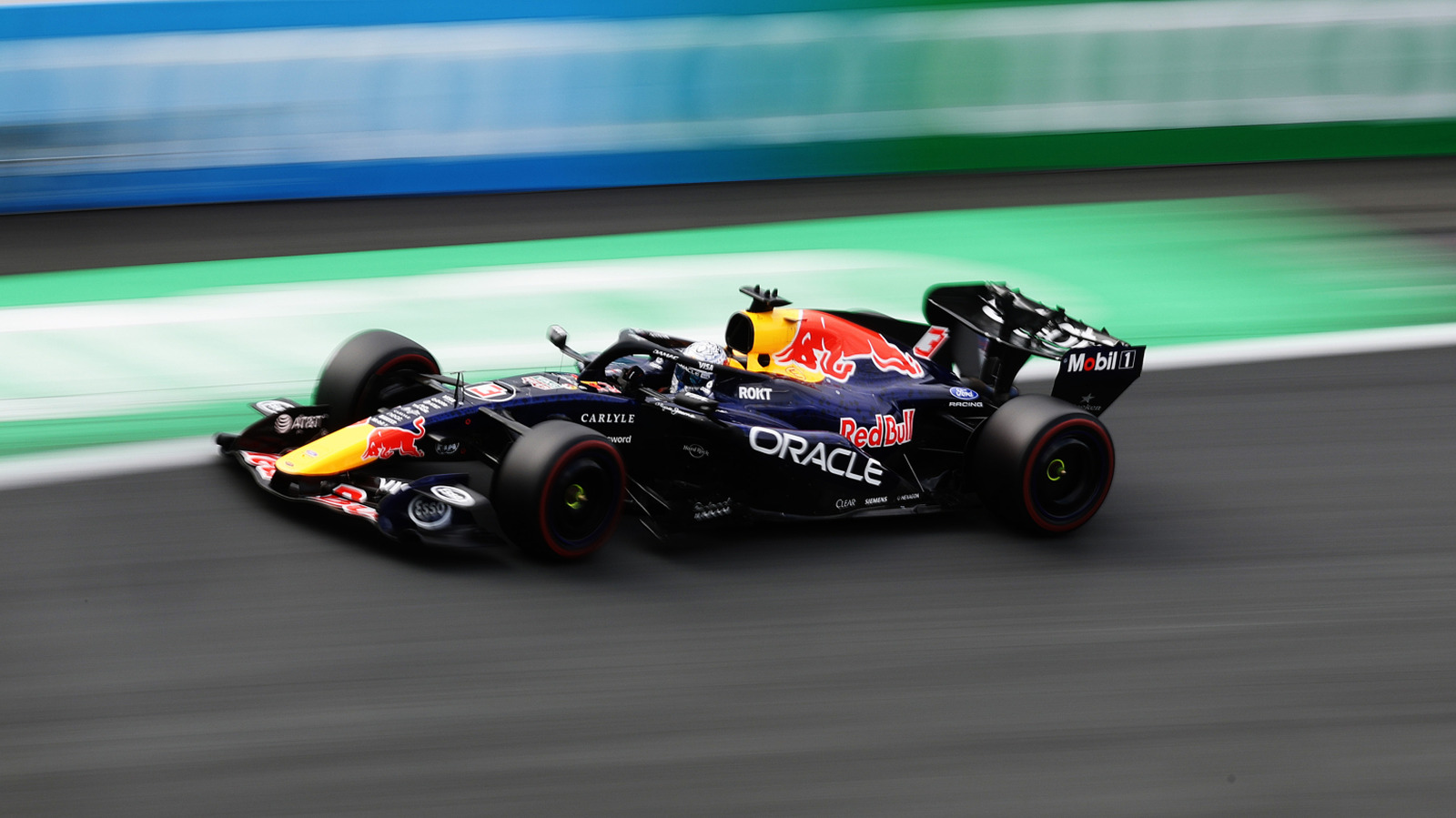
# FIA Hands Red Bull Engine Supremacy, Offers Rivals Development Tokens as Consolation Prize
Formula 1's governing body has officially crowned Red Bull's power unit the most dominant engine on the grid, a verdict that validates what three seasons of telemetry and race results already suggested. The FIA's declaration now formalizes Red Bull's technical dominance while introducing a competitive mechanism designed to prevent the sport from becoming a one-horse show.
Under the new framework, competing teams receive development tokens, essentially allowing them to allocate additional engineering resources toward closing the power unit gap without violating standard cost caps. This approach mirrors the resource allocation systems North American sports leagues use to maintain competitive balance. The token system hands rivals a structured path forward, though it remains unclear whether the additional development window will prove sufficient to dethrone Red Bull's hybrid power unit before technical regulations shift again.
Red Bull's engine advantage stems from several factors. The Milton Keynes team's partnership with Honda, and now with Red Bull Powertrains running the division in-house after Honda's 2021 withdrawal, has yielded superior combustion efficiency, energy recovery systems, and integration with the chassis. Competitors including Ferrari, Mercedes, and McLaren-Honda have closed gaps incrementally, but none have matched Red Bull's optimization across the entire power unit spectrum.
The token allocation directly addresses a problem endemic to high-downforce racing series with frozen engine specs. Once one manufacturer establishes a meaningful advantage, others face years of playing catch-up under restrictive development rules. F1 has tried several approaches over the last decade: unlimited development, cost-cap restrictions, token budgets, and mid-year freezes. Each system produces winners and losers based on when they're implemented.
The FIA's acknowledgment of Red Bull's superiority also reflects a reality that teams and sponsors have grown weary of denying. McLaren, Ferrari, and Mercedes have all invested heavily in power unit development, yet Red Bull's integrated approach delivers results that smaller token allocations struggle to overcome. By formalizing this disparity and then providing structured remedies, the FIA attempts to maintain credibility while avoiding outright penalties against the leading team.
Teams must now strategically deploy tokens across component development, reliability upgrades, and performance enhancements. A Ferrari power unit engineer might prioritize top-end horsepower gains, while Mercedes allocates resources toward mid-range torque delivery. These choices carry real consequences. A token spent on engine mapping cannot fund turbo redesigns or hybrid system tuning. Efficiency replaces experimentation.
Red Bull's dominance extends beyond raw horsepower. Their packaging, thermal management, and integration of the Yuki Tsunoda and Sergio Perez chassis platforms demonstrate systematic competence across multiple disciplines. Rivals cannot simply purchase speed through token spending. They must execute better across departments, a task complicated by budget constraints and the existing technical debt from previous development cycles.
The timeline matters enormously. F1 power units operate under frozen specifications until 2025, with new hybrid regulations arriving in 2026. Teams receiving tokens have roughly two seasons to make meaningful gains before the sport largely resets its technical playing field. Success demands focusing token allocation precisely, avoiding the scattered approach that wastes resources on incremental gains.
F1's token system mirrors salary caps in the NFL and NBA, where leagues artificially constrain resources to maintain competitive parity. The mechanism acknowledges inequality while trying to bound its duration. Whether tokens prove sufficient to challenge Red Bull's supremacy or merely slow their margin of victory will define the next two championship seasons.