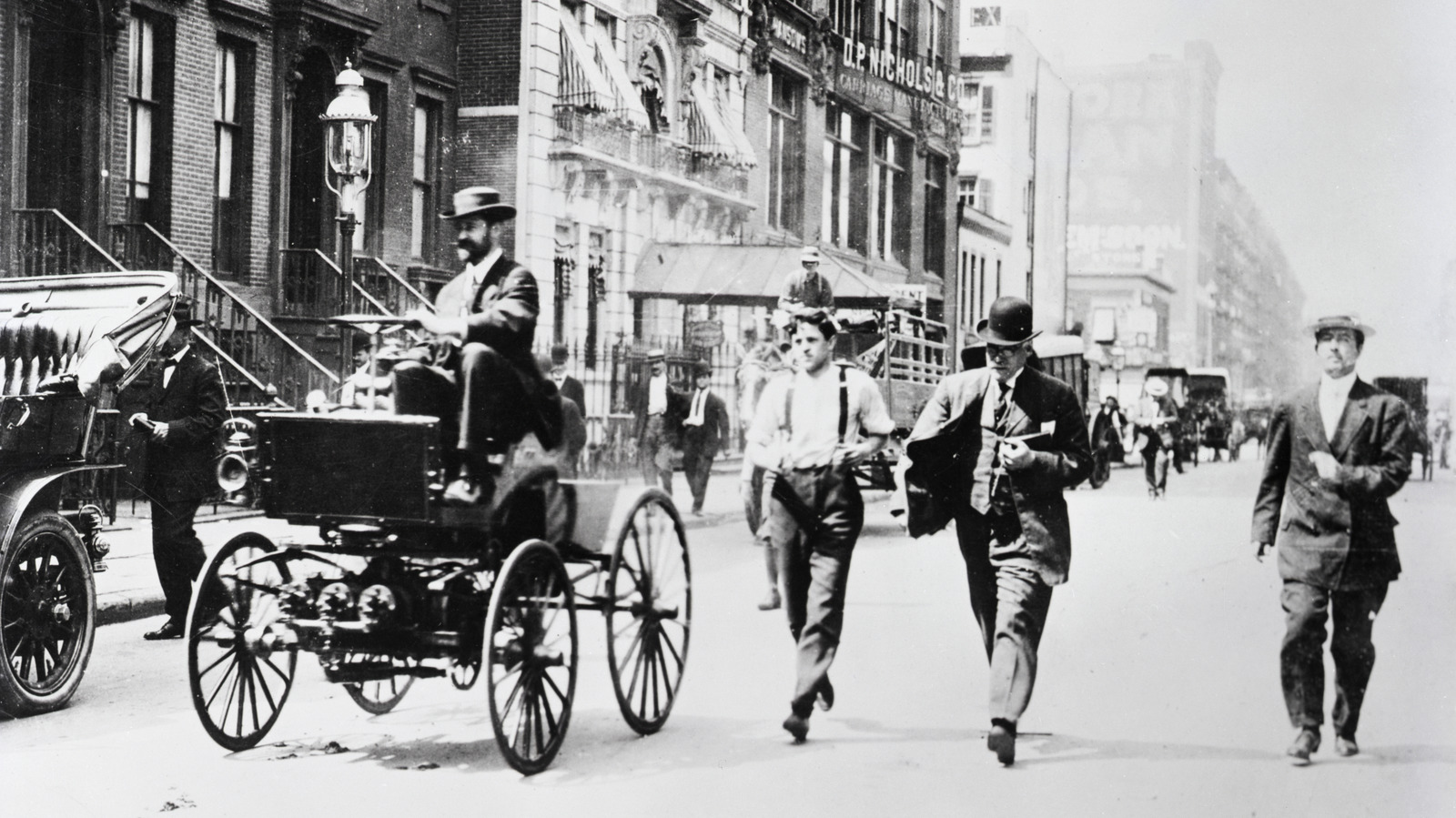
# The First Speeding Conviction and Jail Time Happened in 1904 Over Today's Walking Pace
The history of automotive law enforcement contains an absurd footnote. In 1904, someone became the first person jailed for speeding. The offense. Driving at a speed that a fit person could match on foot.
Early automobiles crawled by modern standards. Top speeds barely exceeded 20 miles per hour on most models. Traffic laws existed in their infancy, drafted by cities scrambling to manage this new transportation technology alongside horse-drawn carriages and pedestrians. Speed limits reflected genuine safety concerns on unpaved roads with no traffic signals or lane markings. Yet enforcement proved crude and often draconian.
The 1904 conviction illustrates how authorities treated motorists as reckless outsiders threatening public order. Automobiles represented danger. Early cars lacked reliable brakes, steering remained unpredictable, and drivers received minimal training. Pedestrians had no expectation of motorized traffic. Residential streets served as playgrounds and gathering spaces. A vehicle traveling at even modest speeds posed real hazards.
That conviction also reveals cultural anxiety about technology. The automobile threatened established transportation systems, employment in horse-related industries, and social hierarchies. Wealthy enthusiasts bought these expensive machines while working people relied on horses or walking. Punishing drivers harshly served multiple purposes. It protected pedestrians, yes. But it also expressed class resentment and resistance to change.
Speed enforcement has evolved dramatically since 1904. Modern limits reflect road conditions, traffic flow, and engineering studies rather than arbitrary assumptions. Automated cameras now record violations. Courts process tens of millions of speeding citations yearly. Police use radar and lidar technology that barely existed a decade ago.
Yet enforcement philosophy carries echoes of that 1904 jail sentence. Speeding generates massive revenue for municipalities. A single violation can cost hundreds of dollars in fines and court fees. Insurance premiums spike. Points accumulate on licenses. Repeat offenders face license suspension and jail time, just like that first motorist.
The difference lies in context. Modern speed limits account for actual vehicle performance, road design, and accident data. A 55 mph interstate limit reflects engineering reality. A 25 mph school zone addresses genuine pedestrian vulnerability. Enforcement targets drivers whose behavior creates measurable danger.
The 1904 conviction exposed the panic surrounding automobiles. Society needed time to develop appropriate regulations and enforcement proportional to actual risk. Early speed limits sometimes read like fiction to modern drivers. Some cities banned cars entirely during certain hours. Others required drivers to hire flagmen to walk ahead of their vehicles, warning pedestrians.
That first speeding conviction eventually seemed quaint. As cars became commonplace, society normalized them. Traffic laws matured from reactive panic to systematic safety frameworks. Drivers gained experience and better training. Technology improved braking, steering, and visibility.
Today's speeding culture reflects this evolution. Authorities focus enforcement on highways where accidents cause deaths and injuries. Urban areas increasingly adopt safer street designs and lower limits to protect vulnerable road users. Automated enforcement raises concerns about revenue generation versus safety, echoing questions asked since 1904 about whether speeding laws protect people or simply extract money.
That first jailed speeder probably never imagined automobiles would become ubiquitous. Neither did they anticipate that their conviction would become a historical curiosity rather than a warning example.