# Reflective Road Coatings in Arizona Create Urban Heat Paradox
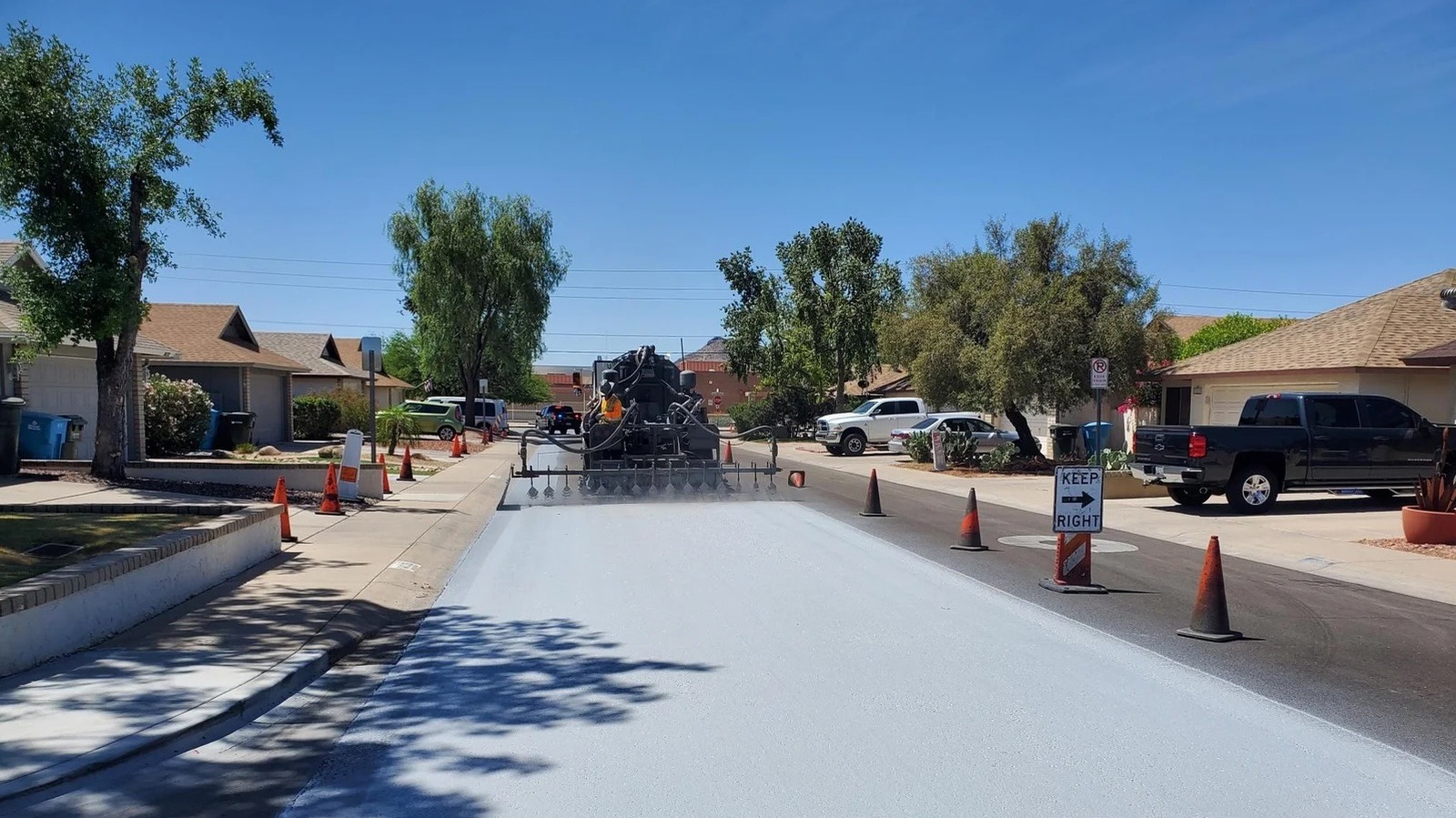
Arizona's experiment with reflective asphalt coatings demonstrates an unintended consequence of fighting urban heat islands. The lighter-colored road surfaces successfully reduce the temperature of the pavement itself, lowering nighttime ambient air temperatures. But during daylight hours, the reflected solar radiation heats the air directly above the roads to significantly higher temperatures than conventional dark asphalt would produce.
The physics works this way. Traditional black asphalt absorbs solar radiation and stores it as heat in the pavement material. Reflective coatings bounce much of that radiation back into the atmosphere instead. At night, when the absorbed heat radiates back into the air from conventional roads, reflective surfaces have already cooled down, reducing nighttime air temperatures. This benefit aligns with efforts to mitigate the urban heat island effect that plagues sun-baked cities like Phoenix.
The daytime problem emerges because reflected solar radiation doesn't simply vanish. The light bounces into the air column above the road, heating it directly through atmospheric absorption and convection. Drivers, pedestrians, and anyone exposed to the road corridor experience hotter ambient temperatures during peak heat hours, even though the surface itself stays cooler. This creates a counterintuitive situation where cooler roads produce warmer air.
For automotive applications, this matters. Hotter ambient air affects engine efficiency, air conditioning demand, and tire performance. Electric vehicles lose range in extreme heat as cooling systems work harder. Conventional combustion engines run leaner and less efficiently. The slight gain in nighttime comfort doesn't offset the increased daytime thermal stress that drivers face.
Arizona cities adopted reflective coatings to address legitimate urban heat problems. Phoenix recorded surface temperatures exceeding 160 degrees Fahrenheit in summer months, contributing to dangerous ambient conditions that kill residents without access to air conditioning. The reflective coating strategy seemed logical. Reduce pavement heat absorption, lower overall temperatures, save lives.
The research reveals the limitation of localized engineering solutions to climate problems. Shifting heat from one medium to another, or from one time period to another, doesn't eliminate it. Reflecting solar radiation into the atmosphere simply transfers the thermal problem to the air rather than solving it. For a desert city where 120-degree afternoon air already pushes human physiology to its limits, adding reflected heat into the ambient environment creates net negative outcomes despite cooler pavement.
Transportation departments face a difficult calculus. Cooler roads reduce tire degradation and improve road durability. They lower infrastructure maintenance costs. Nighttime cooling provides relief during sleep hours when temperatures matter most for human health. But worse daytime air temperatures could worsen heat-related illness among outdoor workers, delivery drivers, and construction crews.
The solution likely requires combination strategies rather than single interventions. Reflective coatings work best in limited applications where nighttime benefit outweighs daytime drawbacks. Expanded tree canopy over roads, permeable surfaces that allow evaporative cooling, and reduced traffic congestion that generates additional waste heat address the problem more comprehensively. Cities like Phoenix need multifaceted approaches rather than technological band-aids that trade one problem for another.