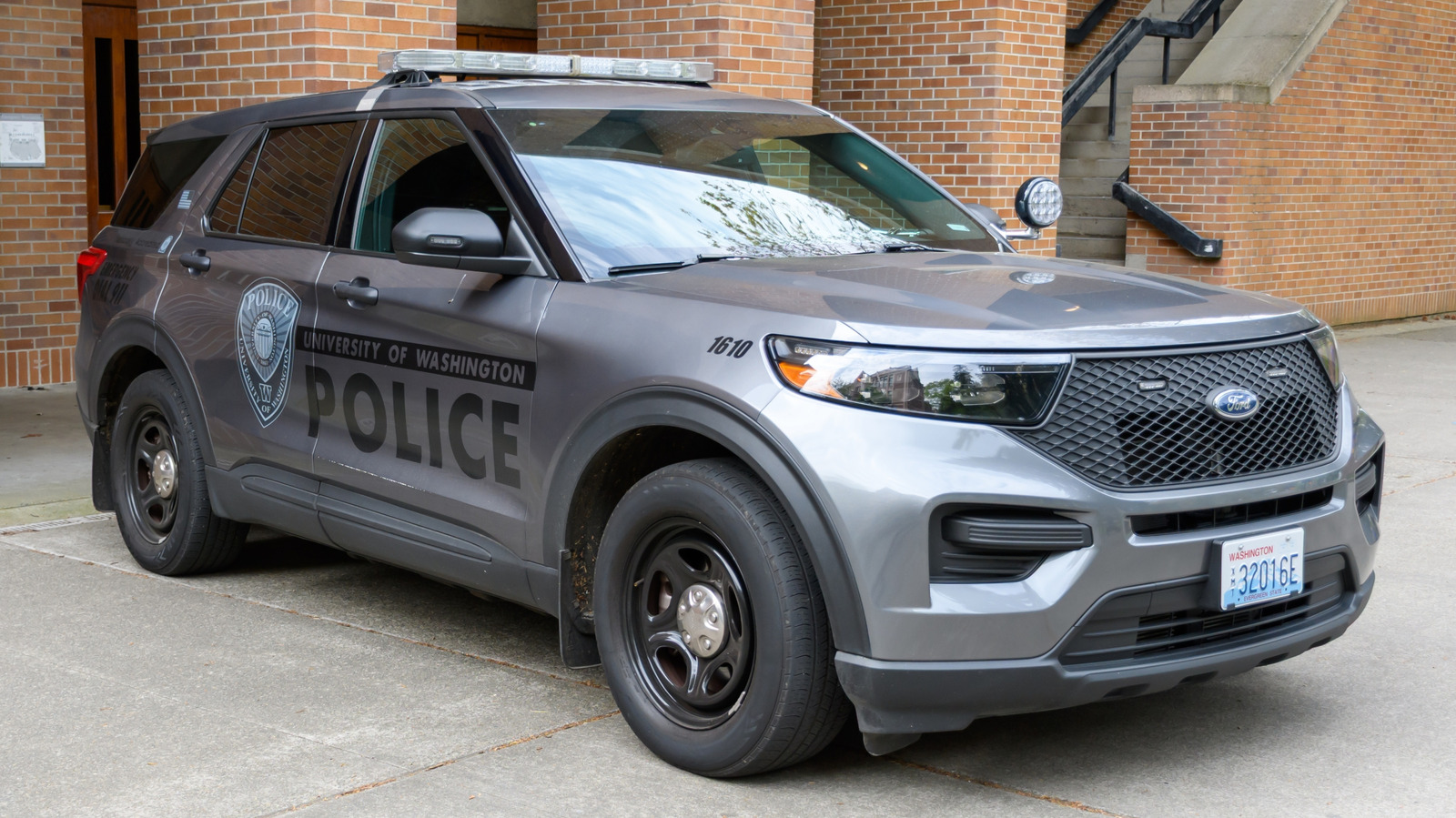
Ford dominates police vehicle procurement across America, and the dominance reflects both practical engineering and entrenched market dynamics that competitors struggle to break.
The Police Interceptor Utility, built on the Ford Police Interceptor platform (essentially a modified Explorer), commands roughly 70 percent of the American police vehicle market. This concentration stems from decades of institutional relationships, proven reliability in high-stress duty cycles, and specifications tailored directly to law enforcement needs.
Ford's advantage begins with purpose-built vehicles. The Police Interceptor Utility delivers 400 horsepower from a twin-turbocharged EcoBoost V6, paired with all-wheel drive and heavy-duty brakes designed for pursuit and rapid acceleration. The vehicle handles extreme temperatures, extended idle periods at traffic stops, and the constant electrical draws of emergency lighting and communications gear. Ford engineers reinforced the frame, upgraded cooling systems, and added provisions for weapon racks and barrier screens. These modifications go far beyond what civilian models offer.
Price matters too. Ford's high-volume production spreads development and tooling costs across millions of units, allowing competitive pricing on police packages. Bulk fleet purchases from state and municipal agencies benefit from volume discounts that smaller competitors cannot match. A single major police department might purchase hundreds of vehicles annually. Ford's established supply chain and parts availability make maintenance simpler and cheaper for departments stretched thin across multiple precincts.
Reliability in continuous duty drives repeat purchasing. Police vehicles operate under punishing conditions. Officers idle engines for hours while seated in the car. Extreme weather, constant acceleration and braking, and heavy electrical loads stress powertrains in ways civilian driving never does. Ford's Police Interceptor platform has proven itself across thousands of departments over two decades. Once a municipality commits to Ford, switching costs and training requirements discourage switching to unfamiliar platforms.
Dodge challenged this dominance with the Police Pursuit sedan built around the Charger platform, emphasizing rear-wheel-drive handling and V8 power. The Dodge offering gained traction in select markets but never dislodged Ford's core advantage. Chevrolet entered with the Caprice PPV sedan, marketed on affordability and familiar General Motors support. Neither gained significant ground.
The market shifted recently. Dodge discontinued the Police Pursuit sedan after the 2024 model year, consolidating police vehicle options further. Chevrolet's Caprice production also faces uncertainty as the brand realigns its lineup. Ford faces no direct competitor offering a complete package of purpose-built engineering, proven durability, and nationwide dealer support simultaneously.
Electric vehicles present the next challenge. Police departments worry about range anxiety during extended shifts and question charging infrastructure. Response times matter in emergency situations. Ford's Police Interceptor Utility remains gas-powered, a known quantity departments trust. The Ford F-150 Police Responder hybrid offers a compromise, blending efficiency with traditional powertrain familiarity.
Inertia reinforces Ford's position. Departments train officers on Ford systems and brake layouts. Mechanics understand Ford service procedures. Command structures ordered Fords for decades and see no compelling reason to disrupt supply chains with unfamiliar platforms. Breaking this cycle requires competitors to offer not just equivalent vehicles but demonstrable advantages worth the transition costs and retraining burden.
Ford's police dominance reflects market logic rather than accident. Purpose-built engineering, price, reliability, and institutional momentum create barriers nearly impossible to overcome.