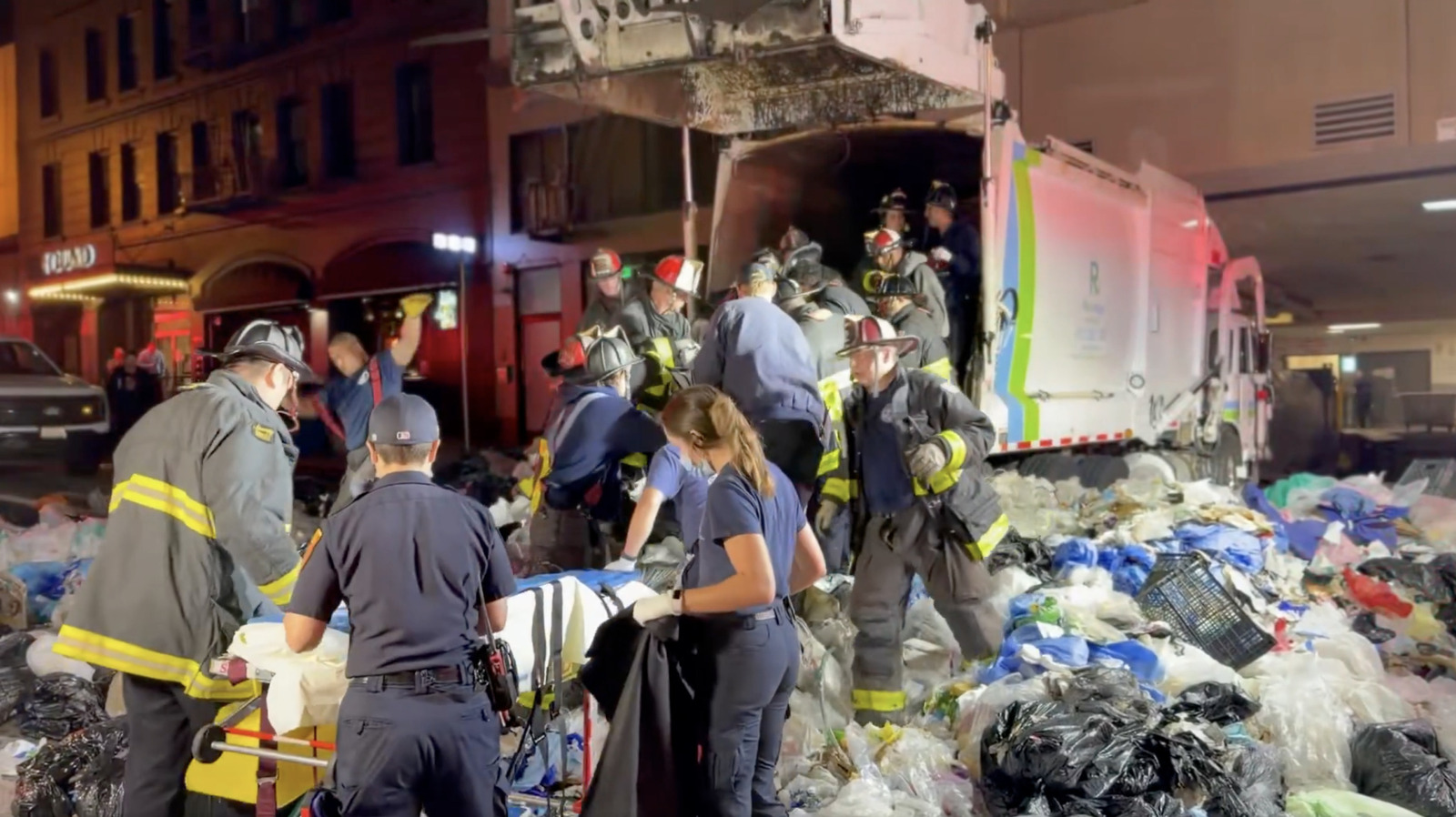
A San Francisco man survived one of the most harrowing vehicle-related incidents imaginable after being accidentally loaded into a garbage truck and compacted. Firefighters took more than two hours to extract the man from the waste compactor, demonstrating the structural complexity of modern refuse collection vehicles and the dangers lurking in everyday municipal equipment.
The incident unfolded when the man, whose identity has not been disclosed, was somehow loaded into the garbage truck's hopper along with refuse. The truck's compaction mechanism activated, crushing the waste and the man together inside the vehicle. Despite the brutal force of the compactor, the victim survived the initial trauma.
Emergency responders mobilized quickly once the situation was discovered. A team of two dozen firefighters arrived at the scene and began the painstaking process of disassembling the garbage truck to free the trapped man. The rescue operation required careful dismantling of the vehicle's compaction system, hydraulic mechanisms, and waste containment structure. Firefighters had to work methodically to avoid further injuring the victim while extracting him from the metal chamber.
The two-hour extraction time reflects the engineering reality of garbage trucks. Modern refuse collection vehicles use powerful hydraulic piston systems to compress waste into increasingly dense loads. The compartments are reinforced steel, sealed tight to contain odor and prevent spillage. Accessing a person trapped inside requires bypassing multiple mechanical and structural barriers.
Garbage truck incidents remain rare but documented hazards in urban waste management. Workers in the industry face risks during collection operations, but accidental passenger entrapment represents an extreme outlier. This rescue required specialist firefighting skills beyond standard medical response, as crews needed to disassemble heavy machinery without causing structural collapse that could further trap or harm the victim.
The survival itself defies the apparent odds. Compaction forces in modern garbage trucks can exceed several thousand pounds of pressure per square inch. The man's survival raises questions about the precise circumstances of the incident, his positioning within the truck's hopper, and whether the compaction cycle had fully completed before rescue personnel discovered him.
San Francisco's fire department has built expertise in complex extrication operations due to the city's density and infrastructure challenges. The 24-firefighter response suggests department commanders recognized the severity and complexity of the situation immediately. No fatalities occurred, and reports indicate the victim received appropriate medical attention following extraction.
This incident underscores how occupational and public safety risks extend beyond obvious vehicle hazards like traffic collisions. Municipal equipment operates with tremendous force and under poor visibility conditions. Garbage collection remains one of the nation's more dangerous jobs when accounting for injury rates among sanitation workers.
The precise cause of how the man ended up in the garbage truck remains under investigation. Whether he was a worker, bystander, or homeless individual seeking shelter will likely emerge as authorities complete their inquiry. Regardless of circumstances, the two-hour rescue operation and the man's survival represent an extraordinary outcome from an extraordinarily dangerous situation.