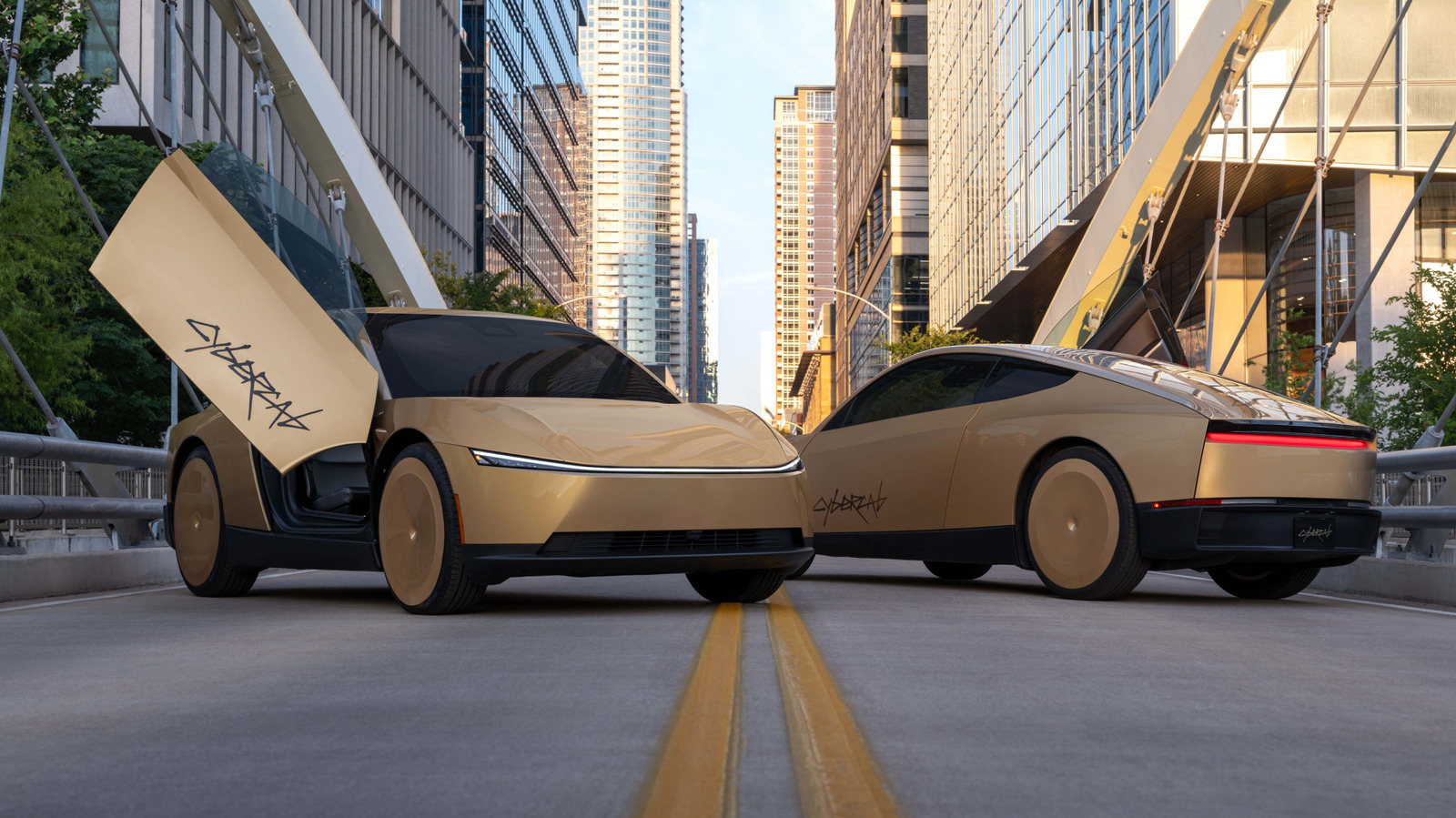
Tesla's rollout of the Cybercab robotaxi has collided with federal regulators before a single customer has taken a ride. The National Highway Traffic Safety Administration launched a formal investigation into whether the electric autonomous vehicle meets federal safety standards, specifically challenging Tesla's claim that the vehicle qualifies for exemptions from manual control requirements.
The crux of the dispute centers on steering wheels and pedals. Federal motor vehicle safety standards require that all cars have manual controls. Tesla argues the Cybercab, designed as a fully autonomous vehicle without a steering wheel or brake pedal, falls outside these rules because it operates as a purpose-built autonomous system rather than a traditional car. NHTSA is skeptical of this interpretation and opened the probe to examine whether the Cybercab actually complies with applicable federal standards.
This regulatory friction reveals a fundamental gap between Tesla's vision and federal law. The Cybercab represents Elon Musk's bet on Level 4 autonomy, meaning the vehicle theoretically handles all driving tasks without human intervention under defined conditions. Tesla has presented renderings showing a minimalist cabin with no traditional driver controls, two passenger seats facing each other, and doors that open upward. The company positioned it as a glimpse at future transportation, with production promised within two years and pricing around $30,000.
The NHTSA investigation threatens to upend that timeline. Federal regulators have grown more cautious about autonomous vehicle deployments following a series of incidents involving Tesla's Full Self-Driving beta and other autonomous systems. NHTSA has already opened investigations into crashes involving Tesla vehicles operating on semi-autonomous modes. Now the agency is applying similar scrutiny to a vehicle designed with zero manual backup controls.
Safety advocates raise valid concerns. A fully autonomous vehicle without manual overrides depends entirely on software and sensor systems to avoid collisions, respond to emergencies, and navigate edge cases. If the system fails, there is no fallback. Traditional cars retain steering wheels and pedals as redundancy. NHTSA's hesitation reflects decades of automotive safety doctrine built on redundancy and failsafe design.
Tesla's counterargument holds some logic. If a vehicle truly operates at Level 4 autonomy in all conditions, manual controls become unnecessary weight and cost. However, current technology has not demonstrated consistent Level 4 capability across diverse environments, weather conditions, and traffic scenarios. NHTSA appears to be asking whether the Cybercab's software and sensors are genuinely reliable enough to justify abandoning manual controls entirely.
The investigation also carries broader implications for the autonomous vehicle industry. Waymo, Cruise (formerly Uber's self-driving unit), and others operating robotaxis have largely worked within existing federal frameworks, deploying vehicles with steering wheels to satisfy regulators. Tesla's challenge to these requirements could either force NHTSA to clarify exemptions for purpose-built autonomous vehicles or establish precedent requiring manual controls even on fully autonomous systems.
Resolution could take months or years. In the meantime, Tesla faces pressure to redesign the Cybercab with manual controls or convince NHTSA that its systems warrant a true exemption. The outcome will determine not just the Cybercab's viability, but also how federal regulators approach autonomy going forward.