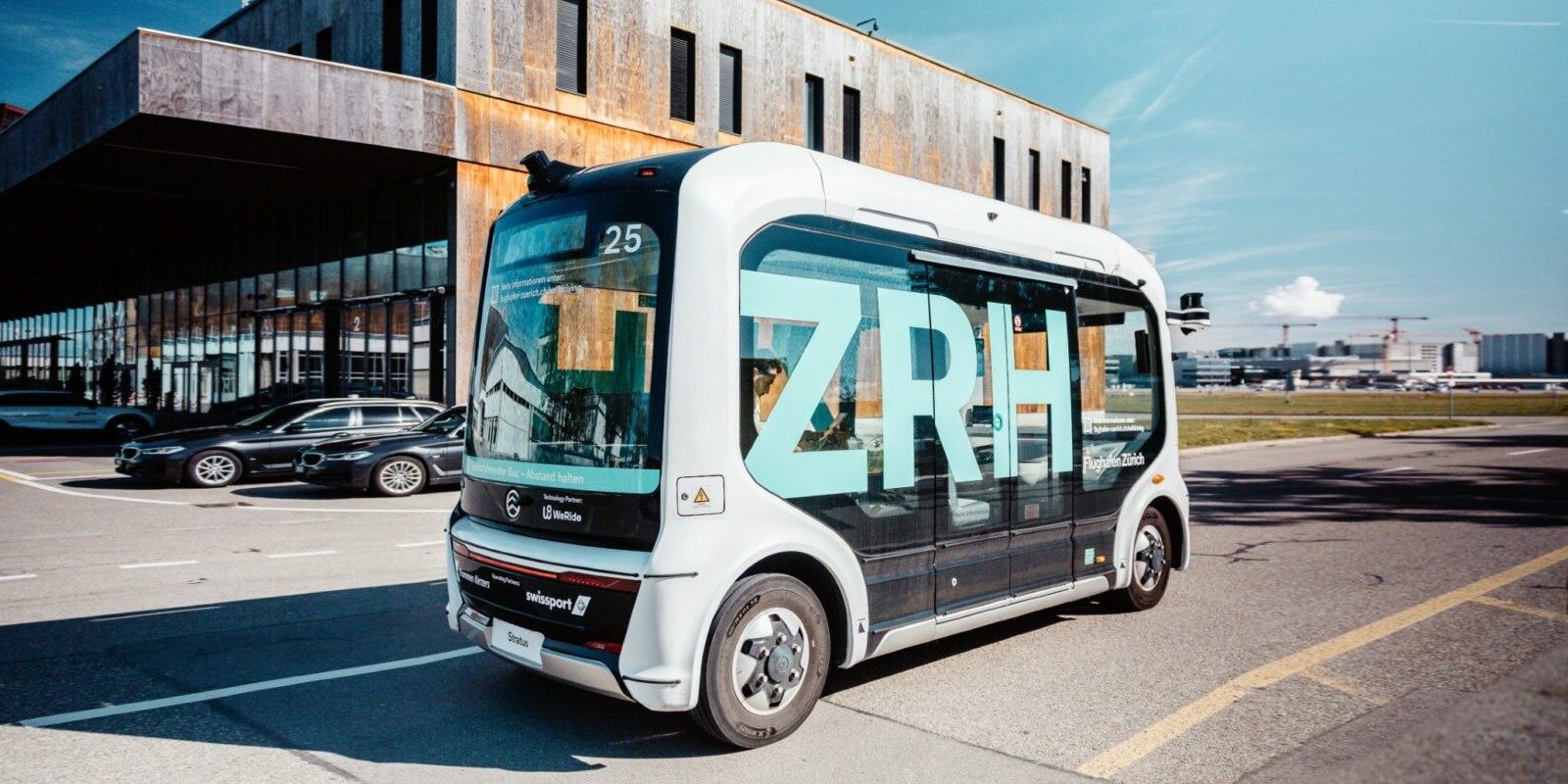
Zürich Airport has become one of Europe's first aviation hubs to deploy fully autonomous shuttle buses without human safety monitors. The airport is now operating two Level 4 self-driving electric shuttles on its grounds, marking a watershed moment for autonomous vehicle deployment in real-world airport operations.
Level 4 autonomy represents the second-highest tier of self-driving capability, where vehicles can operate independently in defined conditions without human intervention. The absence of a safety driver or monitor makes this deployment unusually aggressive compared to most autonomous vehicle trials globally. Most pilot programs, even in permissive jurisdictions like California and Arizona, retain human operators ready to take control if systems fail.
The shuttles at Zürich handle airport ground transportation, likely ferrying passengers or staff between terminals, parking areas, or other facilities. This application fits the operational sweet spot for autonomous vehicles. Airport grounds offer controlled environments with predictable traffic patterns, limited pedestrian interaction outside designated zones, and weather conditions manageable by current sensor suites. Unlike city streets with jaywalking pedestrians, aggressive drivers, and chaotic intersections, airport operations allow autonomous systems to perform reliably.
The deployment reflects Switzerland's permissive regulatory environment for autonomous vehicles. Swiss authorities have granted approval for testing Level 4 systems in defined operational areas, trusting vehicle developers to deliver safe performance. This contrasts sharply with the United States, where federal and state regulators maintain inconsistent frameworks. California allows driverless robotaxis in San Francisco through Waymo and Cruise, yet many states prohibit fully autonomous operations entirely.
Airport operators worldwide face growing pressure to modernize ground transportation. Traditional shuttles require drivers, creating labor costs and scheduling inflexibility. Autonomous alternatives promise 24/7 operation, reduced staffing expenses, and improved efficiency. Electric powertrains align with airport sustainability commitments, since most major hubs target net-zero emissions by 2035 or 2040. Zürich Airport's deployment signals that automation and electrification will reshape airport logistics.
The shuttles' technology source remains crucial context. European autonomous vehicle developers, including companies backed by Chinese firms, have accelerated testing on the continent. WeRide, a Chinese autonomous vehicle startup, operates L4 systems in Guangzhou and has expanded testing into Europe. The Zürich deployment may involve such partnerships, reflecting how autonomous technology development has globalized despite US market concentration.
Safety data from this trial will shape European aviation authority policy. If the Zürich shuttles operate for months without incidents, regulators in Germany, France, and the UK will likely approve similar programs at major airports like Frankfurt, Paris Charles de Gaulle, and London Heathrow. Conversely, any safety failures could trigger restrictions that setback autonomous adoption across the continent.
For airport operators, the stakes are practical. Labor shortages plague ground transportation worldwide following pandemic disruptions. Autonomous shuttles eliminate scheduling headaches and overtime costs. Battery electric buses offer lower per-mile operating expenses than diesel alternatives. The combination of autonomy and electrification creates compelling unit economics for 24/7 operation on confined routes.
Zürich's willingness to deploy without safety monitors also signals confidence that sensor systems and decision-making algorithms have matured beyond early-stage capability. This represents a maturity inflection point for the autonomous vehicle industry. Public acceptance grows when regulators permit true driverless operation, not merely supervised autonomy for media coverage.