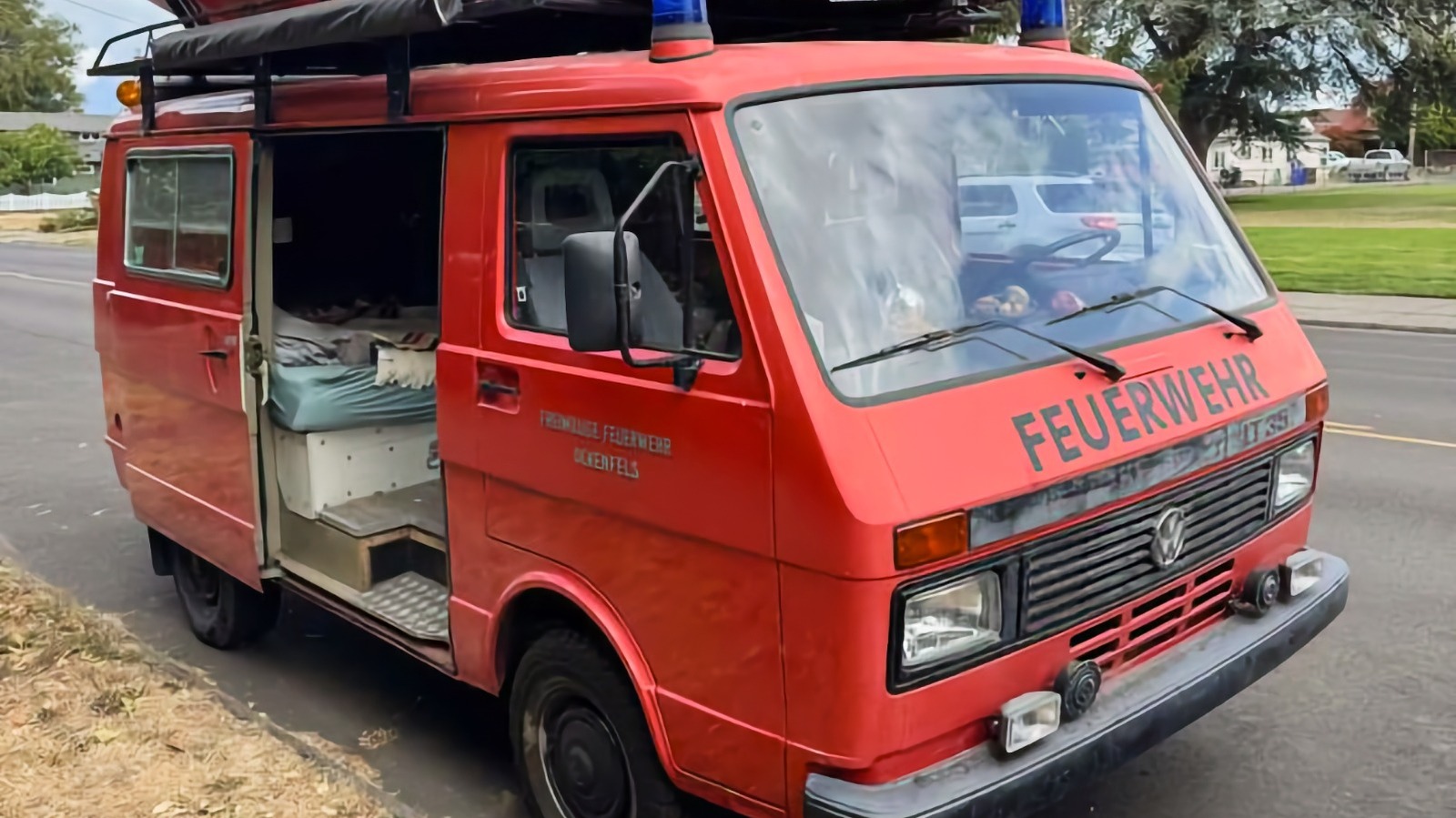
A 1989 Volkswagen LT35 Feuerwehr camper van listed at $12,000 raises a straightforward question: does this German fire service conversion hold genuine collector appeal, or does the asking price overreach the market reality for obscure commercial conversions?
The LT35 represents VW's commercial workhorse era. Built from 1975 through 2000, the LT series powered European trades and small operators. The LT35 designation indicates the 3.5-ton payload capacity. This particular example carries Feuerwehr badging, meaning it served as emergency equipment transport in Germany before a second life as a camper conversion. The boxy profile and utilitarian construction deliver honest practicality. Interior dimensions provide genuine living space, a concrete advantage over compact Class B campervans that dominate American camper markets.
The $12,000 asking price reflects broader collector trends around European commercial vehicles. Stateside, imported work vans and ex-fleet conversions command premium valuations when they offer uniqueness, provenance, or practical versatility. The VW Bus market inflated dramatically since 2015, pushing air-cooled Vanagon and earlier split-window models into five-figure territory. Buyers chasing scarce European metal increasingly look beyond Porsche and Mercedes to oddball commercial platforms. An LT35 with legitimate emergency service history carries narrative appeal that generic white vans cannot match.
However, market depth matters. An LT35 Feuerwehr camper occupies a narrow collecting niche. Domestic familiarity with VW commercial vehicles runs shallow. Most Americans connect VW to the Beetle or Bus, not hulking diesel transports designed for European regulations and infrastructure. Parts availability remains problematic. A seized engine or transmission failure on a 35-year-old LT35 creates expensive sourcing headaches. Repair expertise exists but demands specialists, not general mechanics.
The camper conversion quality determines whether $12,000 represents fair value or overpricing. A factory-original Feuerwehr vehicle with minimal interior modification appeals to authenticity-focused collectors. A heavily customized sleeper setup with new cabinetry, modern appliances, and fresh upholstery targets practical camper buyers who rarely pay premiums for 1989 model years, regardless of origin. The vehicle sits somewhere between those poles, reducing buyer pool appeal.
Import logistics add hidden costs. Bringing a European van to the United States requires homologation engineering, title paperwork, and potential EPA compliance adjustments. Buyers typically absorb these expenses. A $12,000 purchase price becomes $16,000 or $17,000 after shipping, documentation, and technical modifications. At that level, consumers can access significantly newer, more reliable Japanese camper conversions or newer Class B options from Winnebago or Storyteller Overland.
The asking price reflects optimism about niche collector appetite rather than conservative market reality. The LT35 does possess character and European flavor. Its Feuerwehr history provides conversational authenticity. Interior volume delivers functional advantage for extended camping trips. Yet the combination of age, specialized origin, parts challenges, and import complexity creates friction for casual buyers.
Fair market value likely hovers closer to $8,000 to $10,000 for a well-maintained example with honest maintenance records and professional mechanical inspection results. That range acknowledges the van's practical utility and historical intrigue while accepting the narrow collector audience and real-world ownership obstacles. At $12,000, the seller prices for an enthusiast willing to overlook those limitations, not market reality.