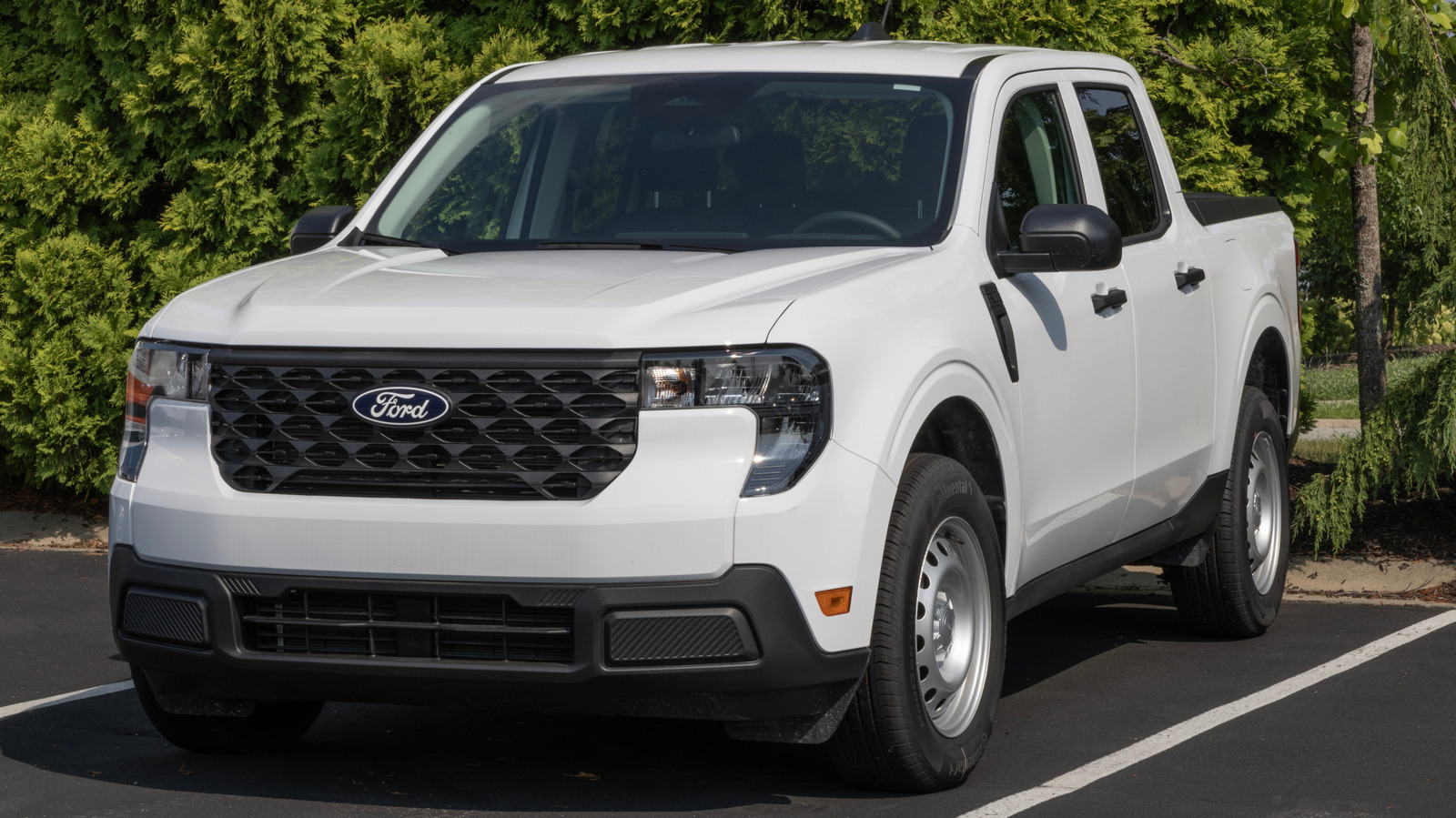
Ford's decision to build the Maverick on a unibody platform rather than the body-on-frame construction typical of pickup trucks reflects a deliberate strategy to target a different buyer than traditional truck owners. The company recognized an underserved market segment: people who wanted truck utility without the size, weight, or price tag of conventional pickups.
The unibody design, shared with the Ford Escape crossover platform, offers concrete advantages for this mission. It delivers better fuel efficiency, lower manufacturing costs, and a lighter overall curb weight compared to body-on-frame competitors like the Chevrolet Silverado or Ram 1500. The Maverick's starting price under $20,000 became possible partly because of this construction method. Body-on-frame trucks demand more material, more welding, and more complex assembly processes.
Unibody construction also improves ride quality and handling characteristics. The integrated structure absorbs road imperfections more effectively than a bolted-together frame and body, something drivers immediately notice during daily commutes or trips. The Maverick feels more car-like, which matters for a vehicle that will spend significant time navigating suburban streets rather than pulling trailers or traversing rough terrain.
Ford engineers understood their target customer profile. The typical Maverick buyer isn't a contractor hauling steel beams or a rancher moving livestock. Market research showed demand from first-time truck buyers, urban and suburban professionals needing occasional cargo capacity, and tradespeople working in lighter-duty applications. For these users, the Maverick's 1,500-pound payload capacity and 4,000-pound towing limit prove entirely adequate.
The unibody approach also enabled Ford to integrate modern technology more seamlessly. Structural reinforcements accommodate electronic components, wiring harnesses, and safety systems without the complications that arise when bolting components to a separate frame. The compact dimensions that result from unibody efficiency kept the Maverick narrow enough for standard parking spaces, another advantage for its intended market.
Traditional body-on-frame construction dominates the truck segment because it handles extreme loads and off-road punishment. Those pickups accept bent frames, twisted chassis, and structural flex as normal wear items in genuinely harsh work environments. The Maverick operates in an entirely different context. It makes zero sense to engineer and manufacture a truck for Farm Country durability when your customer base lives in subdivisions and light industrial parks.
Competitors struggled to follow this logic initially. General Motors and Stellantis both manufacture conventional trucks but lacked unibody truck platforms when the Maverick launched. Hyundai and Kia responded with their own unibody offerings, recognizing Ford had identified a legitimate market gap. The success of the Maverick proves that not every truck buyer demands traditional truck architecture.
The unibody Maverick represents sensible engineering that matches capability to customer need rather than forcing yesterday's design philosophy onto new market segments. It combines truck functionality with efficiency and affordability in a package that buyers actually wanted.