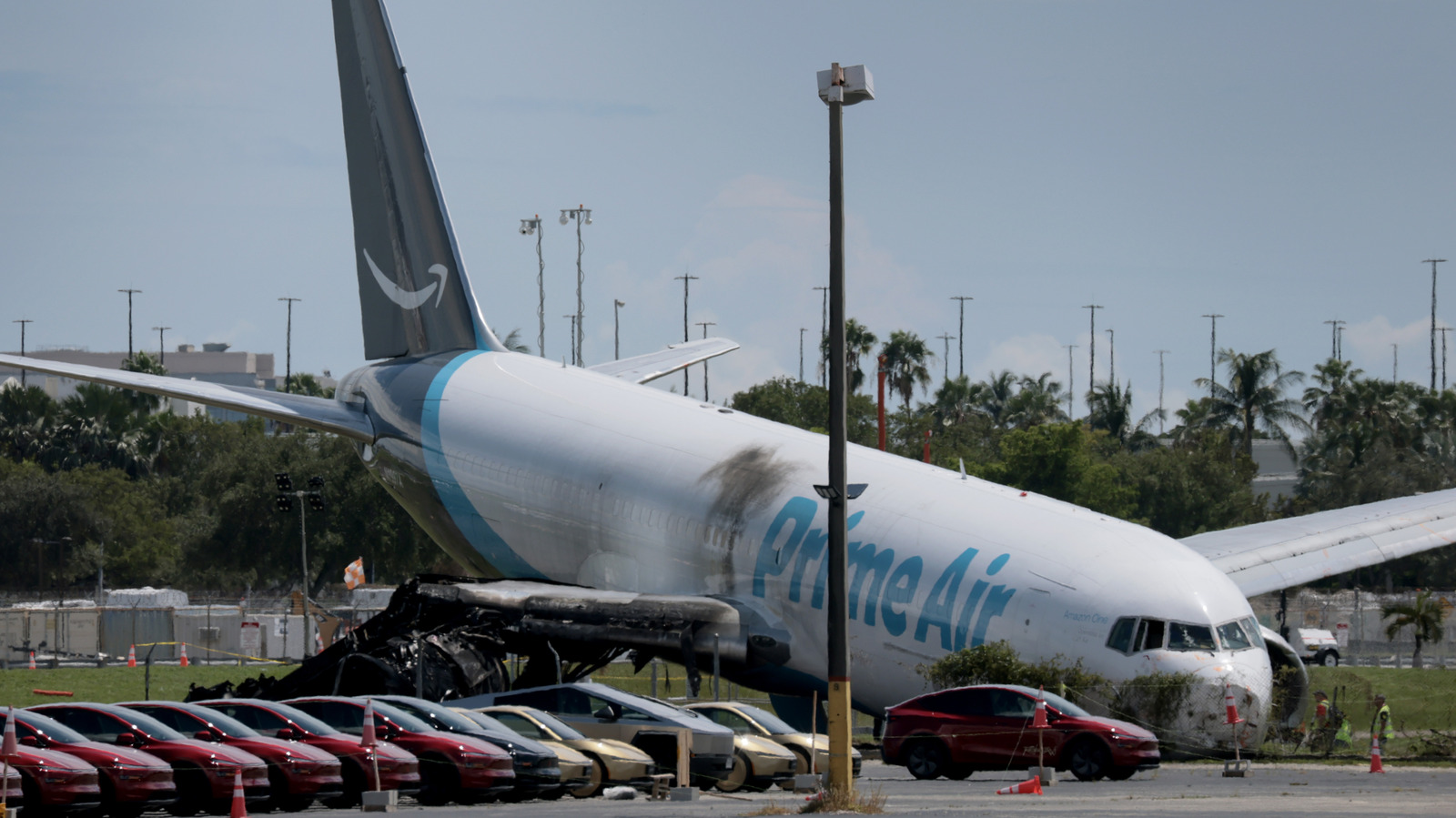
A Boeing 767 operated by Amazon Air crashed in Miami on August 14, killing all five crew members aboard. The aircraft failed to stop during landing at Miami International Airport, overrunning the runway before striking an embankment. Investigators from the National Transportation Safety Board are examining why the plane's braking systems proved insufficient to halt the 400,000-pound jet.
Amazon Air, the e-commerce giant's dedicated cargo airline, operates a fleet of converted Boeing 767s to transport packages across North America. The 767 is a proven workhorse in cargo operations, with thousands in service globally. What makes this accident unusual is that modern aircraft have multiple redundant systems designed to prevent runway overruns, including hydraulic brakes, reverse thrust, and spoiler deployment.
Initial reports suggest the aircraft touched down on the runway but lacked sufficient deceleration to stop before running out of pavement. The NTSB investigation will examine several factors. Weather conditions at Miami International that day matter. Wet runway surfaces reduce friction. Crosswinds can complicate directional control. Technical failures in the braking system would rank high on the investigation list. Pilot error, including improper landing technique or failure to deploy reverse thrust, remains possible but requires evidence.
The five crew members killed represent a tragedy for Amazon and the aviation industry. Commercial cargo operations maintain high safety records overall, but when accidents occur, they tend to be catastrophic due to the aircraft's mass and speed.
This crash arrives as Amazon accelerates investment in its cargo network. The company operates roughly 70 aircraft and continues expanding routes. Amazon Air represents vertical integration into logistics, reducing reliance on third-party carriers like FedEx and UPS. The strategy proves cost-effective and allows Amazon to control delivery timelines, but operating aircraft introduces operational complexity and regulatory scrutiny that shipping contracts avoid.
The Miami crash will trigger a comprehensive NTSB investigation, including examination of maintenance records, pilot qualifications, weather data, and aircraft systems. If mechanical failure emerges, it could affect the broader 767 cargo fleet and lead to airworthiness directives. If pilot error surfaces, training protocols may require revision.
Airport safety regulations already mandate that runways provide sufficient stopping distance for aircraft they're designed to accommodate. Miami International's runway dimensions meet federal standards for 767 operations. Understanding why standard procedures failed matters for the entire aviation community. Every accident investigation produces lessons that inform future operations and safety protocols.
For Amazon, the crash represents a sobering reminder that operating aircraft demands absolute reliability and rigorous safety management. The company will likely increase cooperation with investigators and review its maintenance and training procedures. Cargo aviation relies on trust from regulatory authorities and the public. A fatal crash damages that trust, even among operators with strong safety records.
The investigation will take months. Until completion, speculation remains just that. Evidence from the flight data recorder and cockpit voice recorder will prove definitive.