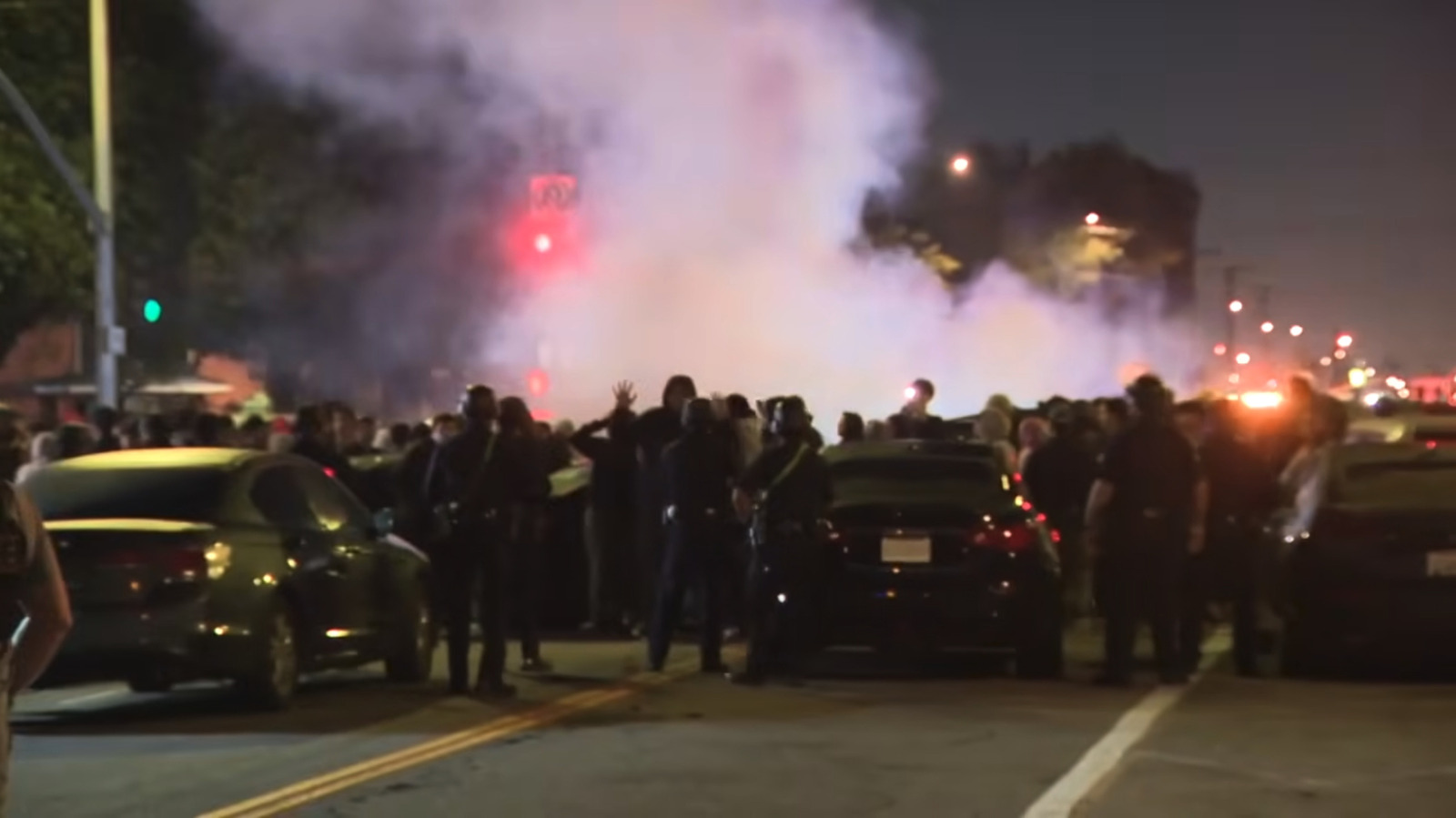
The Los Angeles Police Department deployed Operation Street Sweeper during Labor Day weekend, impounding 200 vehicles and arresting 69 people in a coordinated crackdown on street takeovers. LAPD Chief Jim McDonnell confirmed the operation represents an ongoing enforcement strategy, not a single weekend sweep.
Street takeovers, where drivers orchestrate temporary road closures to perform dangerous stunts and burnouts, have exploded across major cities over the past three years. Los Angeles has emerged as a hotbed for these events, with organizers using social media to mobilize participants and spectators. The takeovers pose genuine public safety risks: bystanders face injury from reckless driving, emergency vehicles struggle to reach scenes, and neighborhoods endure noise and property damage.
Operation Street Sweeper targets the infrastructure enabling these events. LAPD deployed additional patrols in known hotspots, set up checkpoints, and worked with automated license plate readers to identify repeat offenders. The 69 arrests likely include organizers, drivers who performed stunts, and participants who blocked traffic. The 200 impounded vehicles sends a direct message about consequence. Once seized, cars face lengthy impound holds and heavy storage fees that add up quickly. Vehicle owners must navigate Los Angeles County's impound release process, which creates real financial pain and bureaucratic friction.
The scale matters. Two hundred cars represents significant resource commitment from LAPD and demonstrates political will to address the problem. Street takeover culture has operated with relative impunity in some jurisdictions where police lacked capacity or political cover to respond aggressively. Chief McDonnell's statement that this approach continues signals sustained enforcement, not theater.
However, sustainable solutions require more than police action. The takeover phenomenon reflects deeper issues: young drivers seeking community and status outside conventional channels, social media amplification that monetizes chaos, and a genuine gap in legal street performance venues. Several cities have experimented with sanctioned drift events and car meets that redirect participant energy into controlled environments. Los Angeles has not embraced this approach at scale.
The criminal code already addresses these activities. Drivers can face charges for reckless driving, speed contests, blocking traffic, and public nuisance violations. California Vehicle Code Section 23109 specifically prohibits speed contests and exhibitions of speed, with penalties including vehicle impound and jail time. What has changed is enforcement intensity and publicity.
Repeat offenders and organizers remain the core problem. Casual participants may attend once, get caught, face consequences, and stop. The hardcore takeover community views enforcement as part of the game. They scatter to different locations, use encrypted messaging, and rotate vehicles. LAPD's continued operation suggests they understand this dynamic requires persistent pressure rather than episodic crackdowns.
For drivers who care about cars and performance, street takeovers represent an existential threat to legal driving culture. Each high-profile incident and news story generates political pressure for broader vehicle restrictions, traffic enforcement, and surveillance. This cycle ultimately harms every driver.
Operation Street Sweeper demonstrates that cities can respond to street takeovers when leadership prioritizes the issue. Whether sustained enforcement changes behavior or simply displaces it remains to be seen. The next phase involves whether Los Angeles invests in alternative venues that satisfy the underlying demand for performance driving and community.