# Hyundai's 'The Walking Dead' Tucson Blurred the Line Between Marketing and Morbid
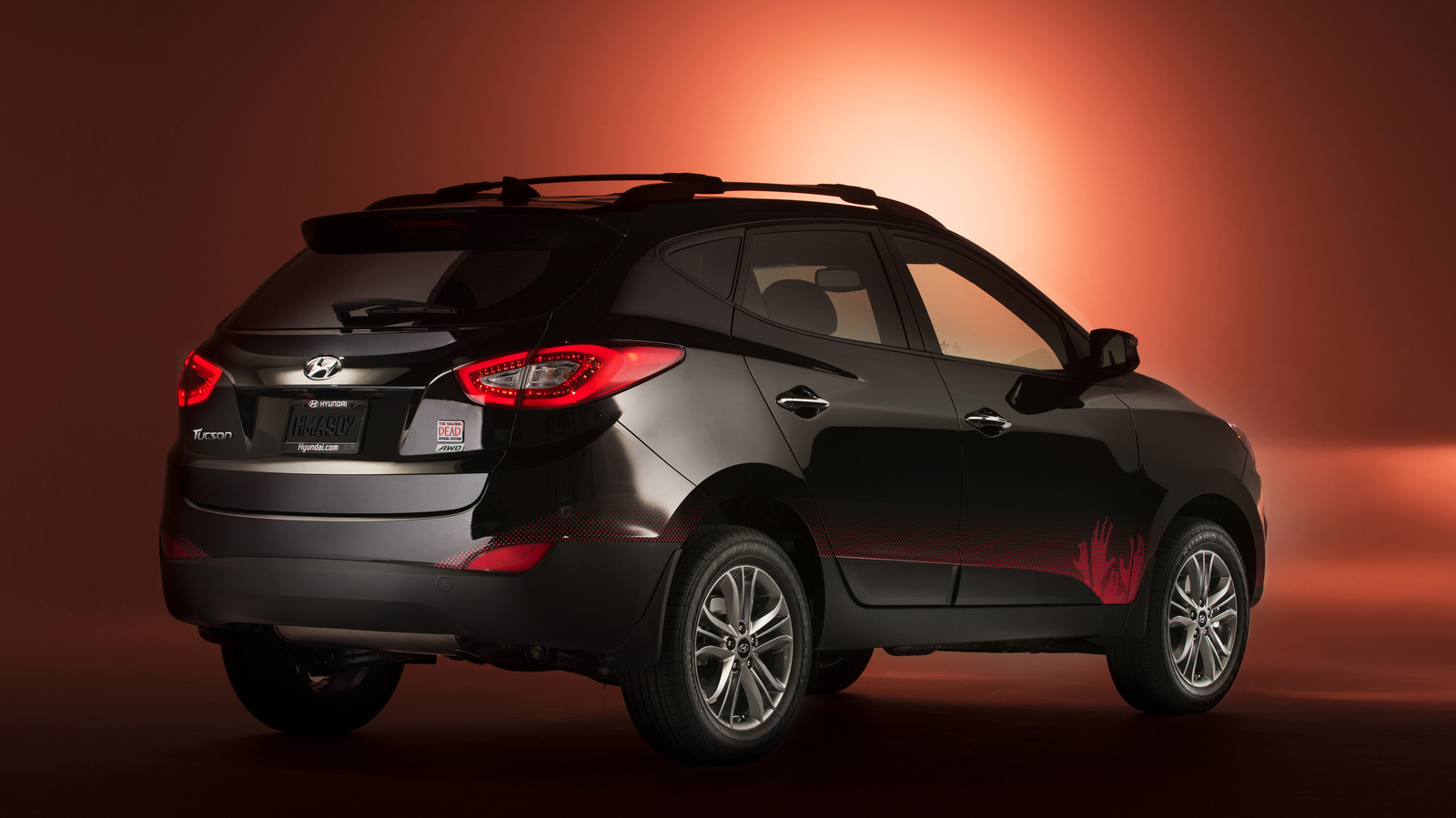
Hyundai partnered with AMC's "The Walking Dead" to create a special-edition Tucson compact crossover that leaned hard into the show's gruesome aesthetic. The vehicle featured zombie hands clawing upward from the bodywork in blood-red metallic paint, transforming the family hauler into a rolling tribute to undead horror.
The collaboration went beyond cosmetic horror. Hyundai bundled the zombie-themed Tucson with a survival gear backpack, playing into the show's post-apocalyptic narrative where characters constantly prepare for the worst. The combination positioned the practical, affordable crossover as a vehicle for the end times.
This move sits within a broader trend of automakers mining pop culture franchises for brand lift and younger buyer engagement. Hyundai, in particular, has invested heavily in entertainment partnerships to elevate its image beyond reliable transportation. The company has secured prominent placements in major films and television shows, understanding that association with hit content reaches audiences brands struggle to connect with through traditional advertising.
"The Walking Dead" represented peak cultural moment when this partnership likely occurred. The AMC series commanded massive viewership through its eight-season run, with a dedicated fan base that skewed heavily toward merchandise-hungry demographics. A zombie-themed vehicle appealed directly to that audience in a way that standard trim packages never could.
The execution, however, walked a fine line. Zombie imagery on the exterior raised eyebrows even among Walking Dead enthusiasts. The blood-red paint and reaching undead hands transformed the Tucson from practical family vehicle into something unsettling. Hyundai gambled that shock value would drive awareness and social media engagement, betting that controversy converts to buzz.
From a product perspective, the special edition Tucson itself remained fundamentally unchanged. The partnership focused entirely on appearance and bundle contents. The vehicle still offered the competent turbocharged engine options, reasonable cargo space, and warranty coverage that made the Tucson a legitimate compact crossover competitor against the Honda CR-V, Toyota RAV4, and Mazda CX-5. Buyers weren't gaining additional capability or performance, just aesthetic distinctiveness and zombie-themed accessories.
The timing of this collaboration likely coincided with the show's peak cultural influence, before streaming saturation fragmented television audiences. Premium cable partnerships carried more cultural weight in that era than they do today. A 2024 equivalent would probably target a streaming property with existing fan enthusiasm rather than traditional broadcast television.
Hyundai's willingness to embrace morbid imagery on a mainstream vehicle showed confidence in the crossover's appeal and its own brand flexibility. The company understood its audience extended beyond sensible sedan buyers to include cultural enthusiasts willing to make bold automotive choices. Whether the special edition Tucson actually moved meaningful sales numbers remains unclear, but the partnership succeeded in generating conversation and positioning Hyundai as willing to take creative risks.
The collaboration ultimately represents a moment when Korean automakers aggressively pursued Western pop culture partnerships to build brand cachet. Hyundai transformed a practical grocery-getter into something memorably weird, proving that even family vehicles could carry entertaining, unconventional stories.