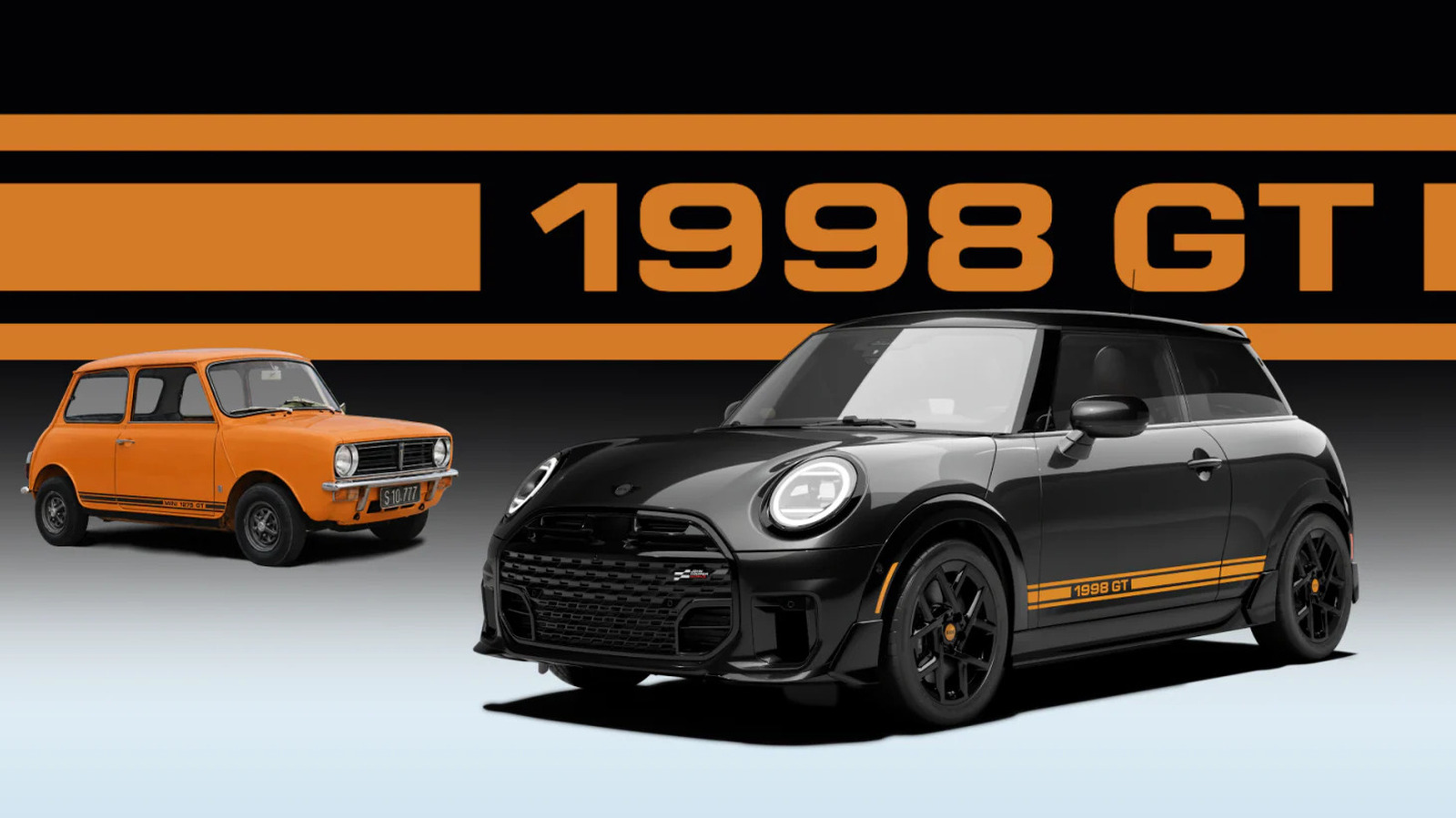
Mini has unveiled the 1998 GT Edition, a retro-inspired variant that trades on nostalgia while delivering contemporary performance hardware. Despite its name suggesting a throwback to the 1990s, this special edition has nothing to do with that era. The "1998" designation refers to the engine displacement in cubic centimeters, not a model year or historical reference.
The 1998 GT Edition borrows styling cues from Mini's John Cooper Works (JCW) performance line, giving the compact hatchback an aggressive visual identity. The package includes JCW-badged brakes and exterior design elements that signal performance intent. These aren't cosmetic additions alone. The braking system represents genuine hardware upgrades over standard Mini specifications, offering improved stopping power and heat dissipation for spirited driving.
Mini continues its strategy of segmenting the Cooper line through special editions and performance tiers. The JCW brand has evolved into Mini's primary performance sub-brand, occupying the space between base Cooper models and full-blown race variants. By incorporating JCW components into a retro-styled package, Mini aims to appeal to buyers seeking both visual distinction and functional upgrades without committing to a complete JCW conversion.
The pricing approach tells the real story here. Mini hasn't positioned the 1998 GT Edition as an accessible entry point. Instead, the company has priced it as a premium variant, leveraging the visual appeal and performance credentials to justify a significant markup over base Cooper models. This strategy reflects broader market trends in the compact car segment, where manufacturers use special editions and visual customization to generate higher profit margins on limited production runs.
The retro aesthetic resonates with Mini's core audience. The brand has built its identity partly through nostalgic references to the original Mini Cooper, which debuted in 1959. Buyers drawn to Mini often appreciate automotive history and design heritage. A package that evokes '90s minimalism while delivering contemporary JCW performance speaks directly to that sensibility.
Competitors in this segment include the Volkswagen Golf GTI and Honda Civic Si. Both models also use performance variants and special editions to capture enthusiast buyers willing to pay premiums for visual distinctiveness. Volkswagen's limited-edition Golf models regularly command higher pricing despite sharing mechanical foundations with standard variants. The strategy works because it creates perceived exclusivity and appeals to buyers who view cars as personal expression rather than mere transportation.
Mini's approach also reflects the broader automotive industry's shift toward personalization and segmentation. As traditional model differentiation becomes more difficult in an increasingly regulated market, manufacturers emphasize options, trim levels, and special editions to maintain pricing power and customer engagement.
The 1998 GT Edition represents a calculated play in this landscape. The naming convention itself demonstrates Mini's understanding of its audience and their appreciation for automotive trivia. Knowing that the name refers to engine displacement rather than a nostalgic reference appeals to enthusiasts who research specifications and value authenticity in branding, even when the package itself is deliberately retro-modern in execution.
Whether buyers view the premium pricing as justified will depend on personal valuation of the JCW performance components and exclusive styling. Mini is banking on the fact that many will.