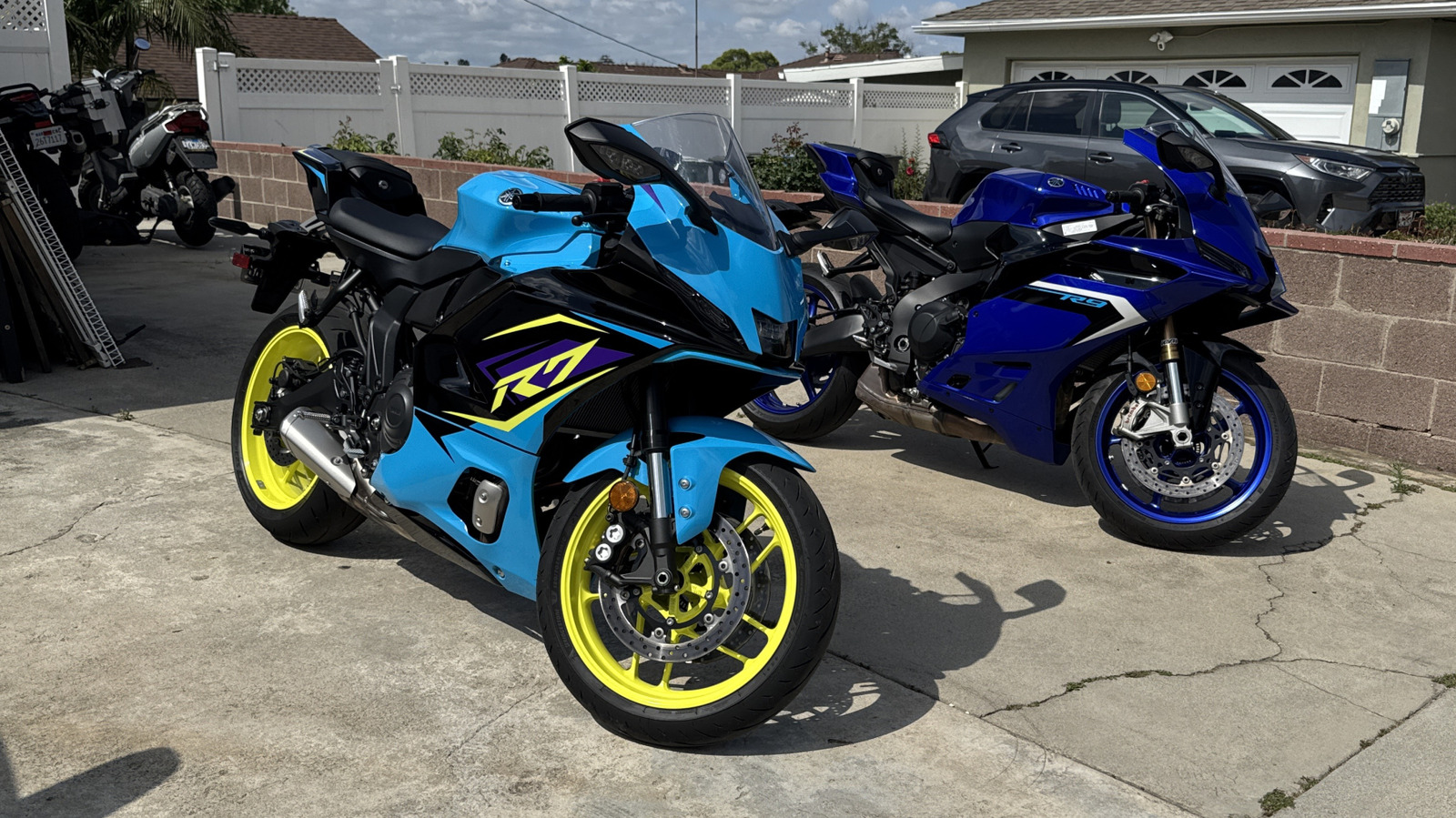
Yamaha's 2026 R7 middleweight sportbike represents a departure from the typical category compromise. The Japanese manufacturer built a machine that excels at nearly everything, only to discover that versatility creates its own problem: nothing truly needs this much capability.
The R7 sits in the 689cc naked sportbike class, a segment Yamaha has dominated for years with the MT-07. But the R7 takes a different approach. It strips away some street practicality in favor of raw track-day performance, sharper ergonomics, and a more aggressive stance. The engine produces 74 horsepower and 50 pound-feet of torque. Those numbers don't sound exotic, but they're properly distributed across the rev range.
Real-world testing confirms what Yamaha intended: this bike feels overqualified for commuting, parking lot duty, and casual weekend blasts. The R7 wants to work harder than most riders will ask. Its responsive throttle response, quick-turning geometry, and precise steering inputs feel wasted on traffic-clogged streets. The brakes stop with unnecessary authority. The suspension tuning anticipates aggressive lean angles that street riders rarely exploit.
This is the opposite problem most middleweight sportbikes face. Typically, buyers accept compromises. They tolerate softer suspension for comfort, trade some power for fuel efficiency, and accept heavier weight for practicality. The R7 reverses that equation. It delivers performance that exceeds what daily riding demands, leaving riders questioning whether they actually need a scalpel when a hammer would work just fine.
The bike costs around $7,200, positioning it against the Kawasaki Ninja 400, Honda CB500F, and its own MT-07 platform sibling. Competitors in this price range usually lean toward practicality or comfort, not pure capability. Yamaha chose a different path.
For track days and spirited canyon runs, the R7 finally makes sense. Riders willing to access its full potential on closed courses find a machine that justifies every engineering decision. But those same riders likely already own or plan to own a dedicated trackbike. The R7 occupies an awkward middle ground: too capable for commuters, too street-oriented for track specialists, and financially redundant for riders serious enough to exploit its limits.
That doesn't make the 2026 R7 a bad bike. It makes it a machine built to a different philosophy. Yamaha built the best middleweight sportbike it could and priced it competitively. The problem isn't the execution. It's that the execution so thoroughly outpaces the typical use case that buyers might logically choose a more practical alternative.
The R7 works as a statement: proof that Yamaha can deliver uncompromising performance at the middleweight level. Whether that statement resonates with buyers remains an open question. Many riders will continue choosing instruments better suited to their actual needs, leaving this particular scalpel sharp but underutilized in a garage full of hammering tasks.