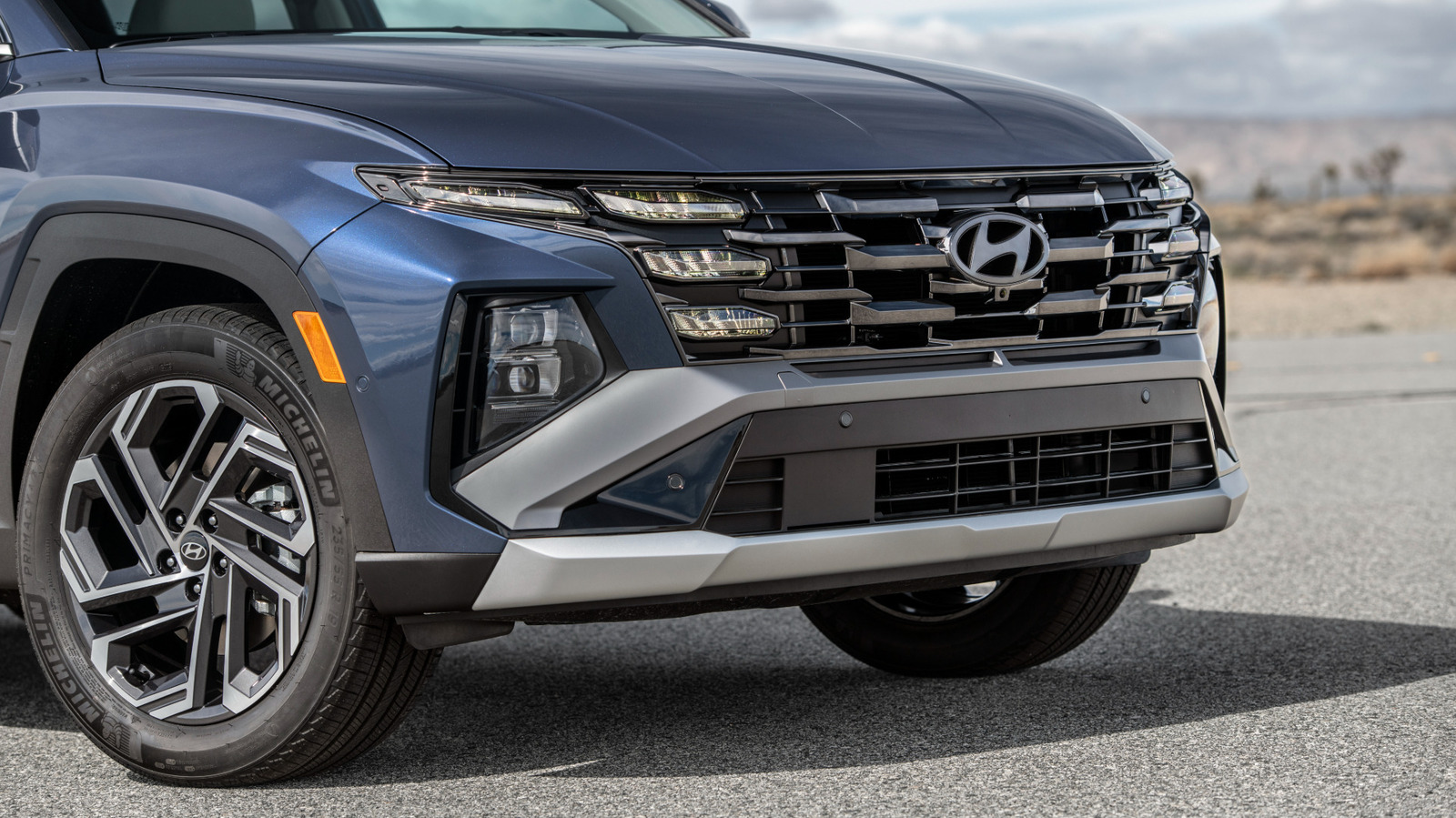
The Hyundai Tucson remains one of the segment's best-sellers, but buyers chasing raw power have legitimate alternatives that deliver substantially more output from the compact crossover class.
The current Tucson lineup maxes out at 281 horsepower with the turbocharged 2.0-liter engine paired to an eight-speed automatic transmission. That engine delivers 311 pound-feet of torque and achieves EPA ratings of 23 city, 30 highway, and 26 combined mpg. For most daily drivers, that output proves adequate. For performance-focused shoppers, three competitors stand out.
The Kia Sportage, Hyundai's corporate sibling under parent company Stellantis, matches the Tucson's turbo output but pairs it with sportier tuning. Kia's designers refined the Sportage's handling dynamics and steering response compared to the Tucson's more comfort-oriented suspension. Buyers get similar efficiency without sacrificing engagement.
The Mazda CX-50 cuts deeper into the performance equation. Mazda's 2.5-liter turbocharged engine generates 310 horsepower and 348 pound-feet of torque. The CX-50 competes on a similar price point, roughly 23,000 to 32,000 dollars depending on trim level. Mazda emphasizes driving dynamics across its lineup. The CX-50's i-Activ all-wheel-drive system delivers responsive torque distribution that the Tucson simply cannot match. EPA fuel economy hits 22 city, 28 highway, and 24 combined mpg. The trade-off is real but manageable for buyers who value cornering ability.
The Subaru Outback, technically a wagon rather than a traditional crossover, delivers compelling performance credentials. Subaru's 2.4-liter turbocharged flat-four engine produces 260 horsepower at 5,600 rpm and 277 pound-feet of torque. The standard all-wheel-drive system and low center of gravity inherited from the flat-engine architecture give the Outback predictable handling in poor weather. Pricing ranges from 28,000 to 38,000 dollars depending on trim. Fuel economy registers at 21 city, 26 highway, and 23 combined mpg. The Outback targets buyers seeking versatility paired with Subaru's reputation for all-weather capability.
Each alternative targets different buyer priorities. The Sportage appeals to Hyundai loyalty while upping the performance ante. The CX-50 serves drivers who prioritize handling without abandoning practicality. The Outback captures those seeking genuine all-weather performance in an understated package.
The compact crossover segment has evolved beyond basic transportation. Buyers now expect power delivery matched to sophisticated chassis engineering. The Tucson remains solid, but these alternatives prove that stepping outside Hyundai's portfolio unlocks tangible performance advantages at comparable prices. Shoppers should test drive all four before deciding. Real-world performance differences matter less than finding the right fit for individual driving patterns and priorities.