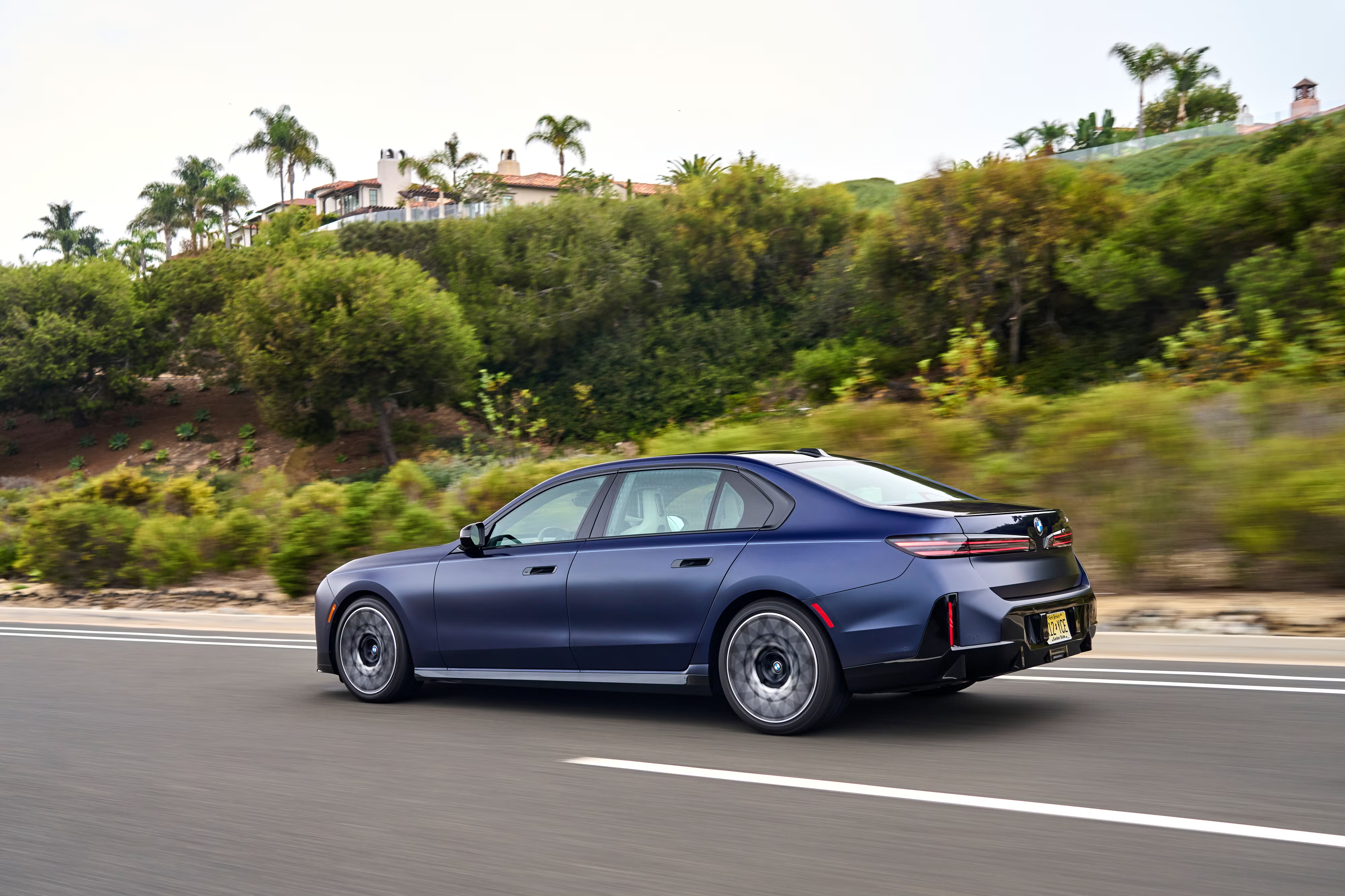
BMW's next generation 7-Series arrives as a statement of baroque excess rather than minimalist restraint. The 2027 sedan swaps the understated elegance that once defined the model for visual drama, glittering trim pieces, and an architecture built to overwhelm rather than impress subtly.
The redesigned flagship sits lower and wider than its predecessor, occupying more road real estate with squared-off proportions that project authority. Chrome and polished metal accents pepper the exterior, creating surfaces that catch and reflect light. The grille remains imposing, though BMW has refined its proportions compared to recent generations that drew criticism from purists. Inside, the cabin favors richness over minimalism. Ambient lighting, sustainable leather alternatives, and wood veneers create layers of visual interest rather than the spare Scandinavian design philosophy that once guided luxury sedan interiors.
Under the hood, BMW offers buyers genuine choice. The engine lineup spans conventional gasoline engines, plug-in hybrid systems, and fully electric drivetrains. The company hasn't yet released final specifications, but expect the gas engines to include turbocharged six-cylinder and eight-cylinder options, likely paired with automatic transmissions and all-wheel drive as standard on higher trims. The plug-in hybrid variants will provide daily electric range for commuters while retaining gas power for highway trips. The iX i7, BMW's all-electric flagging, continues as the most advanced powertrain option.
This approach reflects shifting luxury buyer expectations. German automakers once viewed electrification as inevitable and optimized for efficiency and range. Now they recognize that affluent customers demand options. Some prefer the visceral feedback of combustion. Others want zero-emission capability. A third group wants both. Offering multiple powertrains allows BMW to capture all three demographics without cannibalizing sales between models.
The 7-Series competes directly with the Mercedes-Benz S-Class, Audi A8, Jaguar XJ (in international markets), and the Lexus LS. Mercedes took a similar maximalist approach with its latest S-Class redesign, emphasizing curved surfaces, dramatic lighting, and abundant technology. The result was sales growth despite the car's $100,000-plus starting price. Audi, conversely, pursued understatement with its A8, and sales remain modest. BMW clearly studied the Mercedes playbook.
The cabin technology suite centers on the latest iDrive operating system, which BMW continues to refine for voice control, gesture recognition, and smartphone integration. The head-up display spans wider than previous generations, projecting navigation, speed, and alerts directly into the driver's line of sight. The infotainment system supports over-the-air updates, ensuring the car receives new features throughout its ownership lifecycle.
Interior space remains a priority. The wheelbase grows modestly, creating more legroom in the rear. The trunk expands to accommodate luggage, golf clubs, or electric scooters. The rear seats recline, warm with heating and cooling functions, and offer massage programs across multiple zones.
Pricing hasn't been announced, but expect the 2027 7-Series to start near $85,000 for gas-powered versions and climb to $110,000 for fully equipped models or electric variants. BMW plans to launch the sedan in the second half of 2026, with dealer deliveries beginning in early 2027.