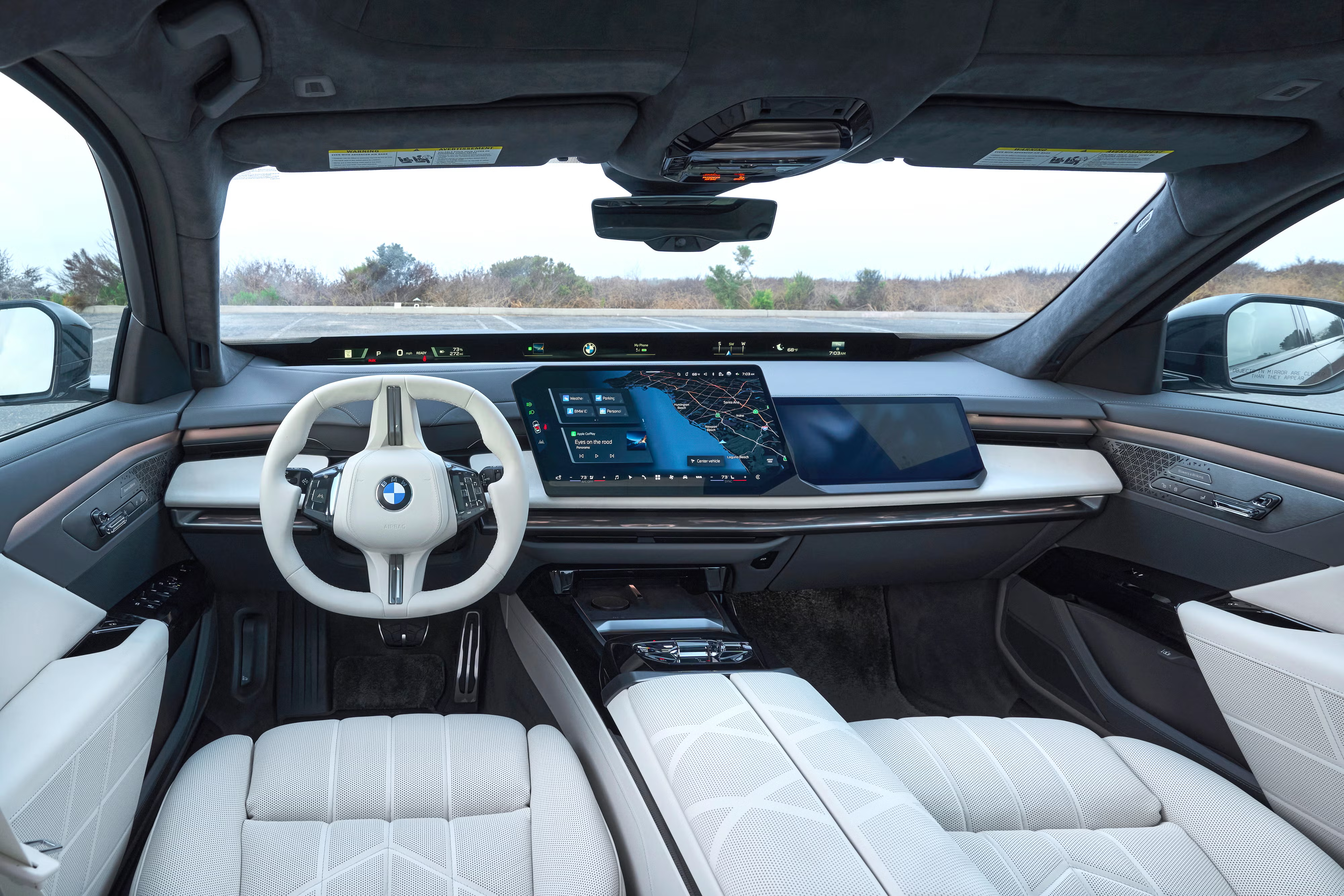
BMW's flagship sedan enters a new generation with the 2027 7-Series, and the German automaker has now unveiled detailed interior photography that reveals the cabin's design language and technology integration. The images showcase a departure from previous iterations, emphasizing simplicity, luxury materials, and digital-first controls that align with BMW's broader design philosophy across its lineup.
The 2027 7-Series interior centers on a horizontally oriented dashboard that stretches across the width of the cabin. The design eliminates unnecessary physical buttons, consolidating most functions into a large curved display panel that curves from the driver's side toward the passenger area. This follows BMW's established pattern in recent models like the iX and i7, where digital interfaces dominate the control environment.
The steering wheel appears refined but conventional in layout, featuring touch-sensitive controls and a smaller diameter that BMW has adopted on newer models. The instrument cluster displays information on a digital screen, with a second display handling infotainment and climate functions. This dual-screen setup balances driver information with passenger entertainment, though it represents an evolution rather than a radical rethinking of the luxury sedan cockpit.
Material selection tells the story of BMW's commitment to the premium segment. The images reveal extensive use of leather upholstery, wood trim accents, and what appears to be brushed metal surfaces throughout the cabin. Color options appear to include traditional black and tan leather combinations, though BMW typically offers numerous customization options for its flagship model. The wood trim looks more contemporary than traditional, suggesting a modern interpretation of luxury rather than classical opulence.
The rear seat area demonstrates the 7-Series' positioning as a car for both drivers and passengers. The backseat appears spacious, with individual climate controls and their own display panel visible in the photos. BMW has long emphasized rear-seat technology in the 7-Series, and the 2027 model continues this tradition with integrated entertainment and comfort options.
Storage solutions remain thoughtfully integrated throughout the cabin. Cup holders, door pockets, and center console organization appear functional and logically placed, suggesting BMW hasn't sacrificed practicality for aesthetics. The center console itself features a modern design with what looks like wireless charging capability built in.
Headroom and legroom in both front and rear sections appear generous, though final dimensions await official specifications. The overall layout maintains the formal, executive aesthetic that has defined the 7-Series for decades, even as technology updates the execution.
The 2027 generation arrives as luxury sedan competition intensifies. The Mercedes-Benz S-Class, Audi A8, and Lexus LS all offer competing visions of what a premium four-door should deliver. BMW's 7-Series traditionally stands out through its driving dynamics and technology leadership, factors that extend beyond cabin design alone.
Official specifications, engine options, and pricing for the 2027 7-Series remain forthcoming. BMW typically offers multiple powertrain configurations, including inline-six engines, V8 options, and hybrid variants. An all-electric i7 variant likely continues alongside the traditional combustion-powered models, maintaining BMW's electrification strategy across segments.