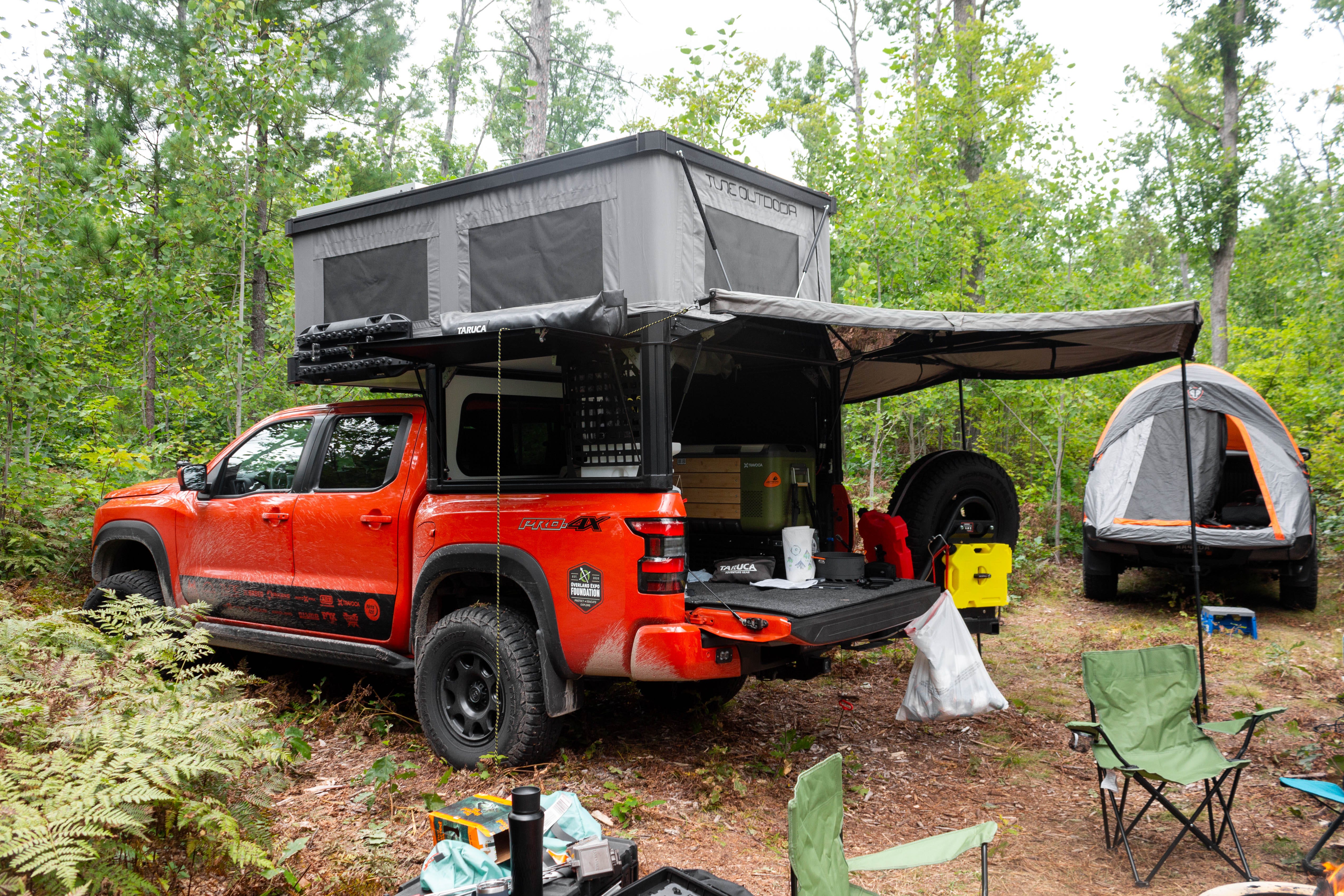
# Nissan Frontier Ultimate Build Proves Gear Alone Doesn't Make the Perfect Camping Trip
Car and Driver's weekend at Overland Expo with Nissan's fully loaded Frontier Ultimate Build reveals a hard truth about adventure vehicles. Maximum equipment doesn't guarantee maximum enjoyment.
The Nissan Frontier Ultimate Build represents the apex of overland truck customization. This isn't a stock Frontier. The truck arrives at Overland Expo, a gathering of serious off-road enthusiasts in Michigan, laden with premium camping gear, recovery equipment, communication systems, and shelter solutions that transform the midsize pickup into a mobile basecamp. The investment is substantial. The setup is impressive. Yet after a weekend in Pure Michigan, the verdict lands differently than expected.
The truck itself is a solid platform. The Frontier has long occupied a middle ground in the truck market, undersized against Ford F-150 and Chevrolet Silverado competitors but overbuilt compared to smaller unibody pickups. With a 3.8-liter V6 engine producing 310 horsepower and standard crew cab configuration, the Frontier delivers practical capability without the fuel consumption penalties of full-size trucks. For camping and light overlanding, that formula works.
But the ultimate build transforms capability into complexity. Roof racks, satellite communication gear, recovery systems, premium bedside storage, coolers, cooking stations, and shelter solutions add layers of setup and breakdown ritual. What began as liberation from daily life becomes a new form of labor. Every evening requires deployment. Every morning demands breakdown. The gear multiplies decision fatigue.
This reveals a split in the overlanding world. One camp pursues equipment maximization. Better gear equals better experiences, the logic goes. Redundancy in systems ensures safety. Multiple tools address multiple scenarios. The ultimate build philosophy assumes comprehensive preparation prevents problems. The other camp embraces minimalism. A truck, a tent, fuel, and water suffice. This approach prioritizes simplicity and acceptance over control.
Nissan's targeting of overlanders represents a smart market move. The Frontier competes directly with Toyota's Tacoma, which dominates this segment and commands price premiums. By partnering with Overland Expo and showcasing customization potential, Nissan positions the Frontier as a capable alternative with lower entry costs. The ultimate build serves as marketing theater, demonstrating possibility rather than necessity.
The timing matters. Adventure vehicle sales remain elevated as work-from-anywhere models enable remote camping. Vehicle-based camping, or "glamping" in its premium iteration, attracts demographics seeking controlled nature experiences. They want comfort, safety systems, and premium materials. They want the appearance of ruggedness without genuine hardship. The ultimate build delivers exactly that target.
Yet the author's takeaway carries validity for the broader market. Camping satisfaction correlates weakly with equipment investment. A simple tent, a sleeping bag, and genuine interest in location deliver better experiences than elaborate setups managed poorly. The Nissan Frontier Ultimate Build works beautifully for serious overlanders who use every system regularly. For occasional weekend campers, it represents overinvestment in complexity.
Nissan should market this truck to its actual customer base. That customer owns multiple properties, works flexible schedules, and treats overlanding as primary recreation rather than occasional escape. For that buyer, the Frontier's cost advantage over Tacoma, combined with demonstration builds like this ultimate version, creates compelling value. Position it as the enthusiast's choice, not the casual camper's luxury.