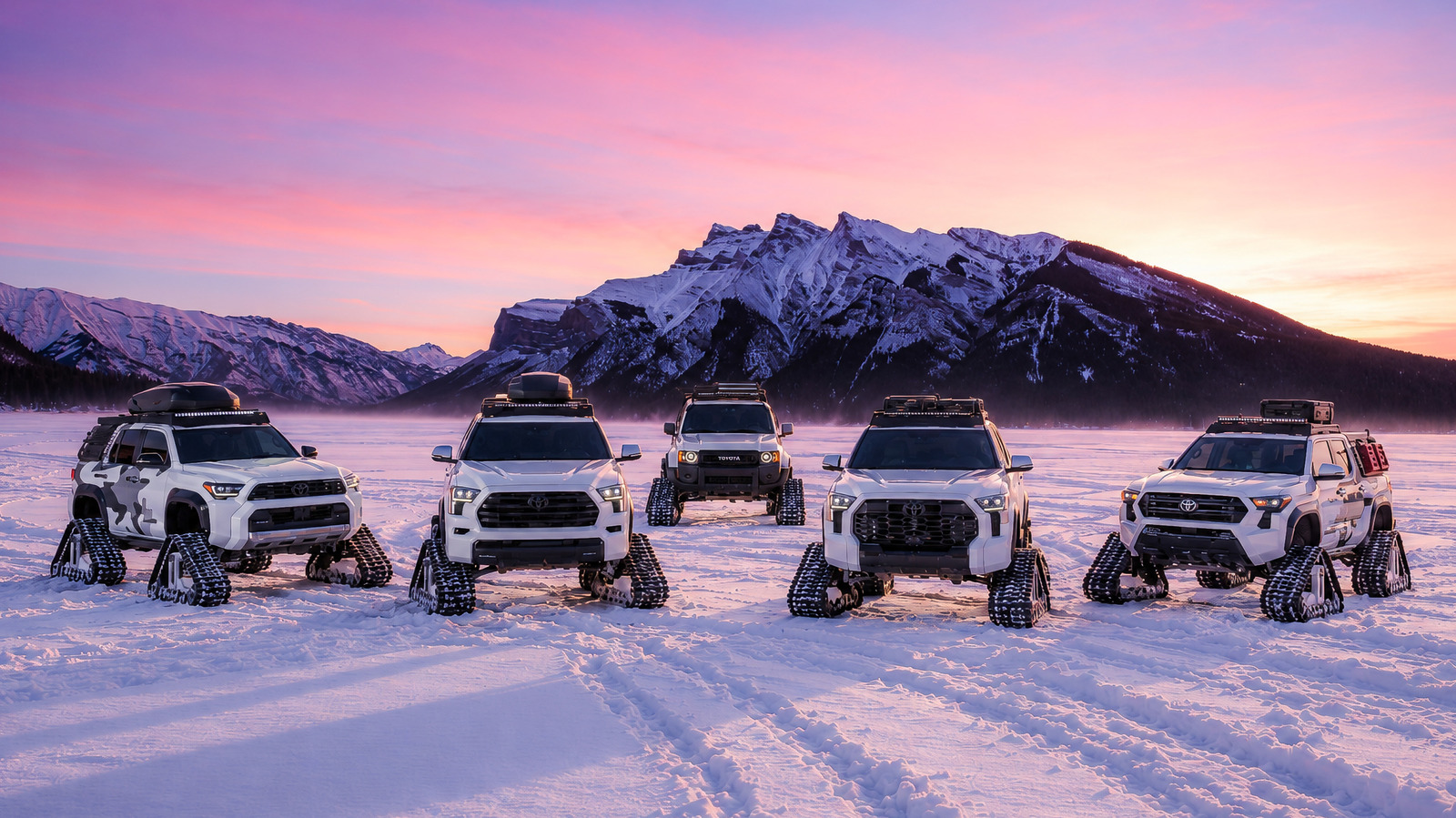
Toyota rolled into SEMA 2026 with a bold statement about all-terrain capability. The automaker equipped its entire truck lineup with snow tracks, transforming conventional pickups into extreme-weather machines that climb over snow, ice, and impassable terrain without breaking stride.
This isn't Toyota's first rodeo with track systems. The company has experimented with aftermarket and factory track conversions for decades, from the Land Cruiser to the Tacoma. But showcasing the entire truck family with unified track technology at SEMA signals a shift in how Toyota views weather performance and customer expectations for adventure-ready vehicles.
The SEMA concepts likely include the Tundra, Tacoma, and potentially the newly redesigned T100 or Hilux variants. Replacing traditional tires and suspensions with track systems fundamentally changes mobility. Tracks distribute weight across a larger footprint, reducing ground pressure and enabling passage through deep snow where standard all-terrain tires would bog down. They also improve traction on ice and mud by maintaining contact points across varied surfaces.
This matters because truck buyers increasingly want vehicles capable of tackling remote locations and harsh seasons. Colorado, Alaska, and Canada have grown as truck markets precisely because buyers expect their pickups to handle winter expeditions. Competitors like Ford have invested in heavy winter capability testing, and Ram offers specialized winter packages. Toyota's SEMA concept fleet suggests the automaker intends to own the extreme-weather segment more aggressively.
The track conversion trend reflects broader industry movement toward vehicle specialization. Rather than building one truck for everyone, manufacturers now develop variants targeting specific use cases. Overlanding, backcountry access, and emergency response all benefit from tracked platforms. Toyota's approach at SEMA demonstrates this philosophy at scale.
Whether these concepts become production reality remains uncertain. SEMA vehicles often showcase engineering prowess and design direction rather than near-term production plans. However, Toyota has shown willingness to bring SEMA concepts to market when customer demand justifies it. The 2024 Land Cruiser, for instance, drew heavily from years of SEMA experimentation.
If Toyota does productionize track options, pricing becomes critical. Full track conversions are expensive, typically adding 10,000 to 20,000 dollars or more to a vehicle's base cost. A Tacoma with factory track capability would land in a different market segment than the base model, likely competing against specialized expedition vehicles and extreme-weather variants from Ram and Ford rather than mainstream mid-size trucks.
What makes this move significant is its transparency. By showing the entire truck family on tracks, Toyota signals internal confidence in this technology and genuine interest in expanding beyond traditional powertrain and suspension upgrades. It also tests market reception. SEMA show traffic and social media response directly influence product development roadmaps at major manufacturers.
The bigger picture involves winter and adventure tourism markets that continue expanding. Wealthy buyers increasingly finance trips to remote, snow-covered regions. Contractors and utility companies need reliable winter performance. Military and emergency services value all-weather mobility. Toyota's SEMA truck fleet speaks to all three audiences simultaneously, positioning the brand as the go-to choice for buyers who refuse to let weather dictate their capabilities.