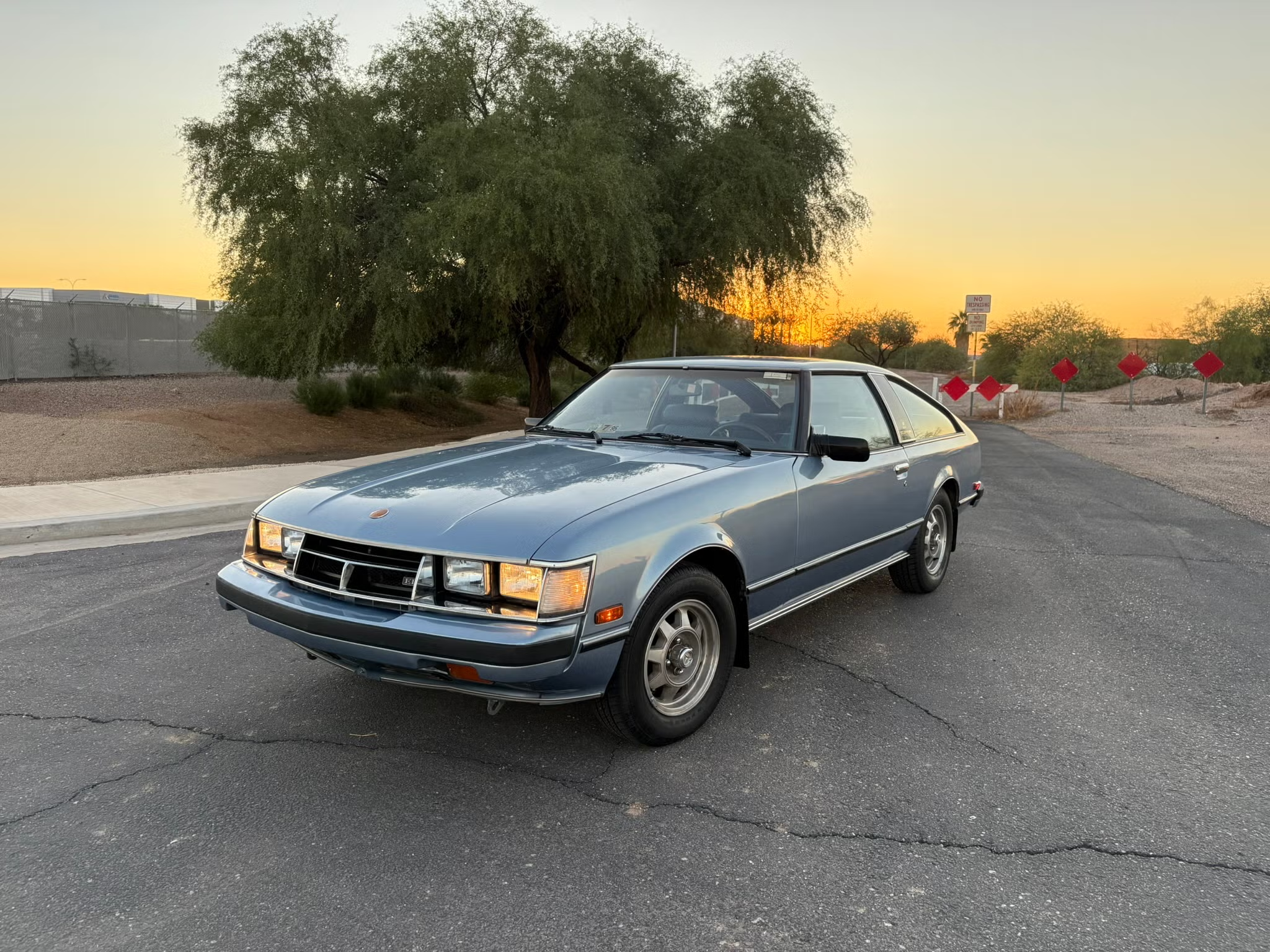
# The Original Supra Emerges: Why the 1981 Toyota Celica Supra Matters Today
A 1981 Toyota Celica Supra has surfaced on Bring a Trailer, and its arrival underscores a simple truth about automotive history: the lineage matters. This first-generation Supra, built in an era when Vin Diesel wasn't yet born, represents the foundation of what would become one of the most culturally resonant sports car nameplates in the world.
The Celica Supra badge tells the story of Toyota's positioning gamble in 1978. The company didn't call this car just "Supra" initially. It wore "Celica Supra" badging because Toyota positioned it as the luxury variant of the Celica coupe, a more premium platform with improved comfort, more power, and genuine performance credentials. That approach reveals Toyota's thinking at the time: the Supra needed to justify a higher price point through substance, not just styling.
Under the hood lived Toyota's A-series engines. The base engine in 1981 produced 110 horsepower from a 2.0-liter inline-four, supplemented by an optional 2.8-liter inline-six that delivered 145 horsepower. That six-cylinder version immediately separated the Supra from its Celica sibling and defined the car's identity. Five-speed manual or four-speed automatic transmissions sent power rearward. Specifications that seem quaint now mattered enormously then. Those six-cylinder numbers represented genuine performance in the early Eighties, when most family sedans wheezed through the day with 85 to 100 horsepower.
Styling reflected Japanese designers' growing confidence. The first Supra featured a long hood, a coupe roofline, and pop-up headlights that became an icon of that era. The proportions were balanced. The design aged better than most Japanese cars from that period because Toyota avoided excessive chrome and kept the details restrained.
The Supra's arrival in 1978 signaled Toyota's seriousness about the sports car market. The company wasn't content to build transportation appliances. The Supra competed directly with Datsun's Z-car, Mazda's RX-7, and Porsche's 924, demanding respect in segments where Japanese manufacturers were steadily proving their engineering capabilities.
First-generation Supras remain undervalued in today's collector market compared to their peers. A 1981 model sitting on Bring a Trailer draws attention from enthusiasts who understand that this car established the template for four decades of Supra production. These cars are mechanical, straightforward, and fixable by owners who possess basic skills. They lack the electronic complexity that makes modern sports cars both impressive and frustrating. Parts availability remains reasonable. Insurance costs stay affordable.
The connection to "Fast and Furious" mythology belongs to later generations, particularly the A80 platform from the late Nineties that became the franchise's most iconic machine. But the original Supra deserves recognition as the car that started Toyota's sports car narrative. It proved that a Japanese manufacturer could build a compelling, profitable, performance-oriented machine that justified premium pricing and competed with established players.
The 1981 Celica Supra represents a specific moment when Japanese automotive ambition matured into genuine execution. That car changed perceptions about where sports cars could come from and what performance could cost.