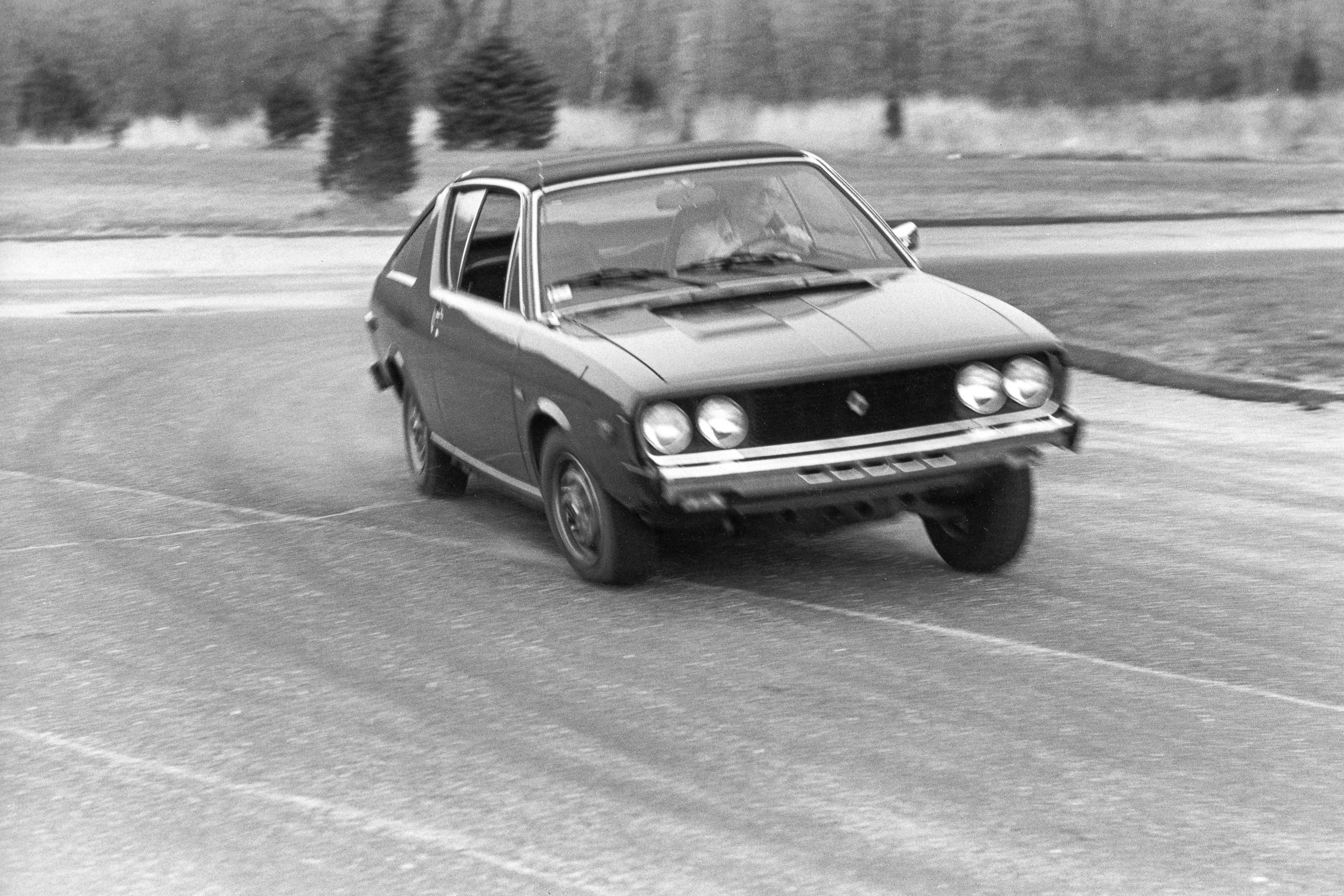
The 1976 Renault 17 Gordini represents a pivotal moment in European hot hatch history, arriving when French performance engineering pushed beyond conventional thinking. This coupe combined rally-bred aggression with affordable pricing, targeting buyers who wanted genuine speed without deep pockets.
The 17 Gordini built on the foundation of the standard Renault 17, a wedge-shaped compact that debuted in 1971. Gordini, Renault's in-house performance division, transformed the base model into something genuinely competitive. The 1976 iteration featured a 1.6-liter four-cylinder engine producing approximately 93 horsepower. That number barely registers by modern standards, but in 1976, it delivered legitimate performance. The power plant sat transversely, driving the front wheels through a manual transmission. This layout made the 17 Gordini nimble on narrow European roads and capable of near-100 mph speeds.
The visual identity mattered as much as raw performance. The 17 Gordini wore a distinctive two-tone paint scheme, typically combining bright colors with contrasting panels. The hood featured functional air vents. Side stripes ran the length of the body. Ducktail spoilers adorned the rear. These weren't mere decorations. Renault's design team understood that buyers wanted their performance intentions visible to everyone at the traffic light. The interior reflected period-correct French sensibilities. Tartan fabric upholstery. A leather-wrapped steering wheel. Gauge clusters positioned for easy visibility during spirited driving. Simplicity defined the cabin, with no power steering, no air conditioning, and no automatic transmission option. Drivers engaged directly with the machine.
The 17 Gordini arrived during a golden age for European performance cars. Lancia offered the Stratos. Fiat built the 128 Sport. Opel produced the Ascona SR. These machines competed not on displacement or displacement, but on chassis tuning, weight management, and enthusiast-focused engineering. The 17 Gordini held its own through superior handling and accessible pricing that undercut its German and Italian competitors.
Rally success informed the 17 Gordini's development. Renault's competition department extracted wins from similar powerplants in dusty, rock-strewn stages across Europe. That rally heritage translated directly to production cars. Stiffer suspension. Better brakes. A lower center of gravity achieved through smart packaging. Buyers received genuinely useful performance, not marketing theater.
The 1976 model year fell during the 17's peak relevance. Energy crisis recessions had begun tempering enthusiasm for muscle cars, but efficiency-minded European performance vehicles thrived. The 17 Gordini offered speed and character at a price point families could actually afford. No six-figure pedigree. No exotic materials. Just smart engineering in a compact, colorful package.
Today, surviving examples command respect among European classic car enthusiasts. The 17 Gordini represents an era when manufacturers believed performance belonged at every price point. Modern performance segments owe a philosophical debt to cars like this one. The 17 Gordini proved that exciting driving experiences need not bankrupt owners or require massive engines. That philosophy persists in contemporary hot hatches, where engineering cleverness often trumps raw cubic centimeters.