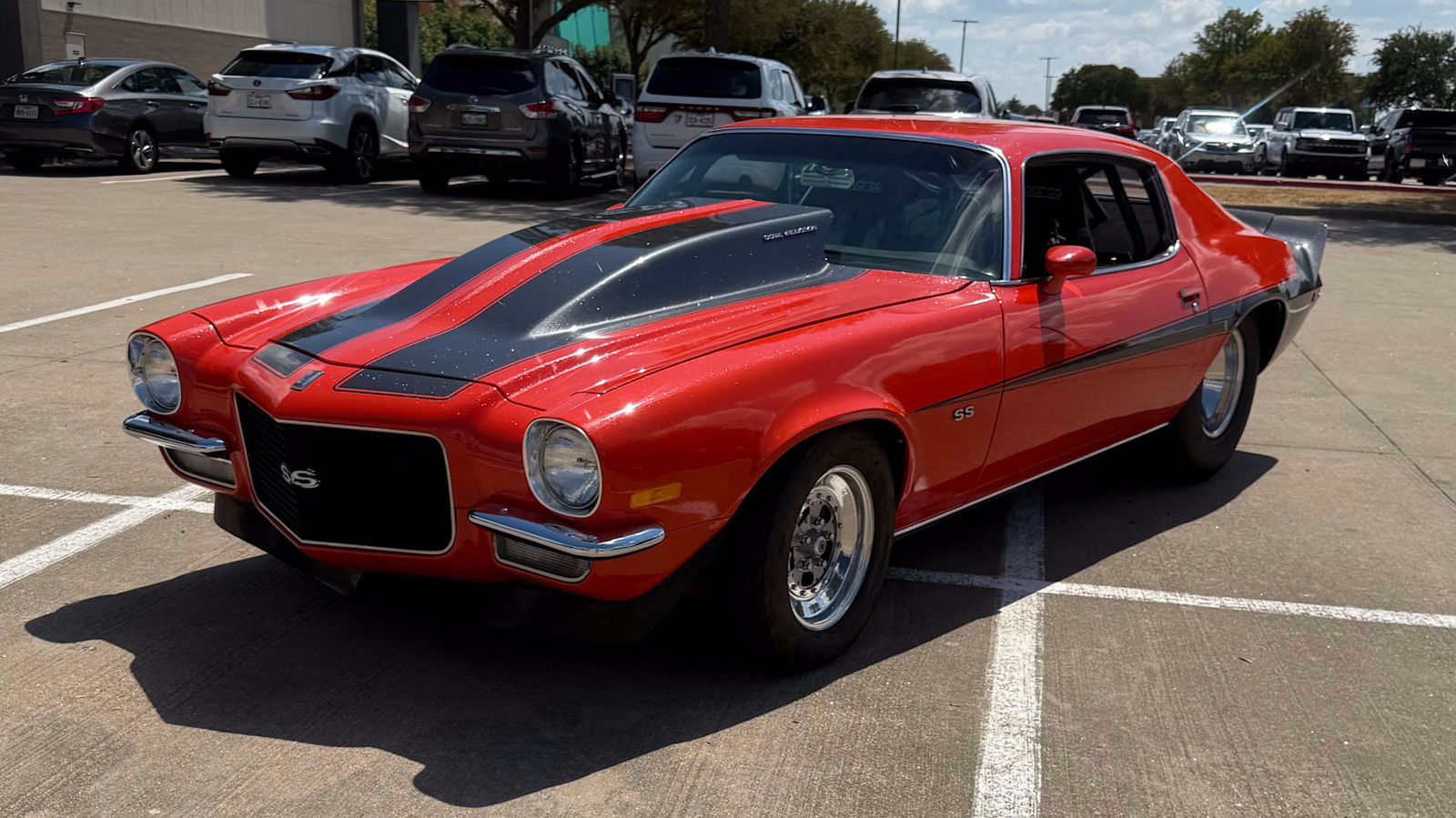
# Unrestored 1970 Chevy Camaro With 353 Miles Hits Market as Ultimate Drag-Strip Sleeper
A pristine 1970 Chevrolet Camaro RS has surfaced for sale with just 353 miles on the odometer since factory assembly. The car combines original 1970 styling with modern performance internals, delivering 850 horsepower from a big-block V8 engine built for straight-line acceleration rather than showroom stock compliance.
The Camaro's specification sheet reads like a drag racer's wish list. The big-block V8 produces 850 hp, a figure that dwarfs the original L78 engine output from 1970 models. That powerplant sits beneath a towering cowl hood, the kind of functional intake ducting that funnels cold air directly to the engine. Beyond pure propulsion, this Camaro carries a 6,000-watt stereo system that transforms the cabin into a mobile sound stage. These upgrades prioritize sensory experience. The music matters as much as the acceleration.
The RS badging denotes Rally Sport trim, a Chevrolet package that historically included hidden headlights and specific trim appointments. Chevrolet positioned the RS as the mid-range Camaro in 1970, sitting between the base model and the Z/28 performance variant. Restorers and collectors often prefer RS examples because the hidden-headlight design appeals to enthusiasts who value aesthetics alongside straight-line speed.
The 353-mile figure represents an almost factory-fresh condition. Most 1970 Camaros now exceed 50 years old and carry six-figure mileage totals. Finding one with under 400 miles suggests either long-term museum storage, a completed restomod that never saw hard use, or a combination of both. The seller has not disclosed the car's full history, but the mileage suggests minimal road time since assembly.
Big-block Camaros hold particular significance in American car culture. The 1970 generation, produced from 1970 to 1981, served as the second-generation platform. Chevrolet offered 454 cubic-inch engines in these cars, though aftermarket builders frequently opt for 427 or 430 cubic-inch stroker configurations to achieve performance numbers like 850 hp. The specific engine size in this example remains unconfirmed, but the horsepower output indicates serious machine work beyond stock specifications.
The drag-strip orientation becomes clear from the cowl hood design and the power delivery. Drag racing demands straightforward, explosive acceleration in controlled environments. Street performance requires broader usability. This Camaro prioritizes the former. The 6,000-watt stereo adds unexpected refinement for a car optimized for quarter-mile runs. Most dedicated drag machines carry minimal creature comforts, so the audio system suggests this car balances show and go.
The 1970 Camaro market has strengthened considerably. First-generation models (1967-1969) command premium pricing, but second-generation RS models with low mileage now attract serious collectors. Factory big-block cars from 1970-1972 hold particular appeal because Chevrolet discontinued the 454 Camaro after 1972 due to insurance costs and emissions regulations.
The asking price has not been disclosed, but comparable examples with significantly higher mileage sell between $40,000 and $75,000 depending on condition and drivetrain. A sub-400-mile example with 850 hp and documented provenance likely commands premium pricing above $80,000. The combination of low mileage, period styling, and contemporary performance engineering creates a rare commodity in today's collector market.