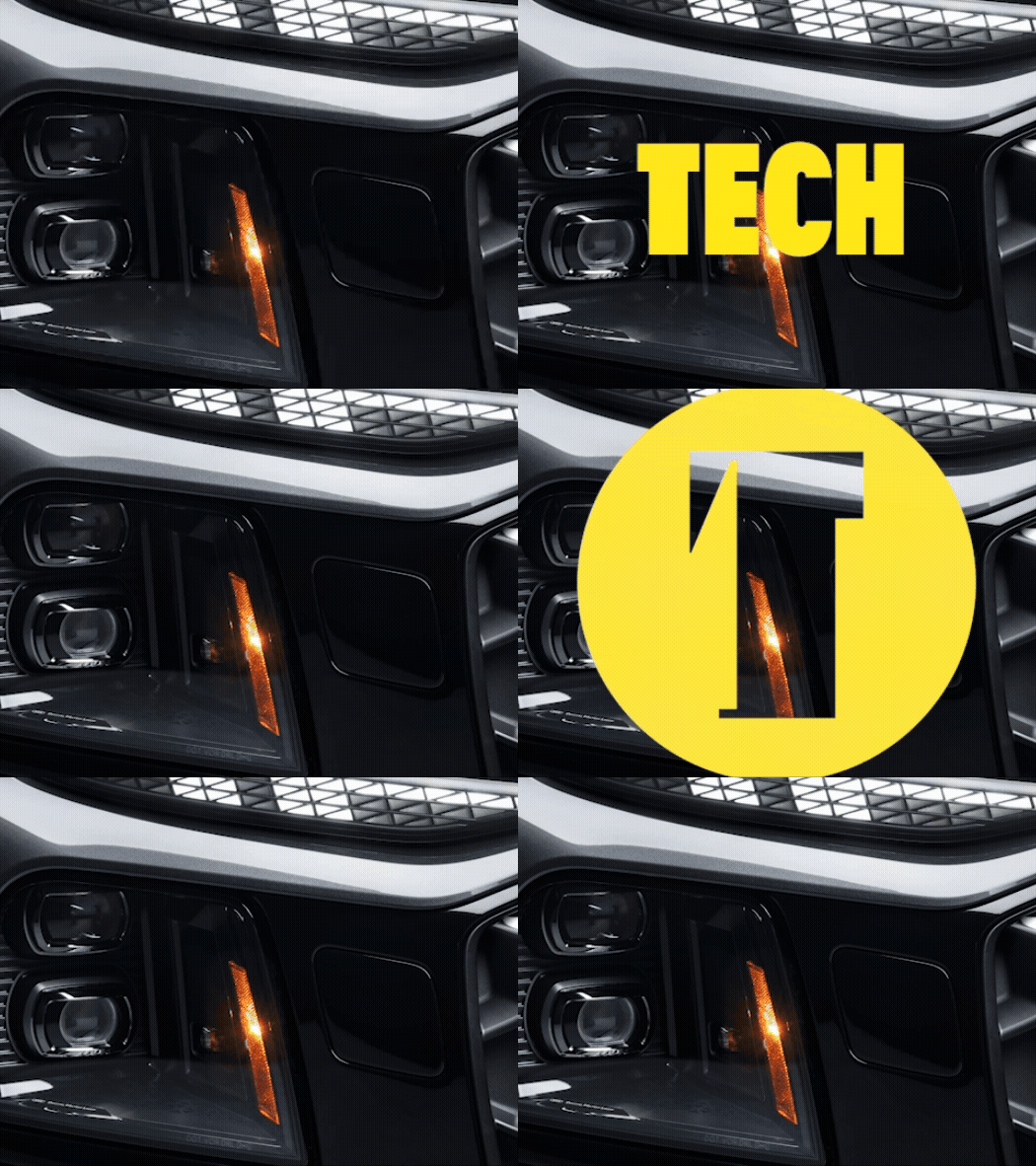
Audi has engineered new Digital Matrix LED adaptive driving beams for the U.S. market that comply with American regulations, debuting the technology on the Q9 flagship SUV. The system uses 25,600 micro-LEDs instead of the mirror-based technology with 1.3 million micro-mirrors found in Audi's previous adaptive beam headlights.
U.S. regulations forced Audi to design completely new hardware and software. European adaptive driving beam headlights do not comply with NHTSA rule FMVSS 108, so automakers must engineer separate versions for American roads. Michael Kruppa, head of front light development at Audi, explained that the regulations required changing not just the light source to LED but the entire headlamp housing, which now stacks two LED modules vertically.
A core challenge involved meeting both NHTSA legality requirements and Insurance Institute for Highway Safety testing standards. NHTSA requires a static low-beam pattern, while IIHS ratings prioritize maximum low-beam illumination and minimal glare. Audi solved this by separating the low-beam module, which remains static and doesn't change pattern, from a micro-LED module handling high beams and adaptive driving beams.
The regulations also required substantially larger darkness tunnels to avoid glare on oncoming traffic. Kruppa used a vivid comparison: European systems create tunnels roughly hitting an oncoming car's outer mirror, while U.S. regulations require tunnels so large "you could place a wild pig next to the car, and the tunnel will include the car plus the wild pig."
Rivian and Tesla launched adaptive driving beam vehicles first after NHTSA approved the technology in 2022. Mercedes-Benz's S-Class and Audi's Q9 are among the first of the latest wave.