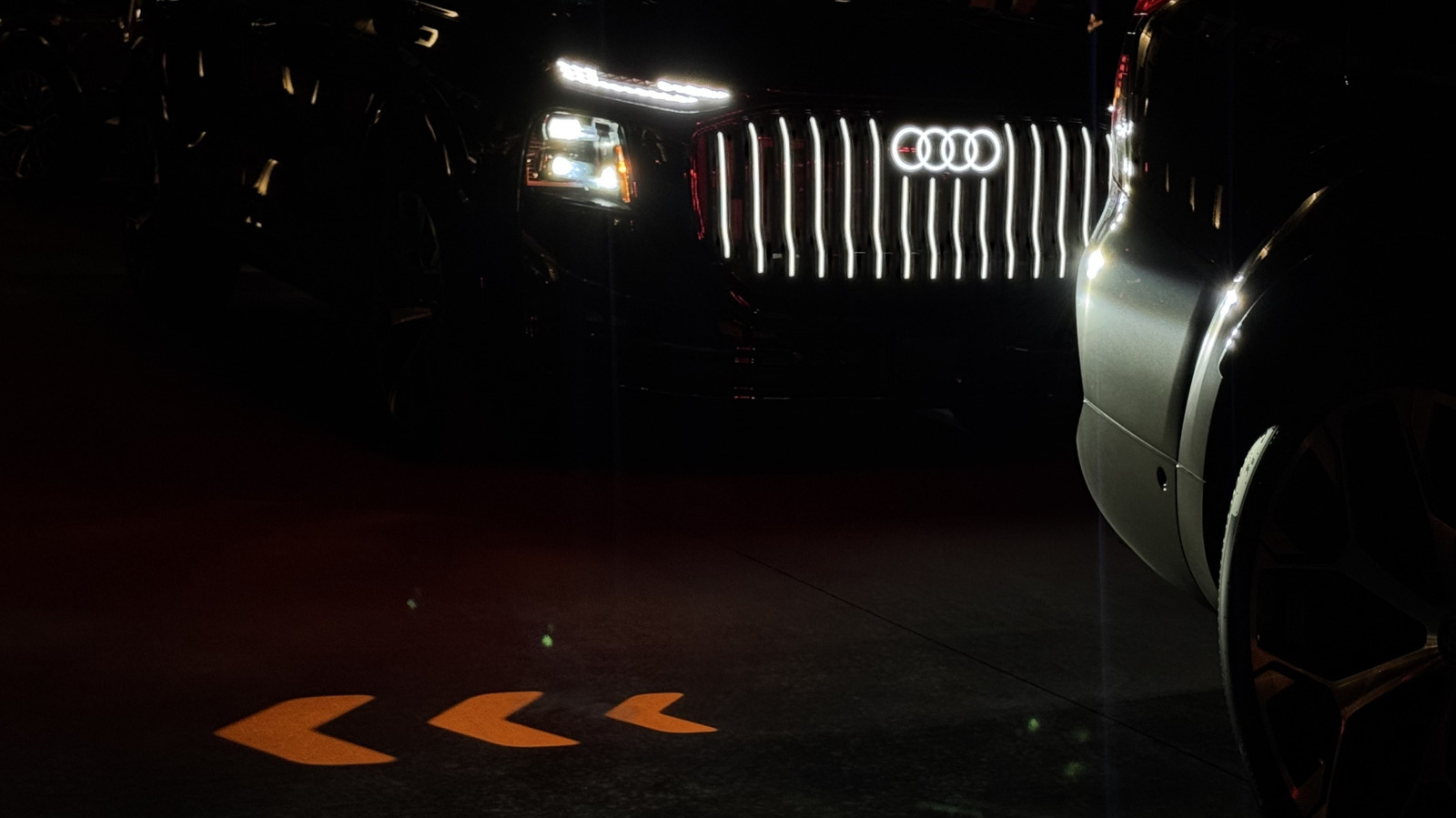
Audi's latest generation of matrix headlights finally overcomes the regulatory hurdle that has blocked these advanced systems from U.S. roads for years. The Q9 and SQ9 models become the first Audi vehicles to deliver Digital Matrix LED technology within the constraints of American safety standards, a breakthrough that resolves the tension between European automotive innovation and American legal requirements.
Matrix headlights use individually controlled LED segments to shape the light beam with precision. This allows the system to illuminate road sections selectively, maintaining full brightness ahead while dimming zones where oncoming traffic appears. The technology improves nighttime visibility without creating the glare that prompted U.S. regulators to restrict such systems. Previous matrix headlight implementations faced certification challenges because their beam patterns didn't conform to Federal Motor Vehicle Safety Standard 108, which governs headlight performance in America.
The Q9 and SQ9's Digital Matrix system adds another layer of sophistication. The headlights now project dynamic turn signals and navigation cues directly onto the road surface ahead of the vehicle. Drivers see directional arrows on the pavement during turns, and the system can display routing information during navigation sequences. This creates a new form of driver communication that exists between the vehicle and the road itself, rather than relying solely on traditional dashboard displays or exterior lighting.
This innovation addresses a long-standing problem in the U.S. market. Audi and other European manufacturers have deployed matrix headlights across their lineups in Europe, where regulations permitted the technology after thorough testing proved their safety record. American drivers received only conventional adaptive headlights that lack the granular control of matrix systems. The regulatory gap reflected conservative U.S. safety standards that took years to evolve and accept matrix technology as an acceptable replacement for older headlight rules.
The Q9 represents Audi's flagship SUV offering in the American market, positioning itself against competitors like the BMW X7, Mercedes-Benz GLS, and Range Rover. The SQ9 variant adds sportier styling and performance calibration. Both vehicles now arrive with technology that was previously unavailable to U.S. consumers, giving Audi a competitive advantage in the luxury segment where technical sophistication commands premium pricing.
The Federal Motor Vehicle Safety Administration's updated headlight requirements represent a significant regulatory shift. These revised standards recognize that LED matrix technology, when properly calibrated and equipped with failsafe mechanisms, delivers safer nighttime visibility than conventional systems. The update signals that American regulators have moved beyond blanket technology bans toward performance-based standards that evaluate actual safety outcomes rather than restricting specific technical approaches.
This development matters beyond Audi. Once the Q9 and SQ9 prove successful in the marketplace and face no safety-related complaints tied to the headlight system, other manufacturers will follow with their own matrix implementations. BMW, Mercedes-Benz, and other luxury brands already have matrix systems engineered and awaiting certification. The regulatory breakthrough essentially opens a door that has been sealed shut for the past decade.
The projected turn signal feature adds practical value to everyday driving while demonstrating how automakers can use existing technology in creative ways. Rather than adding cost or complexity, the road projection capability builds on the headlight's existing LED infrastructure and software architecture. Drivers in low-light conditions or unfamiliar areas benefit from the navigational assistance, though the feature's long-term adoption depends on consumer acceptance and whether visibility conditions actually warrant the added functionality.