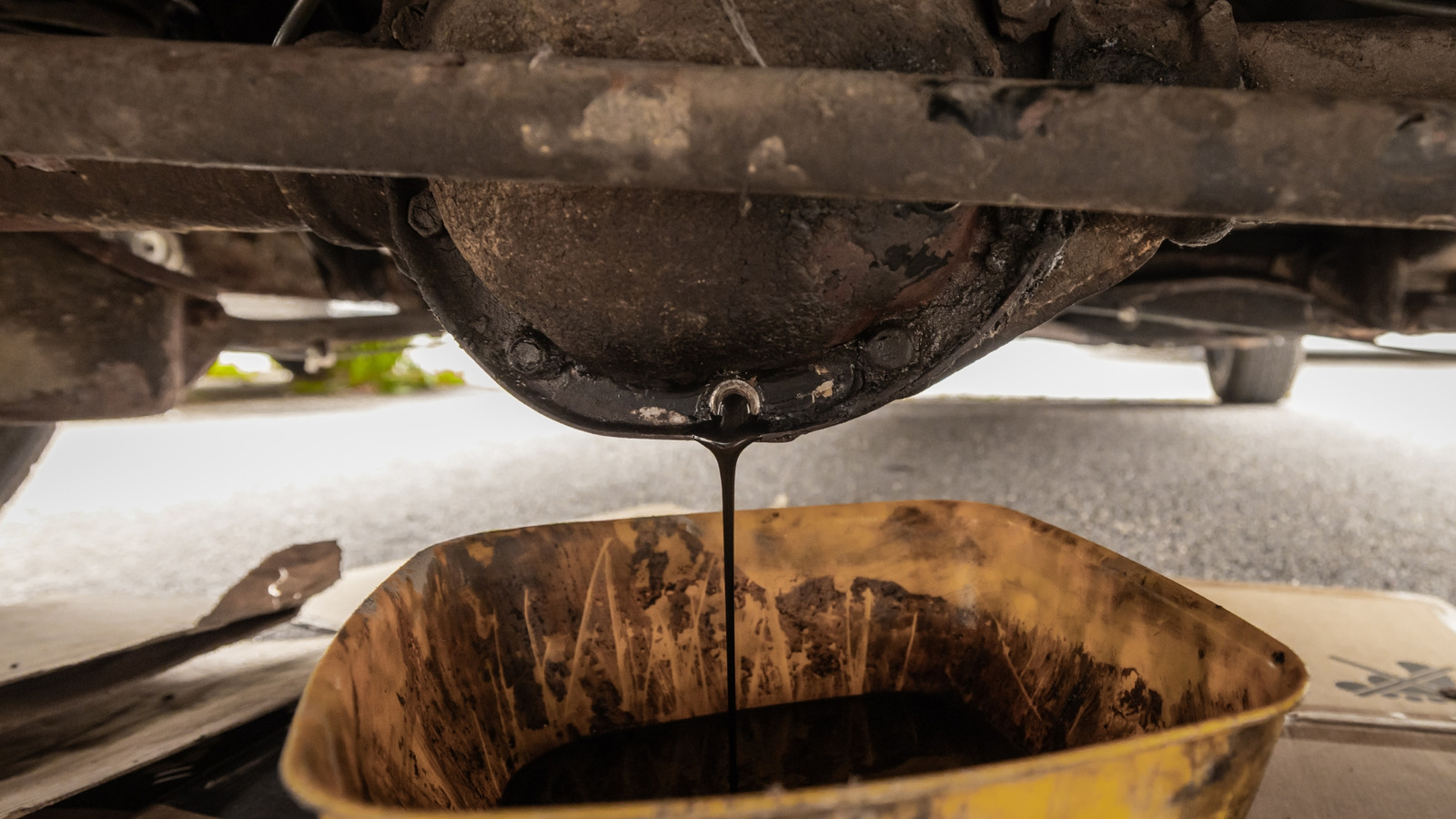
# Why Hypoid Differential Gear Oil Demands Its Own Specification
Car owners often treat motor oil as interchangeable. That assumption destroys differentials. Hypoid differential gear oil operates under physics that engine and transmission fluids never encounter, which is why manufacturers specify distinct products for each system.
A hypoid differential employs angled gears that mesh at non-parallel angles. This geometry creates extreme pressure concentrations where the pinion gear attacks the ring gear. The contact stress reaches levels that dwarf what happens inside an engine or transmission. Engine oil cannot handle this punishment.
Engine oil prioritizes detergency, viscosity stability across temperature swings, and protection against combustion byproducts. Transmission fluid emphasizes smooth flow, friction stability for clutch packs, and thermal resistance for hydraulic circuits. Neither formula addresses hypoid gear lubrication.
Hypoid gear oil contains extreme pressure additives, specifically sulfur and phosphorus compounds. These additives chemically bond to metal surfaces under extreme load, forming a film that prevents metal-to-metal contact between gears. Engine oil lacks these additives in sufficient concentration. Without them, hypoid gears experience scuffing, scoring, and accelerated wear that can fail a differential in thousands of miles.
Viscosity specifications differ sharply. A differential running at highway speeds generates less heat than an engine, but experiences concentrated pressure spikes. The oil must remain thick enough to maintain film strength under peak loads while still flowing at cold starts. Engine oil prioritizes easier cold flow and thinner viscosity for fuel economy. Using 5W-30 engine oil in a differential that requires 75W-90 gear oil means inadequate load protection.
Friction modifiers present in transmission fluid create another problem. Transmissions need specific friction coefficients to modulate clutch engagement and brake band application. A differential needs low friction to minimize heat and parasitic losses, but extreme pressure film strength matters more. Adding transmission fluid to a differential alters friction characteristics in ways that can cause binding or noise.
Modern differentials grew even more sensitive. Limited-slip and locking differentials use friction clutches or electronic actuators that depend on specific fluid properties. Synthetic hypoid oils with precise additive packages became necessary. Pouring the wrong oil into a limited-slip diff can deactivate the locking mechanism or cause chatter.
The consequences escalate quickly. Hypoid gear damage starts silently. Early scuffing releases wear particles that contaminate the remaining oil. Heat generation accelerates degradation. The differential seizes or the gears fail suddenly, stranding drivers and triggering thousand-dollar rebuild bills. Some damage becomes irreversible within hours.
Manufacturers list differential oil specifications in the owner's manual and on the filler plug itself. Common specs include 75W-90, 75W-110, or synthetic equivalents. Some vehicles require limited-slip additives or proprietary formulations. Using anything else voids warranties and invites mechanical failure.
The aftermarket complicates matters. Some synthetic gear oils claim universal compatibility. Most deliver adequate protection, but performance varies. Amsoil, Royal Purple, and Mobil 1 produce gear-specific formulations that meet or exceed OEM specifications. Cheap off-brand alternatives often omit sufficient extreme pressure additives.
Differential service intervals typically run 30,000 to 60,000 miles under normal conditions. Severe use, towing, or mountain driving demands more frequent changes. Neglected differentials burn through oil faster and fail earlier, making regular service the cheapest insurance against failure.
The one-size-fits-all oil myth dies in the differential. Each fluid system in a vehicle handles distinct demands. Using the right product means reliable differentials and years of trouble-free operation.