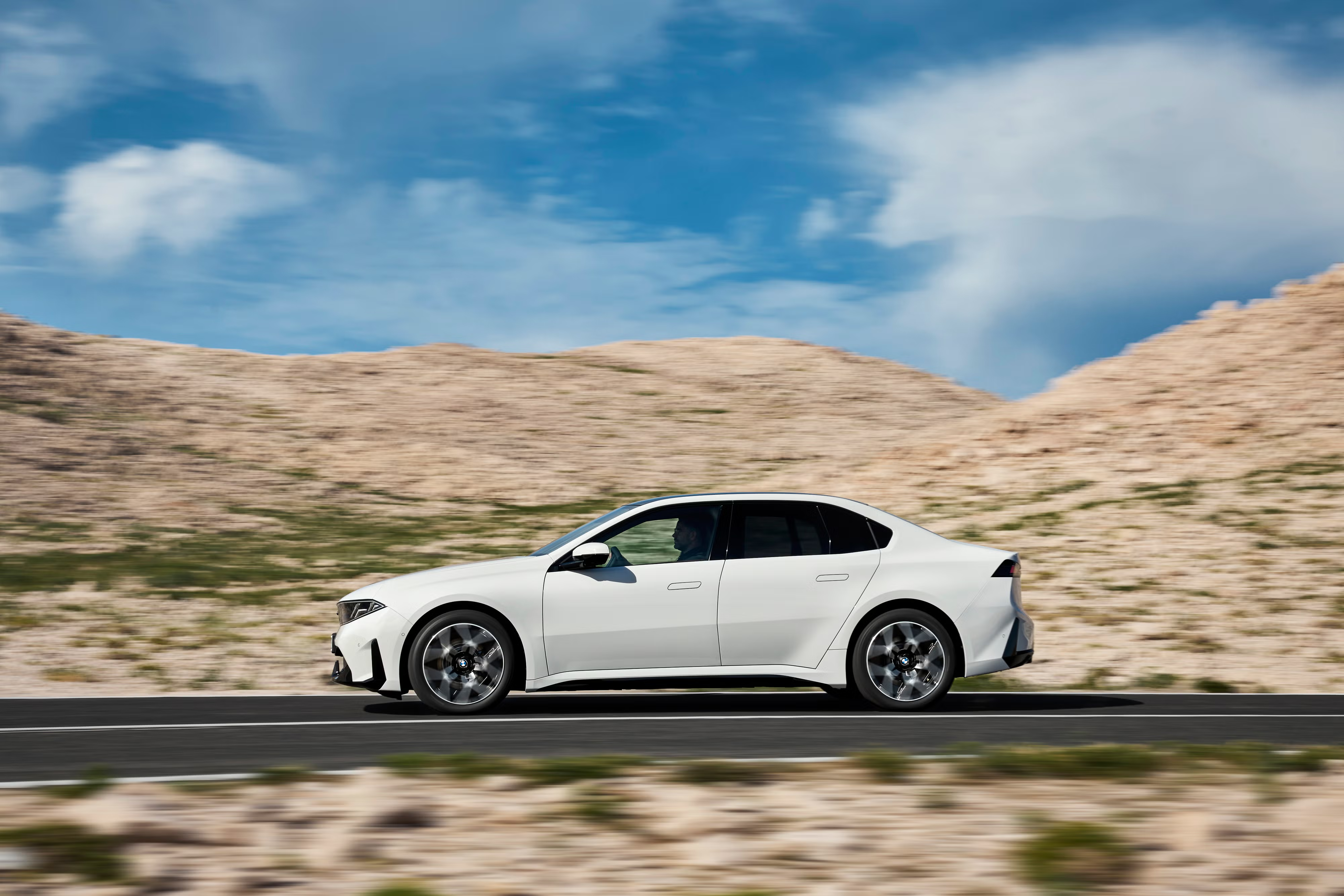
BMW built the 2027 i3 50 xDrive as a dedicated electric sedan rather than adapting the gas-powered 3-series platform. The two cars share only the front grille, mirror housings, and possibly door handles. Everything else differs, including a 1.5-inch longer wheelbase, extra height and width, and a redesigned cabin pushed forward to accommodate the electric drivetrain.
The i3 uses dual motors. A 165-horsepower induction motor drives the front wheels, while a 322-horsepower synchronous motor powers the rear, combining for 463 horses and 476 pound-feet of torque. That power moves the sedan to 60 mph in an estimated 4.2 seconds. The rear motor uses the same technology as the i4, but the front motor is new and more efficient because it generates less drag when disengaged.
A 112-kWh battery pack delivers an estimated 450 miles of range, significantly larger than the i4's 84-kWh unit. The 800-volt architecture supports 400-kilowatt charging at compatible stations. The car uses a NACS port with an included SAE Combo adapter.
The suspension tuned without optional M adaptive dampers felt taut but composed. BMW's "Heart of Joy" software manages steering, friction braking, regenerative braking, and throttle inputs in one-tenth the time of previous systems. Brake-based rear differential control operated smoothly. Steering was accurate but lacked the feel of the gas M350. The 17.9-inch touchscreen and Panoramic Vision display performed well. A panoramic glass roof provided extra headroom, and rear legroom exceeds the M350's, though front toe space can tighten with the seat lowered. Trunk volume measures 15 cubic feet.
The i3 50 xDrive launches in the first quarter of 2027 at $62,850. A sportier i3 M60 model is coming.