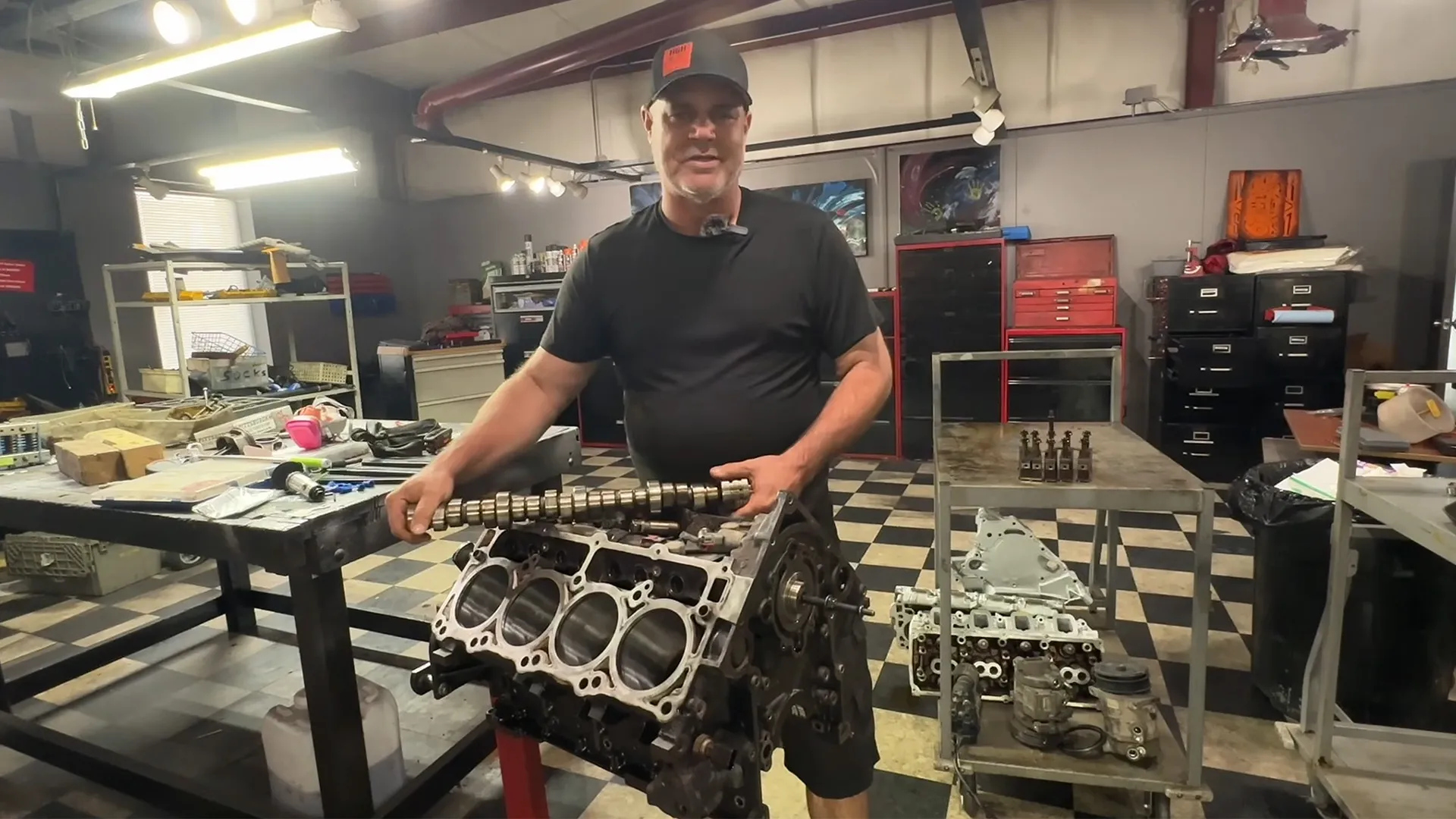
Dave Miller from Hemi Garage Hacks may have finally solved the mystery of why 5.7-liter and 6.4-liter Hemi V8s built from 2009 onward tick like angry metronomes, but his discovery raises a far more troubling question: How did Chrysler let this happen in the first place? After more than 15 years of complaints affecting Ram, Jeep, Dodge, and Chrysler vehicles, Miller's borescope investigation reveals a damning design flaw—the oiling hole that lubricates lifter rollers simply doesn't exist in post-2009 models. That's not a manufacturing defect or a quirk of production tolerance. That's a fundamental design change.
Miller's research is thorough and convincing. By comparing an early Hemi to a 2009-and-up model using a borescope inside the oil gallery, he demonstrated that the tiny hole allowing oil to flow into the lifter at the top of its rotation is completely absent on newer engines. The reason? Chrysler redesigned the cylinder block to accommodate a longer camshaft snout required for variable valve timing, but apparently didn't account for the consequences. The result is lifter rollers starving for lubrication, their needle bearings disintegrating, and cam lobes grinding smooth—all while drivers hear that maddening tick and risk catastrophic engine failure if they ignore it.
What's particularly galling is that this isn't a secret anymore. A 30-year Chrysler service department veteran has validated Miller's findings in the comments of his YouTube video, suggesting that people inside the company have understood this problem for years. Yet Hemi owners have been left to suffer through failed engines and expensive rebuilds with no official acknowledgment or recall, let alone a factory solution. Miller is now developing a modified lifter design as a workaround and has a GoFundMe campaign with $4,369 raised toward his $5,000 goal at the time of publishing.
While we should celebrate Miller's ingenuity—this is genuine engineering detective work—we shouldn't mistake a hobbyist's fix for what should have been Chrysler's responsibility. The automaker benefited from years of warranty savings by essentially ignoring a design flaw that affects multiple product lines and millions of vehicles. A modified lifter or other aftermarket solution might save individual owners from catastrophe, but it shouldn't let Chrysler off the hook. After more than a decade of tick-tick-ticking Hemis, the company owes its customers transparency about this issue and serious consideration of a factory fix, not just a shrug and a GoFundMe campaign.