The 2027 Rivian R2 Performance and 2026 Tesla Model Y Performance bring contrasting strengths to the compact EV SUV segment. The R2 offers an intuitive, spacious cabin and distinctive design, while the Model Y delivers handling prowess and advanced driving assistance capability.
Rivian launched the R2 exclusively in Performance trim for the 2027 model year, with a $46,485 base model planned for next year. The test vehicle carried the Launch package, which includes a hands-free driving assistance system and 4400-pound tow package. With $2,000 Launch Green paint, the total reached $61,485. The Tesla Model Y Performance tested here included Full Self-Driving (Supervised) with a three-year subscription ($3,564), bringing its price to $63,194.
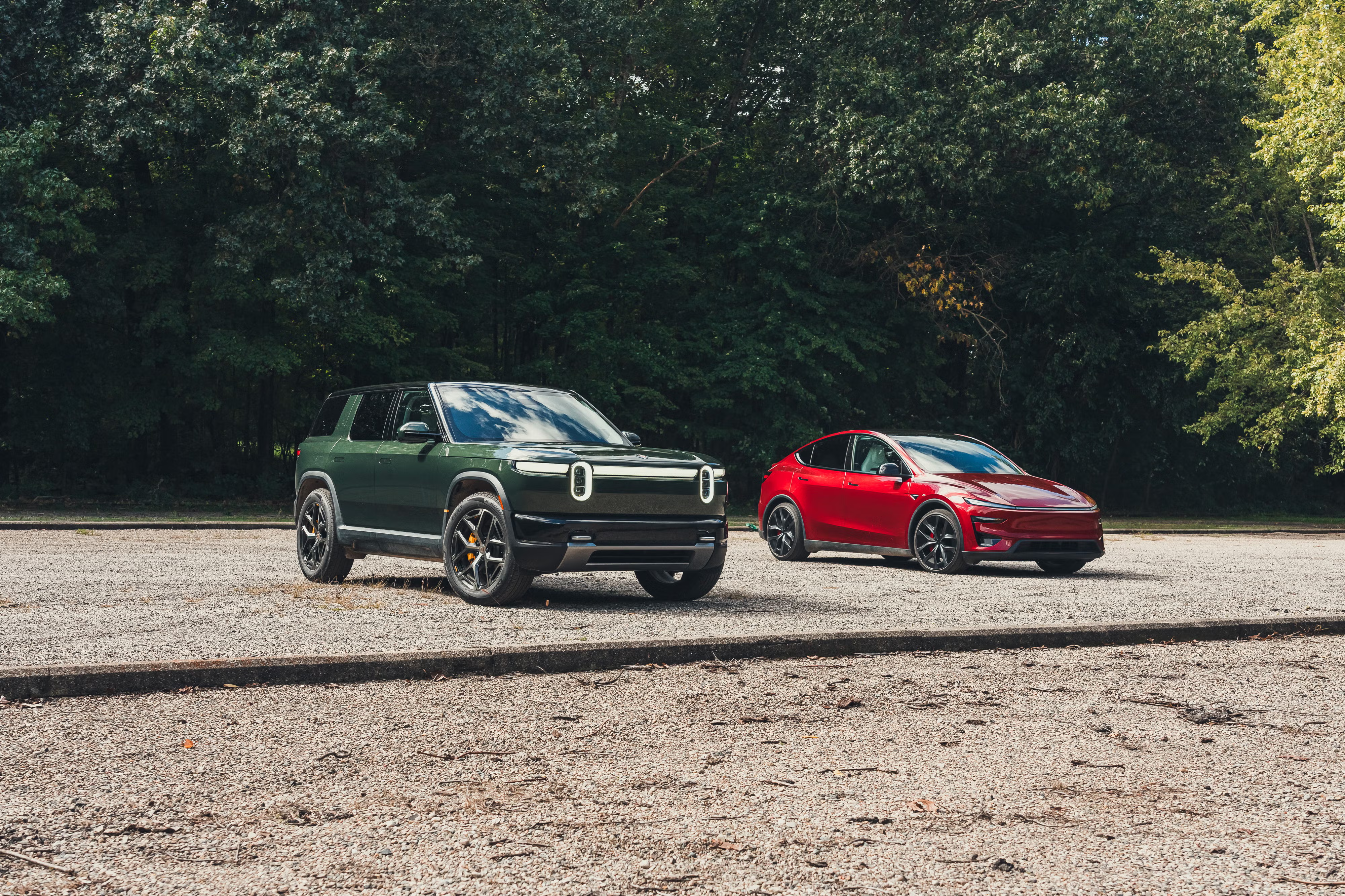
The R2 is rectangular in shape, resembling a shrunken R1S, with distinctive ovoid headlights and a front bumper featuring an integrated silver skid plate and tow hooks. The Model Y displays Tesla's egg-like silhouette and, in Ultra Red, appears sharper with a reshaped front bumper and rear lip spoiler. Tesla's front light bar has a menacing appearance, while Rivian's headlights appear more affable.
Inside, the Model Y centers on a bare-bones approach around a 16-inch touchscreen, with simple dashboard and door panel designs. Carbon-fiber inserts add sportiness, but Tesla's vegan faux leather feels plasticky. The R2 presents a more upscale cabin with layered dashboard design, synthetic leather upper surfaces, tactile wood trim, and textured fabric below. Hard plastics are confined to lower door panels and the center console.
Tesla requires most functions through its 16-inch touchscreen, including climate controls, drive modes, and shifting between drive and reverse. The system is responsive with an easy-to-read interface, but cluttered with tasks. It includes a dash cam, web browser, arcade games, Zoom, a Theater app for streaming while parked, and Grok AI assistance. Rivian complements its 15.6-inch center touchscreen with an 11.5-inch digital gauge cluster and unique multifunction thumbwheels on the steering wheel that control volume, drive modes, fan speed, and temperature through pushing, scrolling, and side movements. Rivian's interface uses illustrations and a mascot for its Gear Guard security system. Neither system permits phone mirroring, though Rivian's navigation map appeared less current than Apple Maps and Waze.
The Rivian's rear seat offers significantly more space. Its tall roof and flat floor provide ample headroom and legroom, while a low beltline and glass roof create an open feeling. The Model Y felt cramped for taller adults, with less legroom and reduced cargo space due to its sloping roofline. Testing showed the R2 accommodated 10 carry-on suitcases in cargo, compared to seven in the Model Y. The R2's rear glass rolls down into the liftgate. The Tesla compensates with an 8.0-inch rear touchscreen for adjusting heated seats, climate, audio, and streaming video. Both provide USB-C ports for rear passengers.
Tesla fits the Model Y Performance with a trailer hitch as standard and can tow up to 3500 pounds. Rivian's Launch package includes a 4400-pound tow package.