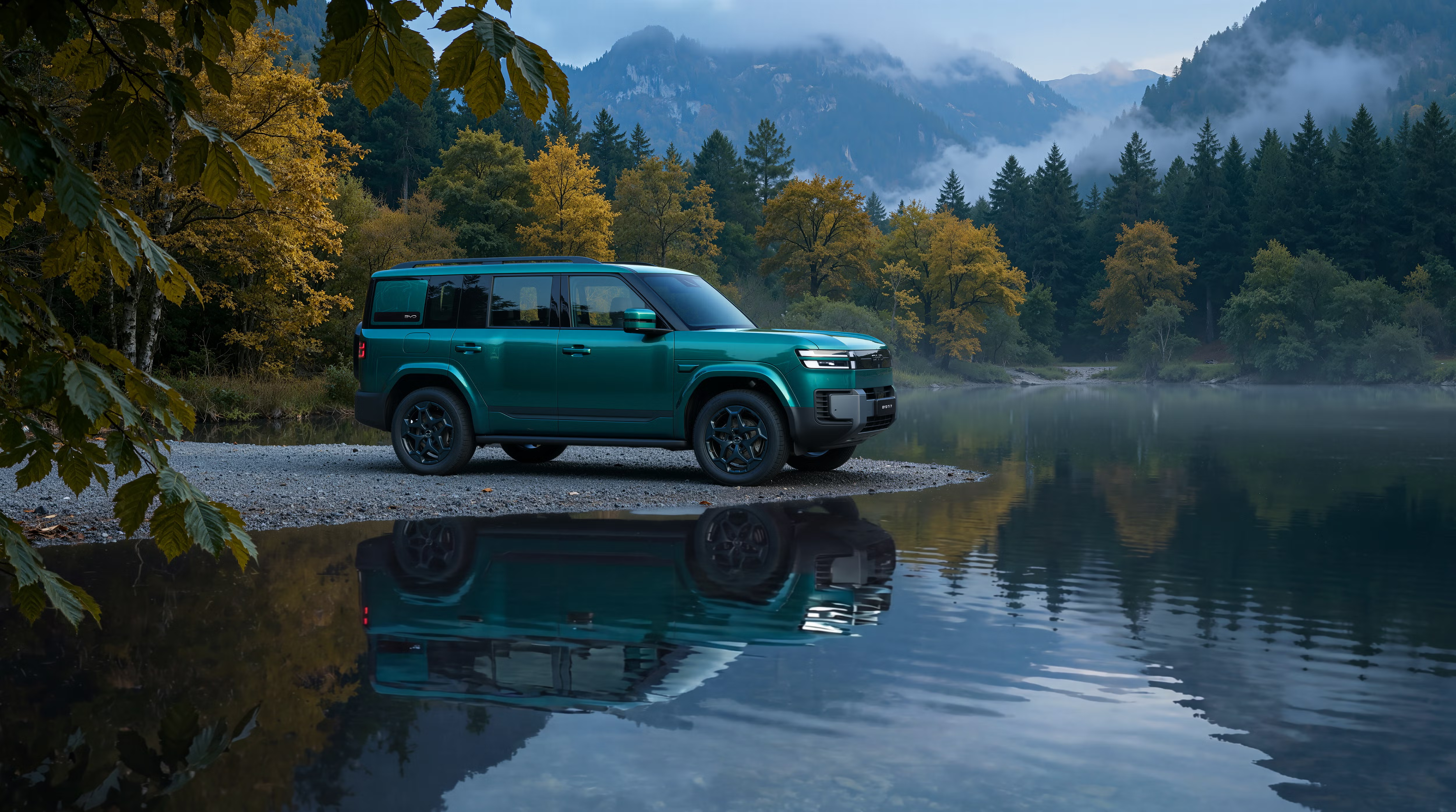
Land Rover's court-ordered raid of BYD's Dutch offices last August signals serious concern about the BYD Ti7, a Chinese-made three-row hybrid SUV that shares undeniable visual DNA with the Land Rover Defender: both feature a boxy shape and an unusual square of painted surface floating above the beltline. But if the company thinks it can win an intellectual property case based on appearance alone, it should look back at its own legal history for a cautionary tale.
The precedent is not encouraging. Land Rover already litigated over design similarity when the Ineos Grenadier was cleared for sale in 2020 despite looking much like an original Defender. That loss should inform how aggressively Land Rover pursues the BYD Ti7 case, which a Dutch court will decide whether to proceed with later this week. Visual similarity, standing alone, has proven insufficient in automotive design disputes. Judges understand that boxy SUVs with heritage appeal occupy the same design space, and that certain functional requirements—cargo capacity, off-road capability, visibility—naturally lead to similar silhouettes.
What could matter more are the specifics that investigators sought during the raid: documents surrounding how a Land Rover Defender was used in the Ti7's development. If Land Rover can prove that BYD systematically reverse-engineered the Defender or engaged in deliberate copying of proprietary design methods, the case becomes substantially stronger. Generic similarity between finished products is one thing; evidence of intentional design appropriation is another. The raid suggests Land Rover believes it has found such evidence, but appearance alone will not prove it in court.
The market dynamics also complicate Land Rover's position. The BYD Ti7 starts at the equivalent of $27,000 below the most affordable three-row Defender in the U.K. market and offers a seven-seat plug-in hybrid layout while Land Rover's plug-in Defender is only available in England with six seats. This represents a different value proposition in a different market segment, which judges may view as evidence that the vehicles serve distinct consumer needs despite their visual similarities.
Land Rover has legitimate concerns about design theft in an increasingly competitive global EV market. But pursuing this case based primarily on how the two SUVs look will likely end the same way the Grenadier dispute did. The company should either produce smoking-gun evidence of misappropriation during the Dutch court proceedings or consider whether its energies are better spent innovating rather than litigating over what may simply be convergent design in the crowded SUV market.