Jaguar and Tom Walkinshaw Racing tested the XJ220's twin-turbo V6 engine using a disguised 1989 Ford Transit van rather than a prototype of the car itself. The Transit's cargo bed concealed a 3.5-liter twin-turbo V6 originally rated at 540 horsepower, along with racing-spec running gear. The only visual giveaways were ZR performance tires and alloy wheels identical to those on the final XJ220.
Jaguar kept the XJ220 development secret, making the nondescript Transit van an ideal test platform that would not draw attention from competitors or the public. The V6 engine traced back to the MG 6R4 rally car. TWR reportedly acquired the engine's rights and design infrastructure from MG after Group B racing ended in 1986.
After TWR completed its testing, the Benetton Formula 1 team acquired the Transit and used it as a parts delivery vehicle. Don Law Racing, described as the world's leading XJ220 specialist, later restored the van and has since displayed it at events like the Goodwood Festival of Speed.
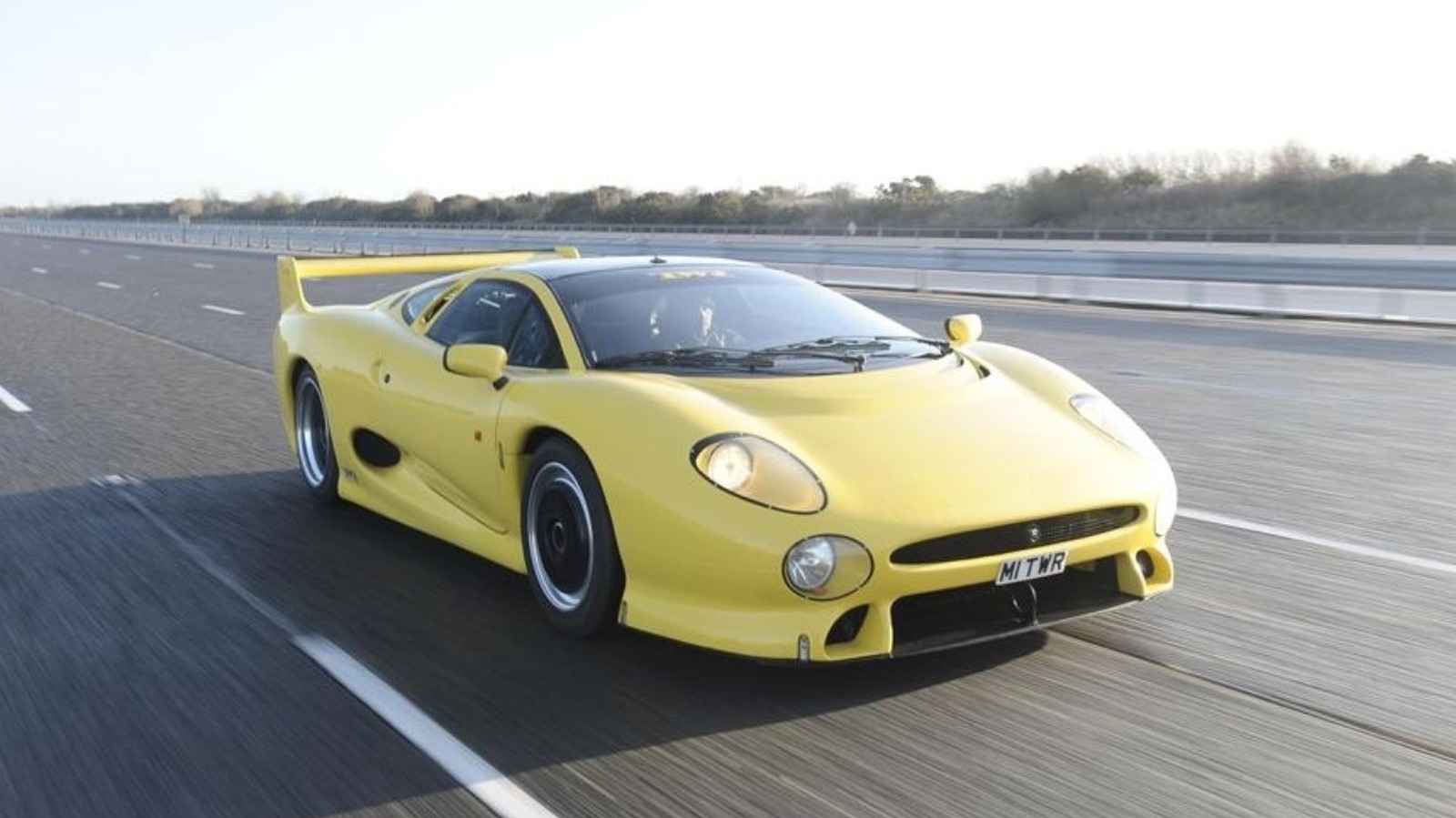
The XJ220 switched from a planned V12 and all-wheel drive to the twin-turbo V6 and rear-wheel drive configuration late in development. It achieved a 217-mph top speed in 1992, becoming the world's fastest production car at the time.