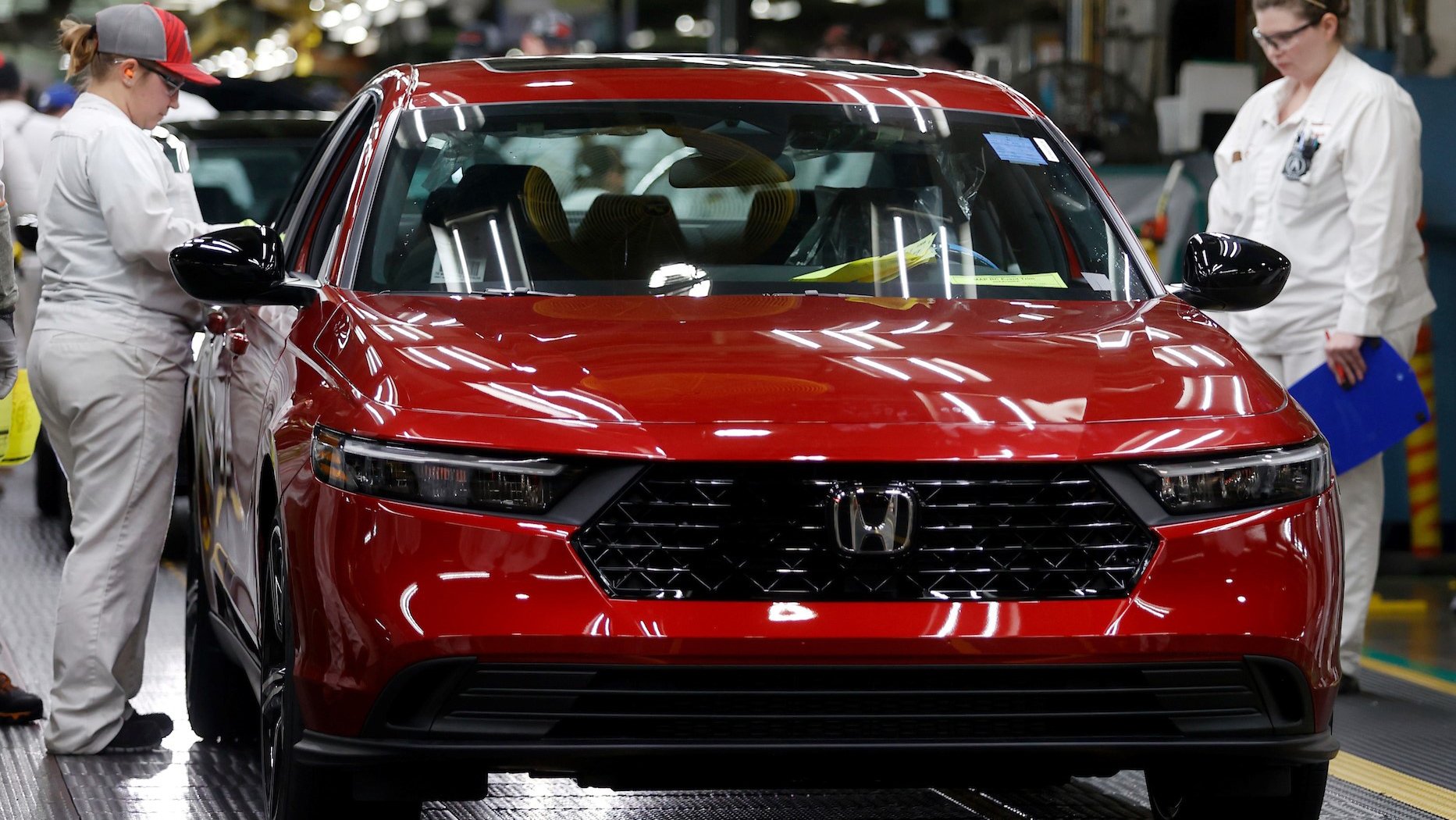
Honda plans to build an eighth manufacturing facility in North America, betting heavily on the region's outsized importance to its bottom line. North America delivered 40 percent of Honda's global sales last year, making it the company's most critical market by a substantial margin.
The planned factory would expand Honda's production capacity precisely when demand remains strong for its core lineup. Honda already operates seven North American plants across the United States, Canada, and Mexico, churning out Civics, Accords, CR-Vs, and Pilots that dominate their segments. An eighth facility signals confidence in sustained consumer appetite even amid broader industry uncertainty.
This expansion reflects a broader strategic shift in automaking. Honda faces pressure from two directions simultaneously. Chinese competitors are muscling into affordable segments with compelling EVs, while legacy automakers pour billions into electrification. Building incremental capacity in North America lets Honda hedge its bets. It can continue optimizing internal combustion production while maintaining flexibility to pivot toward electric vehicles if market conditions demand it.
The timing matters. Supply chain constraints that plagued automakers through 2022 and into 2023 have largely cleared, giving manufacturers room to expand. Labor availability in North America remains challenging, but higher wages at union facilities have proven palatable for profitable segments. A new plant would likely follow the labor agreement Honda struck with the UAW, standardizing wages and benefits across its American operations.
Geographically, a new factory could serve multiple purposes. Locating closer to key markets reduces logistics costs. It also hedges against tariff risks and trade policy shifts that have reshaped automotive economics. Mexico remains attractive for cost reasons, while U.S. plants qualify for potential EV tax incentives and benefit from "Buy American" sentiment.
Honda's eighth factory represents calculated optimism rather than blind expansion. The company reads market signals carefully. North America's 40 percent share of global