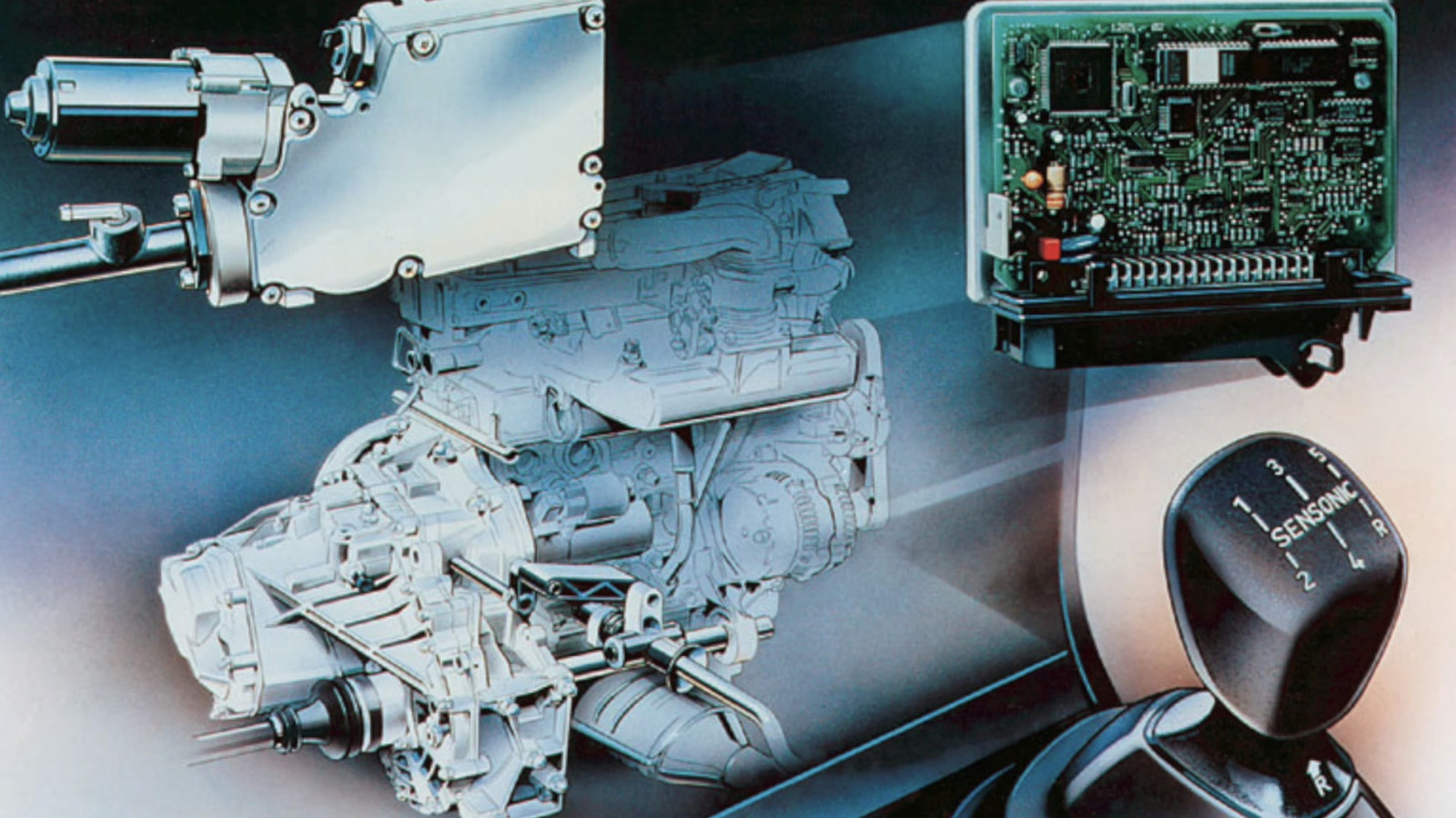
Saab's Sensonic transmission represented an elegant engineering solution that arrived in the wrong market at the wrong time. The Swedish automaker introduced this clutchless manual gearbox in the late 1990s, offering drivers the mechanical engagement of a true manual transmission without the physical demands of operating a separate clutch pedal. Despite its technological ingenuity, the system failed to gain traction and quietly disappeared from Saab's lineup within a decade.
The Sensonic system operated through an electro-hydraulic actuator that managed clutch engagement automatically while preserving manual gear selection. Drivers could shift gears using a conventional shifter pattern, but the transmission disengaged and re-engaged the clutch electronically at the precise moment needed for smooth gear changes. This hybrid approach promised the driving engagement of a manual with the convenience of an automatic, theoretically appealing to enthusiasts who wanted control without fatigue on congested commutes.
Saab equipped the 9-3 and 9-5 sedans with Sensonic technology during its mid-career production run. The system delivered on its technical promise. Shifts executed cleanly, response times improved, and fuel economy matched traditional manuals. Engineers had solved a legitimate problem. Yet sales figures told a different story. Customers proved unwilling to embrace the unconventional transmission, regardless of its objective advantages.
Several market forces conspired against Sensonic's survival. First, the traditional manual transmission was already losing appeal in North America and Europe during the late 1990s and 2000s. Automatic transmissions grew smoother, faster, and more efficient. Consumers increasingly viewed manuals as anachronistic rather than desirable. A complicated middle-ground option confused buyers rather than converting them. Second, Sensonic required specialized dealer service and manufacturer support. Repairs demanded technicians trained on unfamiliar systems. This lack of service infrastructure intimidated potential buyers and complicated the ownership experience.
The price differential also played a role. Sensonic commanded a premium over conventional manuals and competed against increasingly affordable automatics. That pricing squeeze eliminated Sensonic's value proposition. Buyers choosing an enthusiast-oriented manual could select a cheaper traditional clutch pedal setup. Those prioritizing comfort and convenience simply picked an automatic. Sensonic satisfied neither constituency completely.
Saab's financial troubles ultimately sealed Sensonic's fate. As the company struggled through the 2000s, management abandoned development of niche technologies that required ongoing investment without assured returns. The Sensonic system represented genuine innovation, but it was innovation without market demand. Saab discontinued the transmission by the early 2010s as the brand spiraled toward bankruptcy.
The broader lesson transcends Saab's particular situation. Clever engineering alone cannot sustain an automotive technology. Market timing, pricing strategy, infrastructure support, and clear consumer appeal all matter equally. Sensonic proved that even an elegant solution to a real problem cannot survive against the combined weight of market indifference, service complexity, and financial constraints. For all its technical merit, Sensonic remains a footnote in transmission history rather than the revolutionary step forward Saab engineers envisioned.