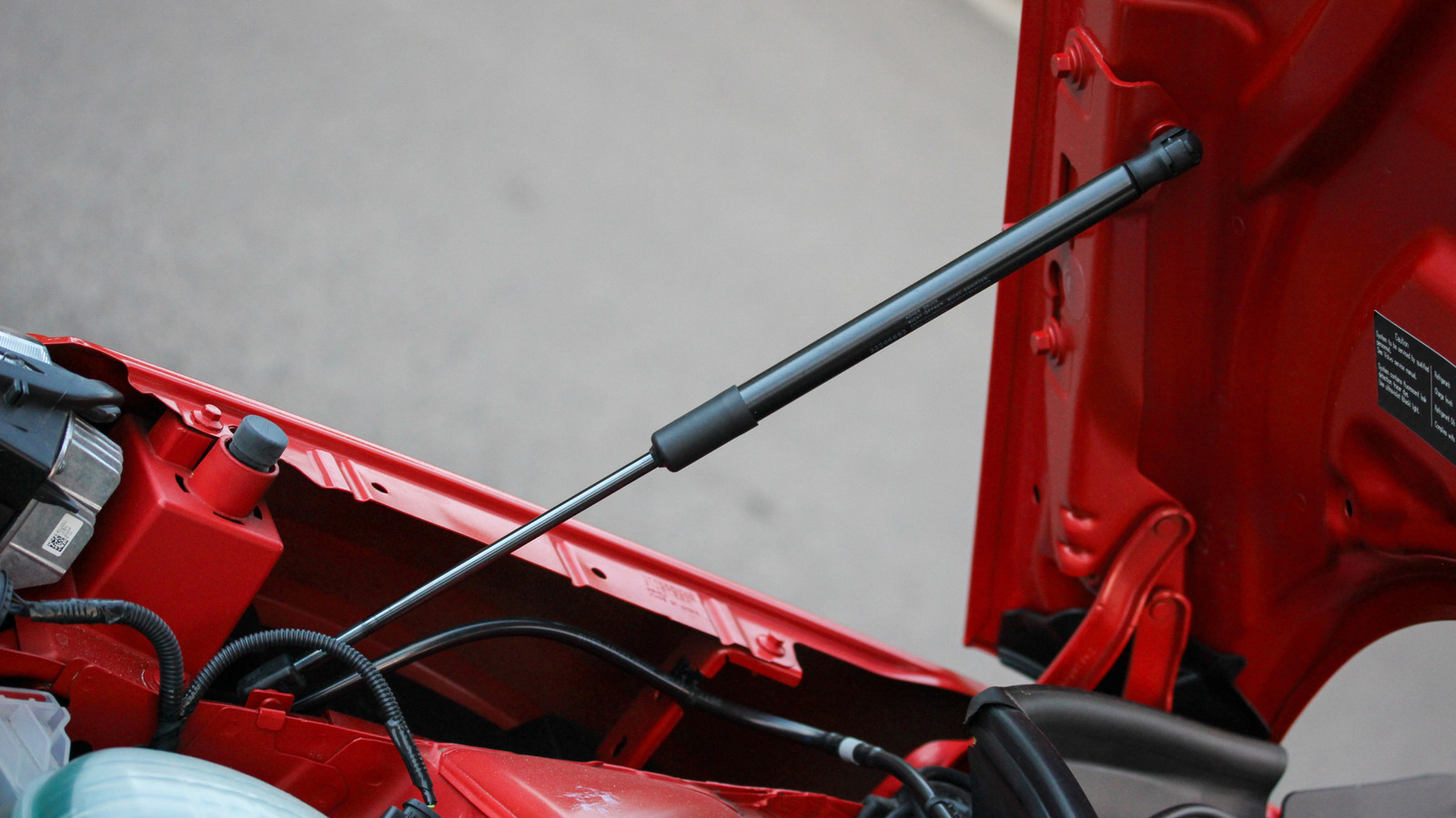
# Cold Weather Breaks Gas Struts: Here's Why Your Hood Won't Stay Up in Winter
Gas struts handle a simple job. They hold your hood, trunk lid, or hatch open against gravity using pressurized nitrogen gas sealed inside a cylinder. In winter, they fail at this job.
Temperature drops compress nitrogen gas. The physics is basic. When the mercury falls, gas contracts. A strut that holds firm at 70 degrees fahrenheit suddenly struggles at 30 degrees. Your trunk lid sags. Your hood droops mid-inspection. That frustration owners experience every January has a real mechanical cause.
Gas struts appear everywhere on modern cars. They replaced the heavy metal rods and springs of older vehicles. The nitrogen-filled cylinders are lighter, cleaner, and require no maintenance. They feel like a small luxury. Except they're not thermodynamic miracles. They're pressure vessels, and pressure changes with temperature.
Here's what happens. The sealed nitrogen inside operates at a specific pressure calibrated for average conditions. Engineers factor in seasonal variation, but struts still lose effectiveness in extreme cold. The gas pressure drops roughly 0.4 percent for every degree celsius the temperature falls. A 40-degree drop from fall to deep winter means the strut operates at significantly reduced pressure. The lid becomes harder to open and harder to hold open.
Older manual hood supports with metal rods never had this problem. They simply stayed where you put them. Gas struts trade that reliability for convenience and weight savings. Manufacturers accept the winter trade-off as an acceptable cost. Owners do not.
The effect varies by manufacturer and strut design. Premium German cars often use higher-quality struts that resist temperature swings better than budget alternatives. But all gas struts weaken in cold. The issue also compounds with age. Struts lose pressure over time through microscopic seal leaks. A five-year-old strut that barely holds the trunk open in July will utterly fail in January.
Drivers have learned workarounds. Some prop hoods open with a stick. Others use cargo straps to hold lids up. Aftermarket solutions include mechanical prop rods you can retrofit. The simplest fix: replace the strut. New units cost thirty to eighty dollars depending on the vehicle. Labor runs another hour or two.
Car manufacturers have recognized this problem. Some brands now use dual struts for heavy lids like tailgates on trucks and SUVs, providing redundancy and stronger pressure. Others tune strut pressure higher, accepting slightly more effort needed to open the lid in summer to maintain function in winter. Tesla uses electric motors on some models, eliminating the gas strut weakness entirely, though adding cost and complexity.
Winter inspections suffer most. Mechanics working on cold cars prop everything open manually, adding inconvenience to service departments. Fleet operators with dozens of vehicles experience compounded frustration. A delivery driver trying to check their trunk in December encounters a lid that won't stay open, wasting time and energy.
This weakness persists because replacing an entire system costs more than accepting periodic failure. Gas struts deliver weight savings, clean design, and maintenance-free operation. The winter performance penalty remains acceptable to accountants even if not to customers sitting in parking lots with sagging trunk lids.