# Jump Starting a Motorcycle with a Car Battery: What You Need to Know
Yes, you can jump start a dead motorcycle battery using a car battery, but the process demands caution and specific procedures to avoid frying sensitive electronics on either vehicle.
The fundamental issue comes down to voltage and amperage. Most motorcycles run 12-volt electrical systems, identical to cars. However, motorcycle batteries typically store 8 to 20 amp-hours, while car batteries deliver 400 to 600 cold-cranking amps or more. This massive difference in electrical output creates real risk.
When you connect jumper cables from a car battery to a motorcycle battery, you're introducing far more electrical current than the motorcycle's charging system was designed to accept. Modern motorcycles carry increasingly complex electronics. Engine control units, fuel injection computers, instrument clusters, and integrated lighting systems all contain sensitive circuitry. A voltage surge from a car battery can overload and permanently damage these components, potentially costing hundreds or thousands in repairs.
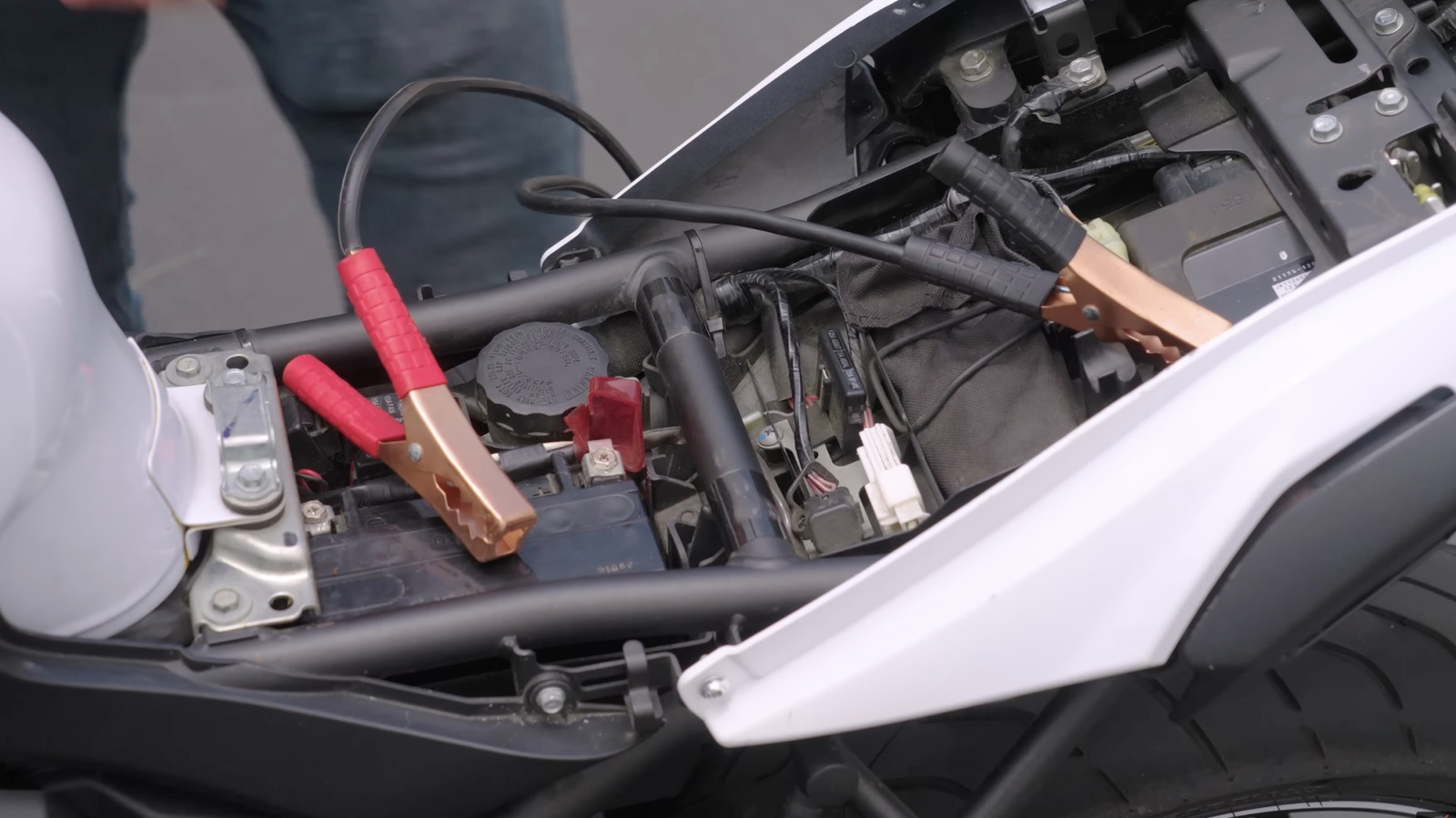
The procedure matters enormously if you decide to proceed. First, ensure both vehicles are off before making any connections. Connect the positive (red) cable to the positive terminal on the motorcycle battery, then to the positive terminal on the car battery. Connect the negative (black) cable to the negative terminal on the car battery. Here's the critical step: do not connect the negative cable directly to the motorcycle battery's negative terminal. Instead, connect it to an unpainted metal surface on the motorcycle's frame, away from the battery. This grounds the connection safely and reduces electrical shock risk.
Start the car and let it run for a few minutes, allowing the motorcycle battery to charge gradually. After a minute or two, attempt to start the motorcycle. Avoid cranking for extended periods, which only adds stress to both electrical systems. Once the motorcycle starts, remove the cables in reverse order: black from the motorcycle frame, black from the car, red from the car, then red from the motorcycle.
Several alternatives exist and deserve consideration. Portable motorcycle jump starters built specifically for bikes deliver controlled amperage designed for motorcycle systems. These dedicated units cost $50 to $150 and eliminate the voltage-surge risk entirely. Trickle chargers work slowly but safely, bringing a completely dead battery back to life over several hours without electrical shock hazards. A simple call to a motorcycle roadside assistance service or local mechanic often proves faster and safer than improvising with car batteries.
Motorcycles manufactured before 2005, particularly those with simpler electrical systems and no fuel injection, tolerate car battery jumps more reliably than modern bikes. Cruisers with minimal electronics handle the procedure better than sport bikes loaded with computerized systems. Always check your motorcycle's owner's manual first, as some manufacturers specifically prohibit car-battery jump starts.
The decision ultimately depends on your comfort level and the age of your motorcycle. A vintage Harley-Davidson with a carbureted engine and minimal computers might shrug off a car battery jump. A 2024 Kawasaki Ninja with multiple ECUs and integrated dash displays faces genuine risk. When in doubt, invest in a dedicated motorcycle jump starter or call for professional help.