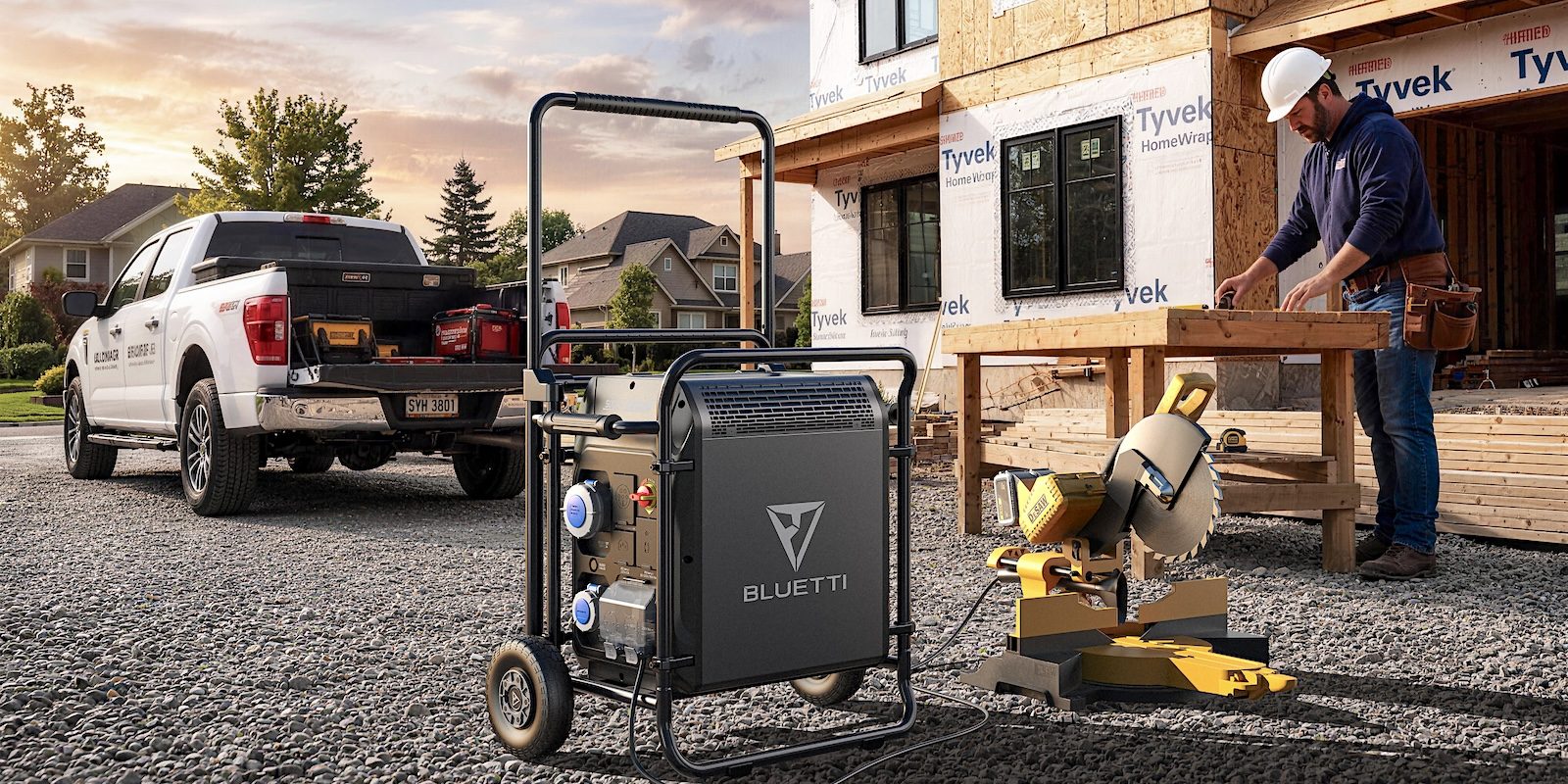
BLUETTI has entered the professional construction equipment market with the Pioneer 5000 E-Generator, marking a direct challenge to diesel and gasoline generators that have dominated job sites for decades. The battery-powered system delivers silent, zero-emission operation designed for contractors, construction crews, and industrial applications where noise and fumes create both operational and environmental headaches.
The Pioneer 5000 represents BLUETTI's calculated push beyond consumer camping and home backup power into territory where real money flows. Construction sites, film production sets, outdoor events, and emergency response operations all depend on portable power. Diesel generators have owned this space almost entirely because they deliver high wattage, run for extended periods on cheap fuel, and tolerate rugged conditions. That dominance erodes as battery technology improves and regulations tighten on emissions and noise.
BLUETTI positions the Pioneer 5000 as noise-free and fossil-fuel-independent. Job sites typically operate generators during daytime hours in residential or sensitive areas where noise ordinances restrict diesel equipment. A silent alternative removes scheduling constraints and eliminates the need to invest in muffler systems or noise barriers. For operators, this means faster project timelines and fewer neighborhood complaints.
The specifications matter here. The 5000 designation typically refers to watt-hours of storage capacity, though BLUETTI hasn't released complete technical details in this announcement. A 5kWh battery paired with appropriate inverter capacity can power multiple tools simultaneously. Contractors need to run power drills, saws, compressors, and lighting rigs in parallel. The Pioneer 5000 must handle surge loads and sustained draws that kill weaker portable batteries within hours.
Battery-backed generators face real limitations. Charging time determines job site flexibility. A solar-charged system can work between jobs but requires full sun and patience. Fast-charging via conventional outlets demands hours. BLUETTI likely positions the Pioneer 5000 for customers willing to charge overnight or invest in rapid charging hardware. Runtime remains finite compared to gas generators that simply need refueling.
The competitive landscape includes EGO Power+, DeWalt, and Titan, which all sell battery-powered tools and growing backup power systems. None yet offer purpose-built jobsite generators matching traditional generator wattage. BLUETTI enters with a brand already trusted for portable power and home backup solutions. The brand recognition transfers directly to construction buyers evaluating alternatives.
Pricing structures will determine adoption. If the Pioneer 5000 costs three times more than a comparable diesel generator, only environmentally motivated buyers and those facing noise restrictions will purchase. If pricing reaches parity within two years, job sites will flip rapidly. Construction margins run thin, and contractors buy what delivers lowest total cost of ownership.
The real work BLUETTI references means durability testing, weather resistance, drop tolerance, and reliability on muddy sites. Consumer portable power generators get babied in garages. Job site equipment absorbs punishment. BLUETTI must prove the Pioneer 5000 survives impacts, extreme temperatures, and continuous operation cycles that kill lighter consumer gear.
This launch signals where portable power trends. Noise regulations tighten globally. Diesel engines face emissions scrutiny and fuel cost volatility. Battery technology improves steadily. Within five years, job sites will run mixed fleets of electric and traditional generators. The question for contractors becomes not whether to adopt battery power, but which systems replace diesel first.