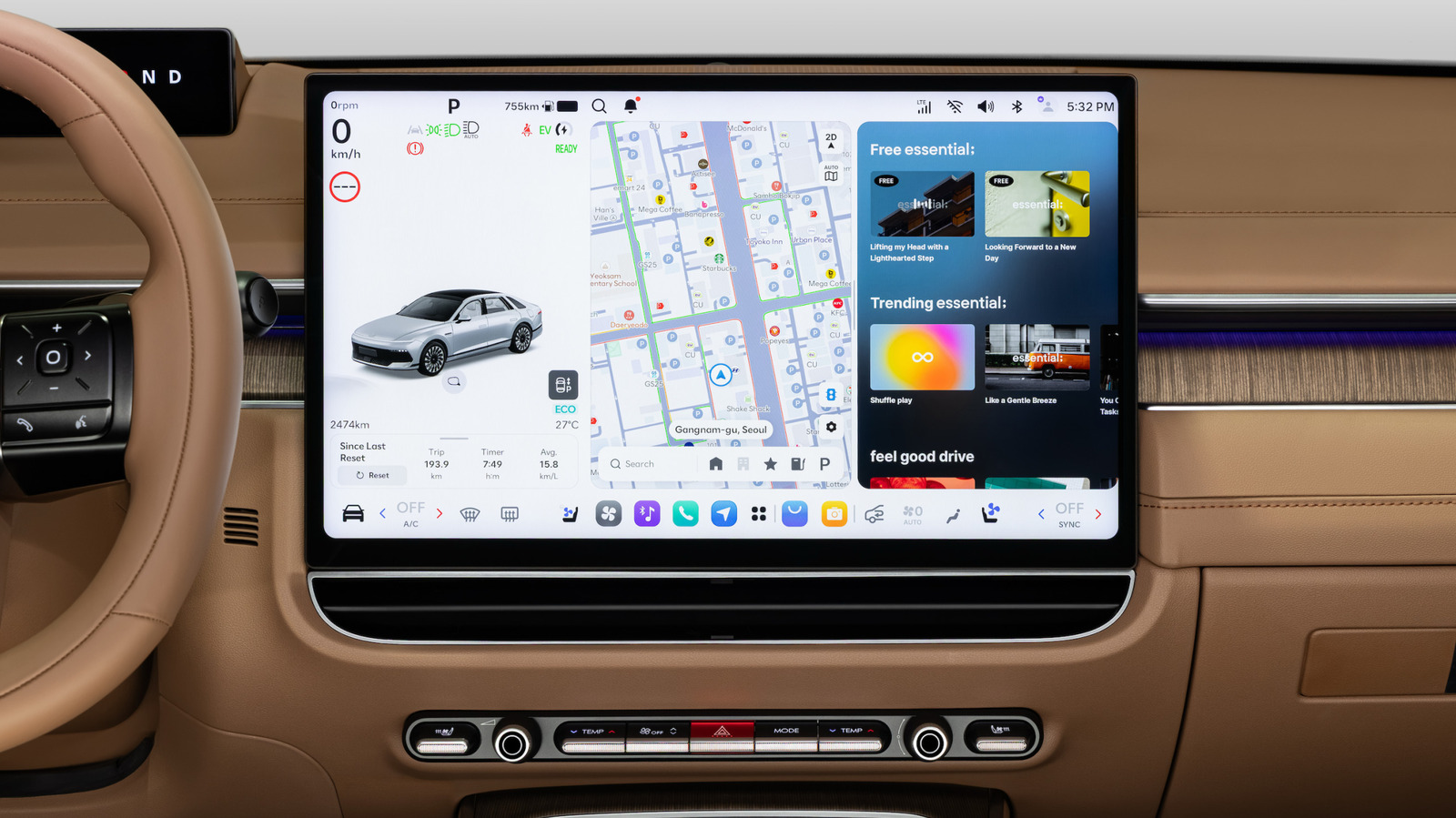
Hyundai has rolled out Pleos, a new infotainment system designed to balance cutting-edge capability with genuine usability. The system debuted in the Korean-market Hyundai Grandeur, and early impressions suggest the automaker has managed a feat many competitors still struggle with: packing modern features without abandoning physical controls or common sense.
The core tension in modern infotainment design is real. Automakers want to showcase technology, offer smartphone integration, voice controls, and cloud connectivity. Drivers want to adjust the volume, change stations, or set climate without taking their eyes off the road or navigating nested menus. Most systems fail this balance. They're either plasticky throwbacks or iPad-on-a-dash disasters that require a computer science degree to operate.
Pleos lands somewhere in the sensible middle. Yes, it retains a touchscreen, but Hyundai has resisted the temptation to hide every function behind glass. Physical buttons and knobs still exist for frequently used tasks. The interface itself prioritizes clarity. The layout avoids excessive customization that leaves owners confused and menus respond quickly without lag or stuttering. These seem like baseline requirements, but they're not. Many competitors, including premium brands, ship infotainment systems that feel unfinished.
The Grandeur itself matters here for context. Hyundai's flagship sedan targets affluent buyers in South Korea who expect both technology and refinement. Pleos needed to feel premium and responsive, not like cost-cutting disguised as minimalism. Hyundai avoided that trap. The system recognizes voice commands reliably, supports over-the-air updates to add features without hardware replacement, and integrates smoothly with Android and Apple platforms without forcing users into proprietary ecosystems.
This approach carries real industry implications. Hyundai and its sister brand Kia have aggressively upgraded their infotainment offerings over the past five years. They recognized that interior technology influences purchase decisions almost as much as powertrain or handling. Buyers compare infotainment experiences at dealerships. They talk about responsiveness and intuitiveness on forums. A clunky system tanks reviews and trade-in values.
The Pleos rollout also signals Hyundai's confidence in its in-house software development. Rather than licensing generic platforms from Bosch, Visteon, or Harman, Hyundai built this. That bet requires resources and talent, but it allows faster iteration and direct control over the user experience. It's the same philosophy Tesla uses, though Tesla's approach tends toward minimalism. Hyundai's philosophy leans toward completeness.
Global availability remains unclear. Pleos appears to be Korean-market exclusive for now, though Hyundai typically exports successful infotainment generations worldwide within two to three years. If the system ships in U.S.-market models like the Sonata or Santa Fe, it could strengthen Hyundai's appeal against Kia, Toyota, and Honda competitors that offer less intuitive dashboards.
The real test comes in ownership. A system can feel polished in a dealership demonstration. Year two or three, after multiple software updates and after owners have explored every submenu, opinions shift. Durability of touch panels, reliability of voice recognition in real-world conditions, and how well the system handles software updates without bugs will determine Pleos' long-term reputation. Hyundai has the infrastructure and support systems to execute properly. Whether it does will define how much daylight it gains over traditional competition.