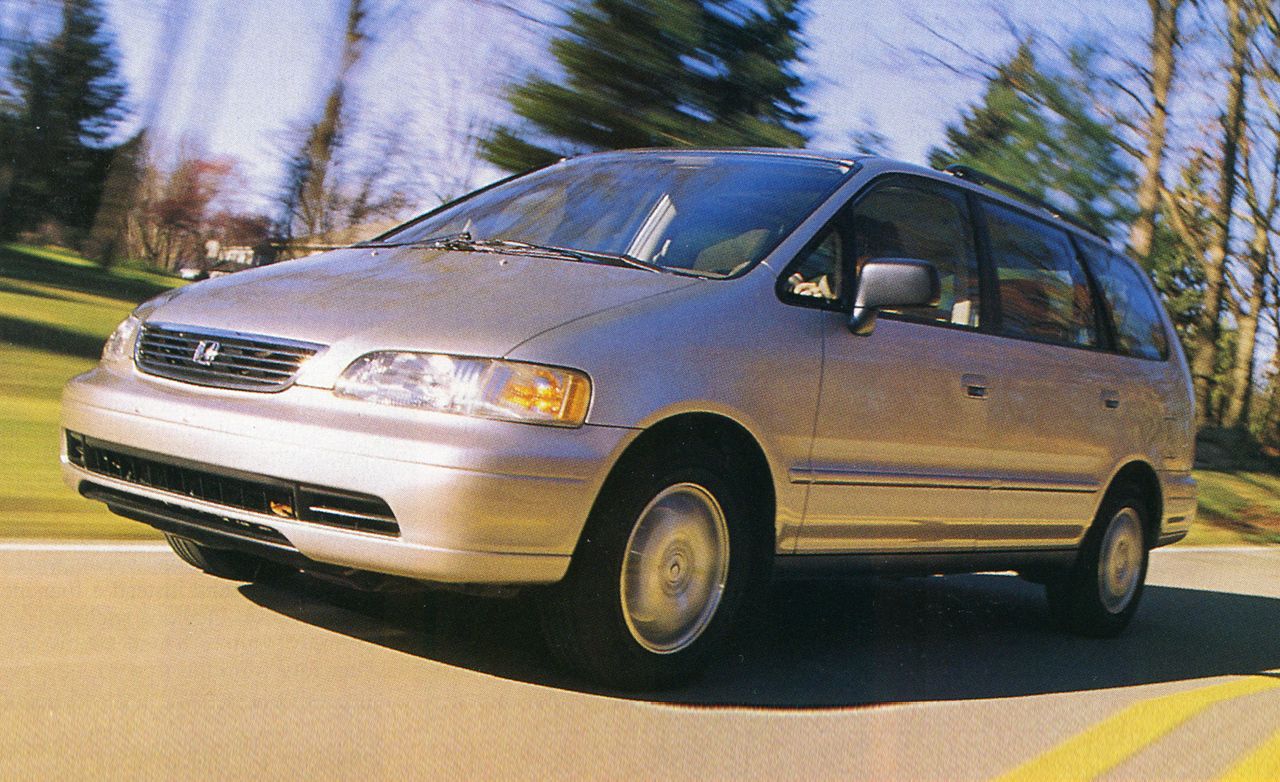
# 1995 Honda Odyssey EX: The Vehicle That Redefined Family Transportation
The 1995 Honda Odyssey EX represented a watershed moment in automotive history, though not everyone recognized it at the time. Honda had just invented a category that didn't technically exist before: the minivan that drivers actually wanted to own without apologizing.
The Japanese automaker faced a genuine problem in the early 1990s. Chrysler dominated minivans with the Caravan and Voyager, vehicles parents needed but nobody craved. The segment itself carried stigma. You bought a minivan because you had three kids and a mortgage, not because the vehicle sparked joy. Honda saw an opening. Why not build a minivan with actual driving dynamics, better reliability than Chrysler's offerings, and design language that didn't scream suburban defeat?
The 1995 Odyssey EX arrived with a 2.2-liter inline-four engine producing 150 horsepower and 152 pound-feet of torque. That doesn't sound impressive until you compare it to contemporary Caravans. Honda also engineered the Odyssey to handle corners without the wallowing and body roll endemic to the category. The steering responded to driver input. The brakes felt confident. Build quality exceeded competitor standards by a visible margin.
Packaging proved clever without gimmickry. Honda's sliding rear doors eliminated the side-impact vulnerability of swing-out doors on vehicles parked in tight spaces. The middle row captain's chairs left a center aisle for parent access to rear passengers. Fold-flat seating created a cavernous cargo area. For families actually living with a minivan, these weren't luxury touches. They were solutions to real problems.
Interior appointments in the EX trim reflected Honda's attention to detail. Cloth upholstery held up better than Chrysler's offerings. The dashboard layout favored usability over style. Air conditioning worked. The audio system delivered decent sound. Nothing revolutionary, but nothing that aged poorly within five years either.
Car and Driver's test data told the story. The 1995 Odyssey EX accelerated competitively for its class. Stopping distances measured shorter than the Caravan. Lateral grip in cornering exceeded category norms. The ride remained compliant without sacrificing control. This wasn't a sports car, but it refused to embarrass its driver on a winding road.
The minivan market shifted after 1995. Honda's success forced Chrysler to raise game. By the late 1990s, other manufacturers entered the segment with products targeting enthusiasts who happened to have families. The Odyssey never became trendy. It never won design awards from the Museum of Modern Art. But it transformed minivans from appliances into vehicles where the driving experience mattered.
The 1995 Odyssey EX occupies an unusual space in automotive history. It wasn't revolutionary enough for enthusiasts to canonize. It wasn't obscure enough to become a collector's item. It simply did its job better than anyone expected, then made the entire category better through competition. That's not Greek tragedy. It's something more valuable: pragmatic success that improved lives without fanfare.