# How Honda Built America's Love Affair with the Compact Sedan
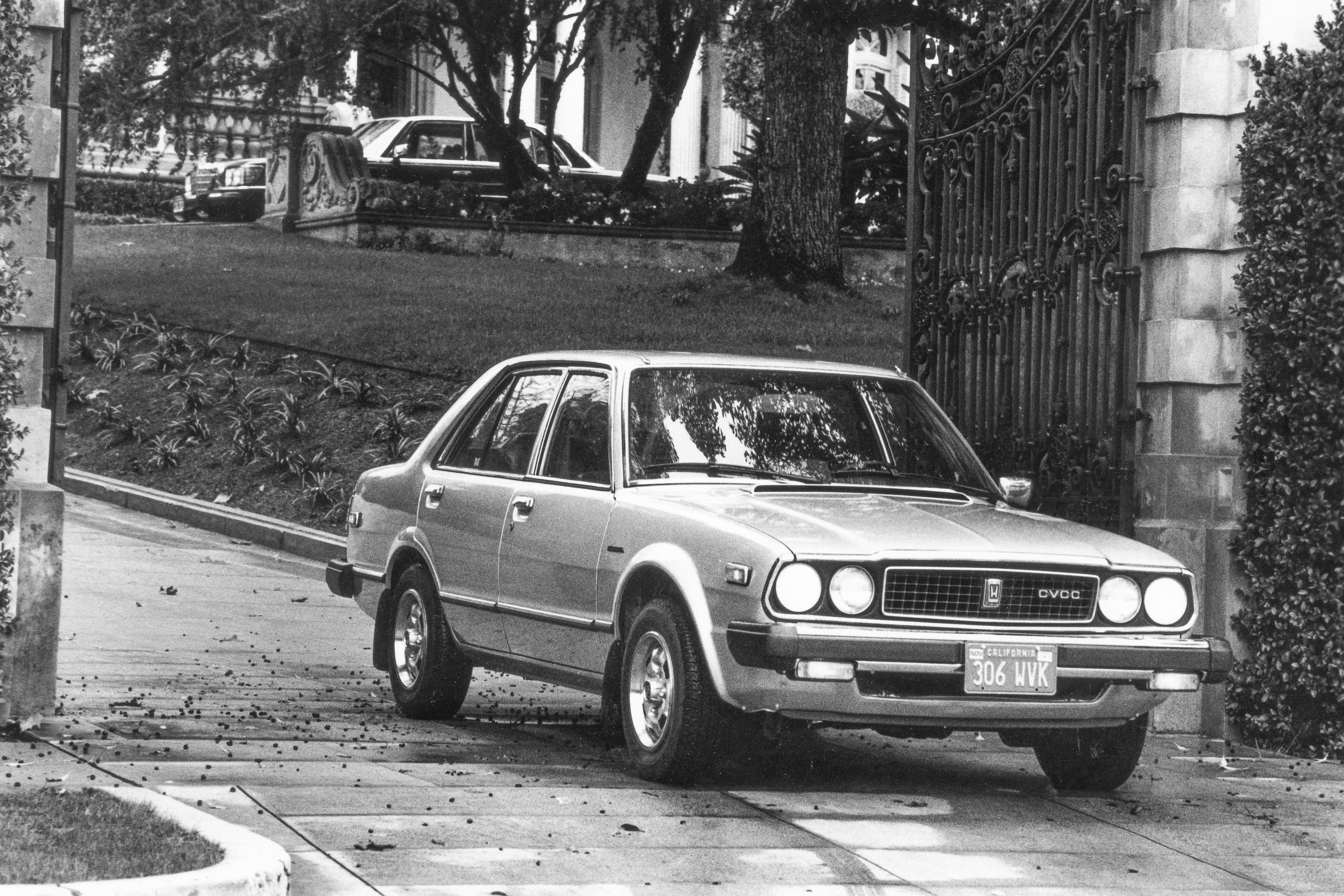
The 1979 Honda Accord 4-Door arrived at precisely the moment Detroit's Big Three had stopped listening to what buyers actually wanted. Japan's second-generation Accord hit showrooms as American families were choking on gas lines, sticker shock, and the bloated mediocrity of domestically built sedans. Honda delivered something radical by 1979 standards: a car that worked.
That "sensational little American car" tag in the original Car and Driver road test captured the cognitive dissonance perfectly. Americans weren't accustomed to Japanese manufacturers building four-door family sedans that could outrun, outlast, and outsmart domestic competition. The Accord's timing proved everything. Ford and Chevrolet were still peddling gas-guzzling intermediates with sloppy steering and transmission problems. Honda showed up with 1.8-liter engines delivering reliable power, tight suspension geometry, and interiors that didn't rattle after twelve months.
The second-generation Accord (1978-1981) fundamentally reset buyer expectations for what a compact sedan should deliver. It offered 80 horsepower in base form, precise rack-and-pinion steering, and a five-speed manual transmission that made shifting an event rather than a chore. The four-door configuration mattered enormously. American buyers still wanted practicality and rear-seat access, but Japanese manufacturers understood that didn't require wallowing suspension and power steering overkill.
Car and Driver's praise wasn't hyperbole. The 1979 Accord came with creature comforts that seemed impossible at its price point. Air conditioning worked reliably. The heater provided genuine warmth. Build quality left American competitors in the dust. While Chevy Malibu and Ford Fairmont owners were already shopping for replacements due to rust and electrical gremlins, Accord owners were racking up 150,000-mile service intervals with minimal drama.
This generation established Honda's playbook for dominance: design with purpose, execute without compromise, price aggressively. The Accord undercut comparable American sedans by thousands of dollars while offering superior driving dynamics and longevity. Resale value followed immediately. By the early 1980s, used Accords commanded prices that puzzled Detroit. Buyers recognized engineering integrity.
The fuel crisis context amplified the Accord's advantage. Americans who'd endured long gas lines and $1.50 per gallon shocks weren't interested in Cadillac-sized cruise ships anymore. The Accord's 30-plus miles per gallon highway efficiency became gospel. Honda couldn't build them fast enough. Dealer lots emptied within weeks of shipment. Waiting lists stretched into months.
That 1979 road test foreshadowed forty-five years of Accord dominance. The nameplate would become America's best-selling car for much of the subsequent decades. The formula never changed fundamentally: competent engineering, refined execution, honest pricing, and relentless quality control. While competitors chased trends and fashion, Honda refined reliability.
The original Accord's legacy extends beyond sales charts. It taught American manufacturers that buyers valued substance over styling, engineering over chrome, and longevity over planned obsolescence. When Detroit finally woke up to those truths in the 1990s, Honda had already claimed the market. That little car from Godzilla's homeland proved that greatness arrives quietly, through engineering rather than advertising.