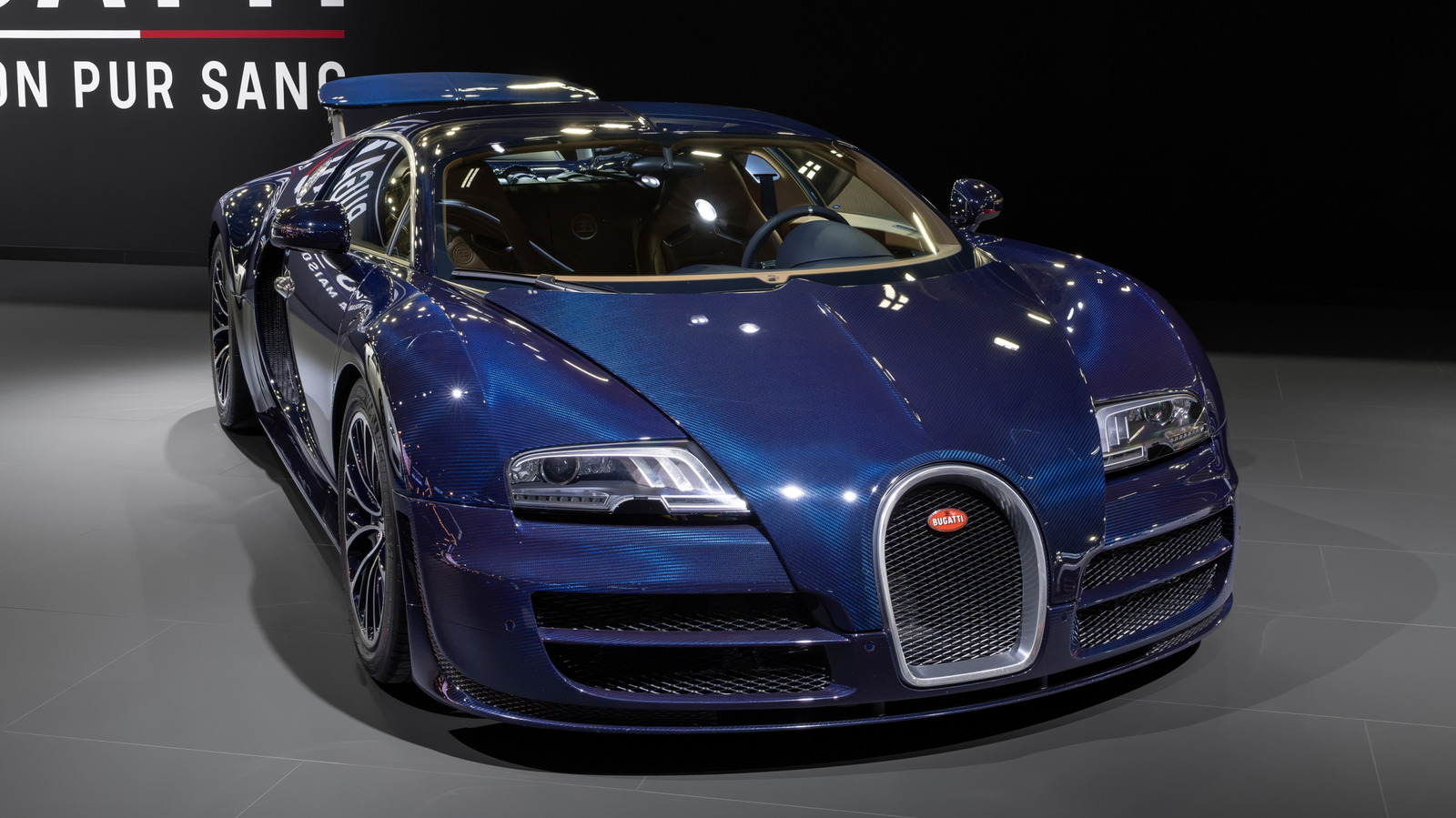
Bugatti's evolution of the Veyron into the Super Sport demanded extraordinary engineering choices, and one overlooked casualty of that ambition tells the story of how extreme automotive development works. The air conditioning compressor, a component most drivers consider mundane, became collateral damage in Bugatti's quest for 1,200 horsepower.
The Veyron Super Sport represented an incremental but significant step forward from the base Veyron's already staggering 1,001 horsepower. To extract those additional 199 horses, Bugatti recalibrated the quad-turbocharged 8.0-liter W16 engine and implemented aerodynamic refinements. The top speed jumped from 253 mph to 268 mph, making it the fastest production car in the world at the time. That extra power came at a cost that extended far beyond fuel consumption.
The A/C compressor failure stemmed from the radical increase in engine output and the cascading mechanical stresses that followed. The serpentine belt driving the compressor now transmitted substantially more power through the engine bay. Bugatti's engineers underestimated the cumulative load. The prototype's compressor simply shattered under the duress of delivering cold air while the engine churned out nearly 1,200 horses. This wasn't a defect in the component itself. The compressor was never designed for this level of sustained mechanical abuse.
This story illustrates a hard truth in hypercar development. Engineers must balance competing demands across dozens of vehicle systems simultaneously. Upgrade the engine without upgrading every accessory driven by that engine, and something breaks. The A/C compressor serves as a perfect example because it represents thousands of similar calculations Bugatti's team had to make. Every belt-driven component, every electrical circuit, every cooling line required validation under the new power level.
Bugatti solved the problem for production Super Sports by sourcing a beefier compressor and reinforcing supporting brackets. They also revised the belt tension and routing to distribute forces more evenly. These changes never made headlines because they were engineering housekeeping. Nobody buys a Veyron Super Sport for its air conditioning. But without these unglamorous fixes, the car would have been unreliable.
The Veyron Super Sport entered production in 2010 and remained in limited production through 2015, with only 30 units built. That scarcity reflected Bugatti's hand-built approach and the complexity involved in managing all those systems at maximum stress. Today, the Super Sport commands prices well above its original 1.9 million dollar tag, often exceeding 2.5 million dollars on the secondary market.
This episode also reflects broader industry dynamics. Hypercar manufacturers cannot rely on off-the-shelf components. A standard compressor rated for a 500-horsepower luxury sedan becomes inadequate when bolted to a W16 monster. Every part must be either specially sourced or custom engineered. That dependency on bespoke components explains why hypercars cost so much and why their development timelines stretch so long. The Bugatti team couldn't simply turn up the boost and hope for the best. They had to think through cascading failures before they happened.
The Super Sport's A/C compressor failure serves as a reminder that raw power is only half the battle in performance automotive engineering. Managing the forces that power creates, distributing loads across dozens of auxiliary systems, and ensuring reliability under extreme conditions separate amateurs from professionals. Bugatti got there eventually.