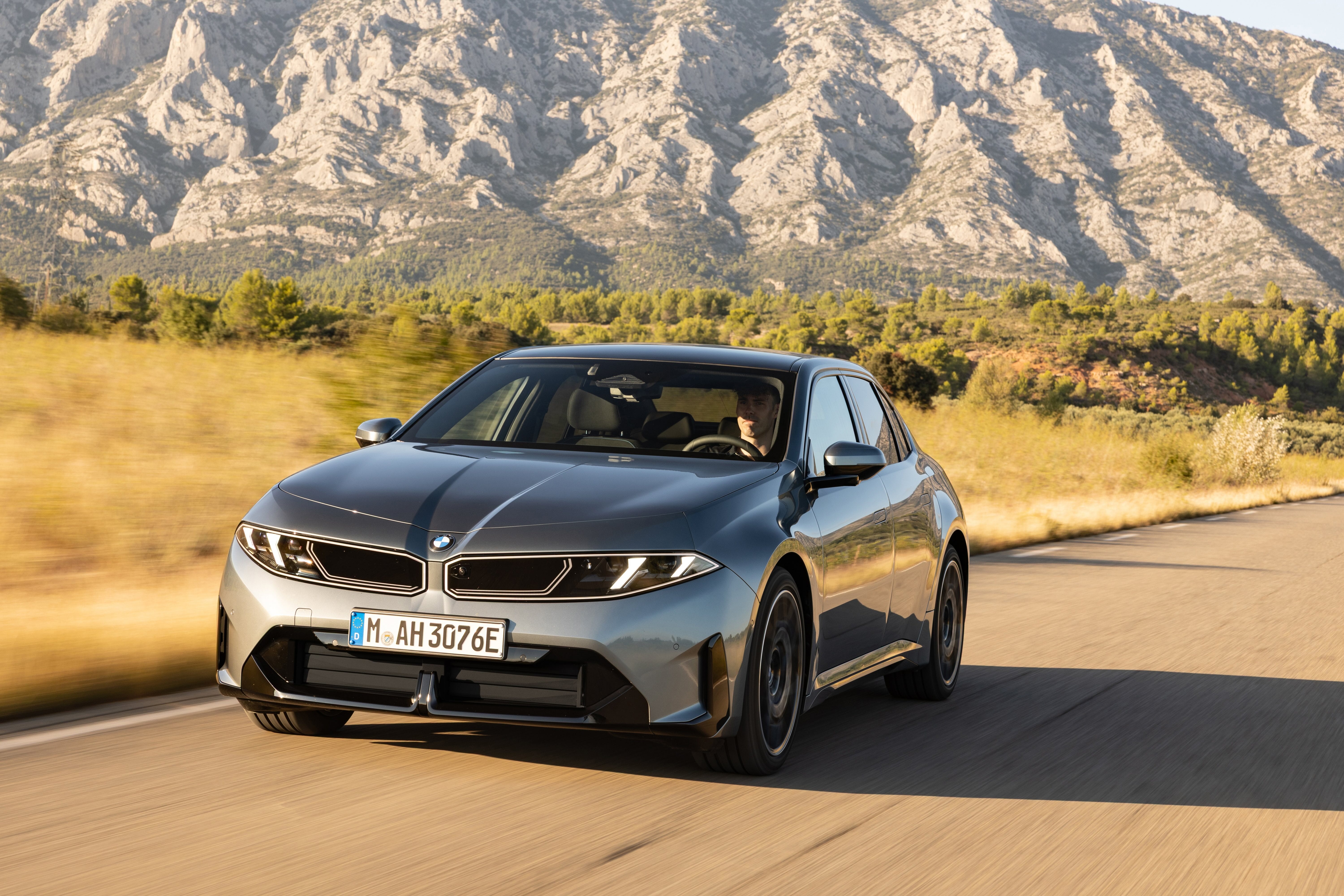
BMW's 2027 i3 50 xDrive sedan sits on the new Neue Klasse EV platform, sharing a 114.1-inch wheelbase with the iX3 SUV. The sedan uses dual electric motors delivering 463 horsepower and 476 lb-ft of torque, with an 800-volt, 108.7 kWh usable battery pack rated for up to 468 miles of EPA range. DC fast-charging reaches 400 kW, enabling a 10 percent to 80 percent charge in as little as 21 minutes.
From the outside, the i3 appears almost identical to the gasoline-powered G50 3-series, though every exterior panel differs and the architecture is completely separate. BMW assigned it its own model code, NA0. Future variants include an M60 version producing over 600 horsepower and a fully electric M3.
The i3 50 delivers a 4.5-second 0-60 time, 0.6 second slower than the M350 xDrive gasoline sedan. In driving, the EV demonstrated seamless regenerative and friction braking, an adaptive one-pedal mode, and a "chauffeur stop" feature that brings the car to an imperceptible halt. The chassis displayed poise and refinement, though the i3 lacks the aggressive character of BMW's combustion models.
The cabin mirrors the new 3-series layout, with identical controls minus gearshift paddles, a rev counter, and start button. The i3's lowest seat sits higher than the M350's. The Panoramic Vision display suits the EV's minimal information needs better than the 3-series gauge cluster.
Potential buyers must choose between the i3 and alternatives like the Mercedes C-class Electric or Tesla Model 3 Performance, which costs less but trails in range and dynamic refinement. For those committed to electric powertrains, the i3 makes a strong case; for traditionalists, the new gasoline 3-series remains compelling.