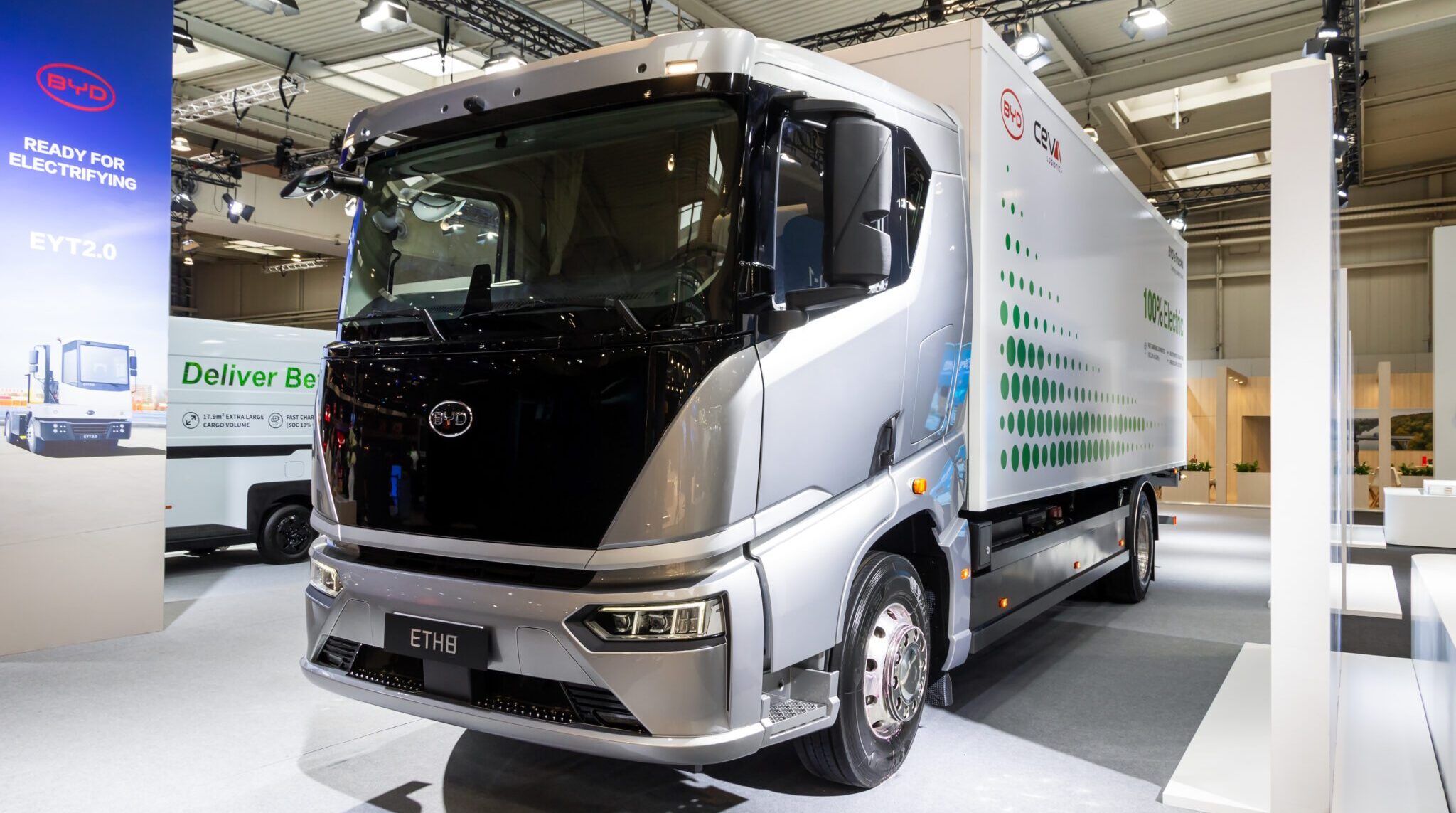
Electric trucks claimed 50.3% of China's heavy truck market in September, with sales reaching 33,100 units and rising 37% year-on-year, even as total heavy truck sales fell 21%. The surge reflects a shift away from liquified natural gas as a transition fuel.
The pace of adoption has outpaced government targets. China set a 40% new-energy heavy truck sales goal for 2030, but monthly sales already exceed that level. CATL now expects new-energy vehicles to account for half of China's annual truck sales by 2028.
Lower operating costs drive the shift, though subsidies remain critical. An electric heavy truck costs CN¥450,000 (US$64,000) more than a diesel equivalent upfront. Trade-in subsidies of up to CN¥140,000 (US$20,000) help close that gap, with some cities adding additional incentives. When subsidies expired last December, electric share briefly hit 53.9% before falling to around 23% by March, showing how dependent the market remains on price support.
Battery swapping has removed another adoption barrier nearly absent in Western markets. CATL operates swap stations allowing standardised packs to exchange in about five minutes. The company plans 900 stations by end of year and 2,000 by 2027. In August, CATL agreed to buy nearly a quarter of Qiyuan Green Power, China's largest swap operator.
Electric trucks are displacing LNG technology. LNG's share of heavy-duty registrations fell from 37% in March to 11% in July, while electric rose from 23% to 47%. Together, the two technologies displace around 680,000 barrels per day of diesel. Kpler expects Chinese diesel demand to fall by about 230,000 barrels per day in 2026, roughly 10%.
Western markets lag significantly. Electric models hold 2.5% of EU heavy truck registrations and under 1% of US Class 8 sales. An electric Class 8 tractor in the US costs 2.4 times as much as a diesel one. Federal tax credits for electrified commercial vehicles ended in 2025, and California shelved its zero-emission fleet rule following Trump administration pressure.