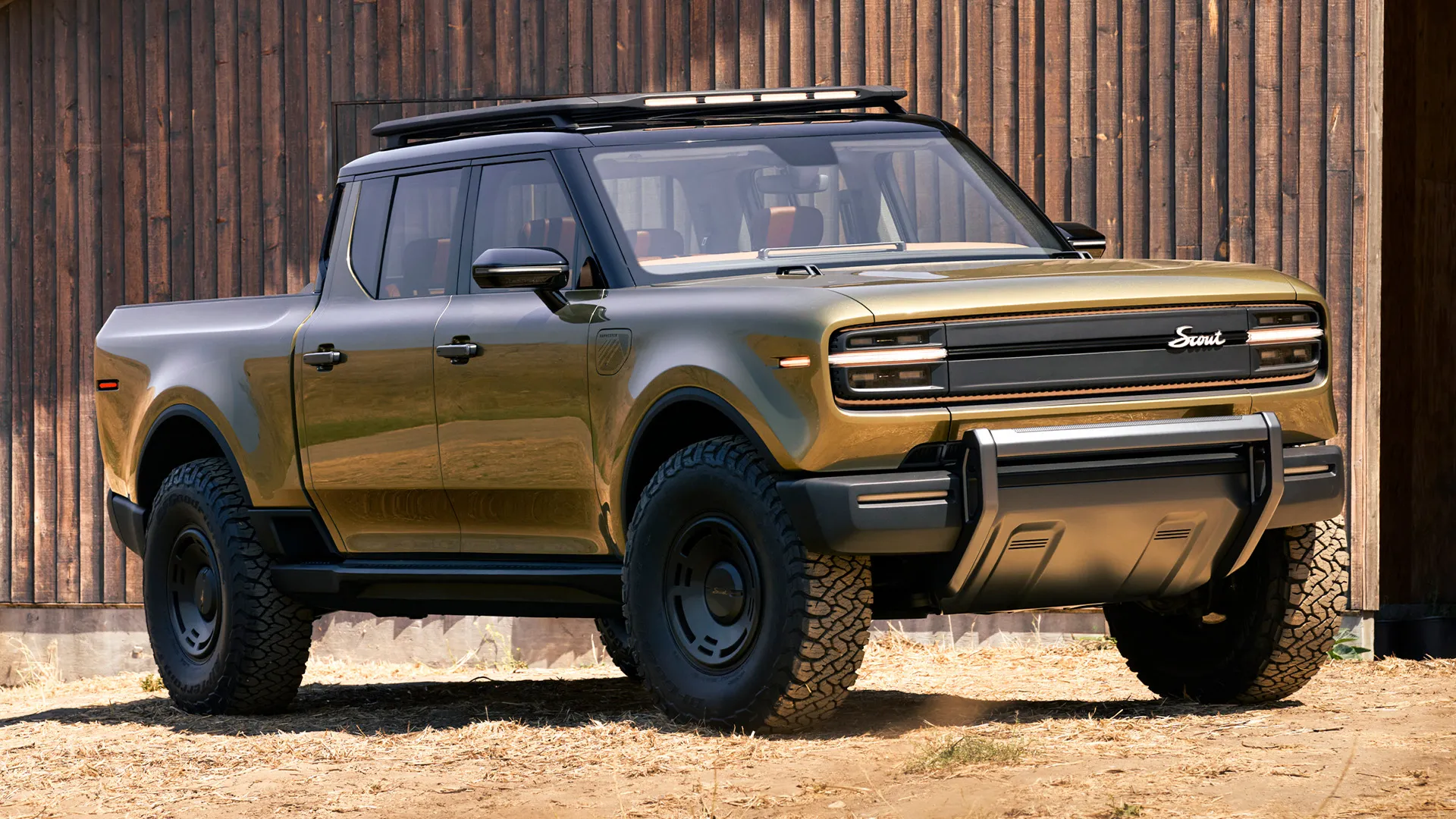
Scout Motors is making a bold claim: its electrified 4x4s are in demand everywhere, not just California. The startup is hosting media at its new $2 billion South Carolina production facility this week, and Ryan Decker, Scout Motors' vice president of strategy and brand, is eager to show that reservation holders span all 50 states. The data supporting this appears impressive at first glance. Decker points to what he calls "overindexing" in unexpected markets—Mountain West geographies like Colorado and Salt Lake, plus classic truck markets like Texas and South Carolina, where Scout claims higher concentrations of reservations compared to all-electric peers.
But here's the problem with Scout's argument: approximately 87% of the company's 212,000 reservations are for gas-assisted Harvester models with onboard internal combustion generators, not purely electric vehicles. That's a crucial detail that reframes the entire narrative. Scout isn't necessarily proving that Americans everywhere want electric trucks—it's proving that Americans everywhere want trucks with gas backup options. These are plug-in hybrid trucks masquerading as a revolution in EV adoption.
The distinction matters enormously when comparing Scout's geographic reach to competitors like Tesla and Rivian. Yes, those companies are heavily dependent on California, but they're selling genuine battery-electric vehicles that rely entirely on charging infrastructure. Scout's success in Texas and the Mountain West likely stems from the comfort buyers feel with the Harvester's onboard generator, not confidence in electrification itself. Decker's observation that "people in wide, open spaces—like Texas—are more hesitant to depend on electricity alone" essentially admits this. The range-extended powertrain isn't a feature—it's a safety blanket that masks lingering skepticism about pure electric capability.
Scout's 75% attachment rate for the Traveler SUV over the Terra pickup also tells us something revealing about market preferences. Buyers fleeing legacy manufacturers like Jeep Wrangler, Ford Bronco, and Ford F-150 aren't necessarily converting to electric transportation. They're trading familiar brands for a fresh nameplate that offers the SUV form factor they want, with a gas engine still available when they need it. That's brand switching, not electrification.
Scout deserves credit for recognizing that electric vehicles need to serve diverse markets beyond coastal early adopters. The South Carolina facility and nationwide interest demonstrate genuine market opportunity. But Scout should be transparent about what it's actually selling. Championing geographic diversity while burying the fact that 87% of reservations include gas engines is misleading the industry about real EV adoption progress. The honest headline: Scout found a winning formula by building range-extended vehicles that don't ask Americans to fully commit to electrification—not by proving electric trucks command nationwide enthusiasm.