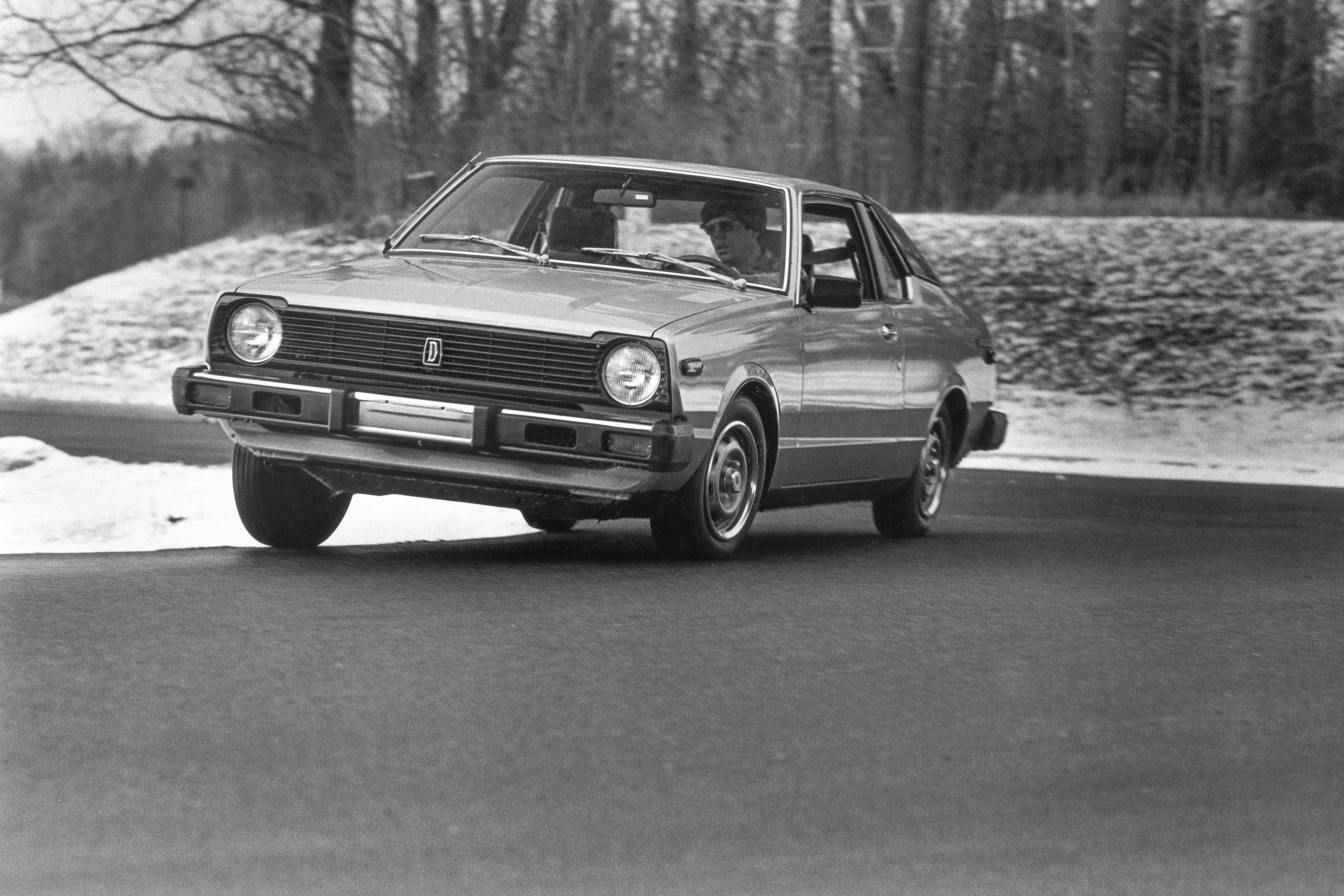
Datsun launched the 310 as its second-generation front-wheel-drive compact sedan in 1979, replacing the ill-fated F-10. The 310 came in two versions: a base sedan and the sportier 310-GX, which is mechanically identical but adds a five-speed transmission, tachometer, rear quarter-windows, rear wiper-washer, a four-spoke steering wheel, and 165/70-13 tires.
The 310 retained the F-10's basic layout with a transversely mounted 1397 cc four-cylinder engine and independent suspension at all corners using MacPherson struts up front and trailing arms in the rear. Datsun lengthened the car five inches and widened it four inches compared to its predecessor while adding only 80 pounds, bringing the curb weight to 2600 pounds.
Standard equipment across both models included reclining seats, split-back folding rear seat, quartz clock, remote hatch opener, intermittent wipers, power brakes, rear defogger, and day-night mirror. The interior featured velour seats, thick carpeting, and a color-keyed dashboard.
In testing the 310-GX over more than 2000 miles, Car and Driver found the car hampered by annoying quirks that undermined its positive qualities. The AM/FM radio had poor reception and a badly garbled speaker mounted under the dash facing the floor. The heating system proved marginally effective, while the defogger operated loudly. The transmission whined in any gear and crunched when shifting into third, and the unconventional shift pattern occasionally caused false reverse selections. At idle, the engine vibrated so severely that the steering wheel appeared blurry; above 5000 rpm, the exhaust system produced a tinny buzzing.
Despite below-average interior space utilization, particularly cramped rear legroom that matched the F-10, the 310-GX proved fun to drive. The engine revved willingly, the five-speed transmission with direct-ratio top gear delivered good power delivery, and steering response was direct with plenty of road feel.