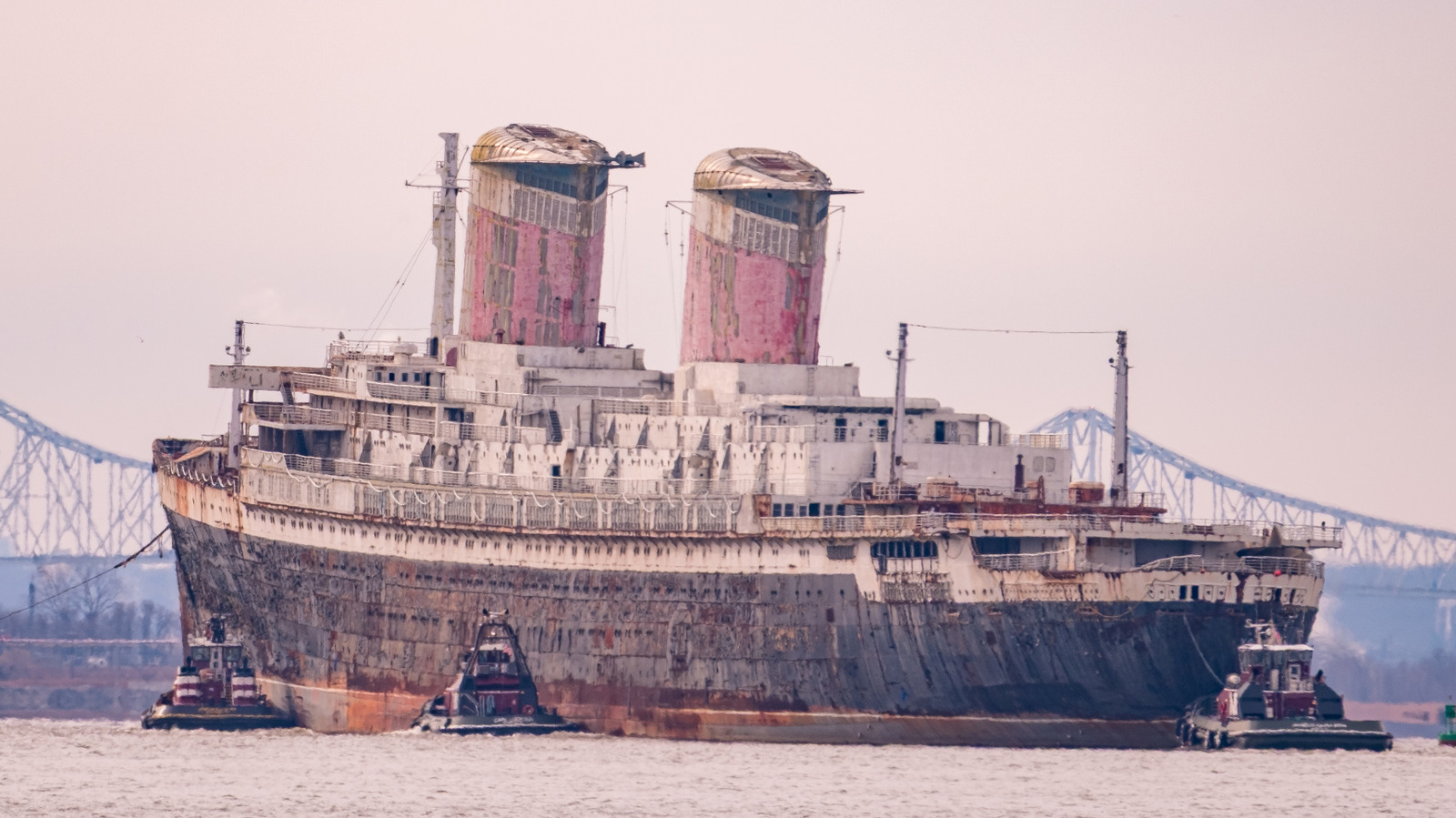
On Veteran's Day, Okaloosa County, Florida deliberately sank the SS United States to the bottom of the Gulf of Mexico, converting the legendary ocean liner into what they're calling the world's largest artificial reef. I understand the environmental reasoning—the area has suffered from human-caused coral reef decimation, and the ship's massive 990-foot frame should theoretically provide shelter for marine life. But intentionally destroying one of America's greatest engineering achievements to fix a problem we created feels like surrendering rather than problem-solving.
Let's acknowledge what we've lost here. The SS United States, which operated from its maiden voyage in 1952 until its retirement in 1969, still holds the record as the world's fastest trans-Atlantic ocean liner. It completed the crossing in 3 days, 10 hours, and 40 minutes at an average speed of 35.59 knots, with top speeds exceeding 38.3 knots. This wasn't just a ship; it was a symbol of American industrial prowess and innovation. Powered by four Westinghouse 1,000-psi steam turbines and eight boilers producing 240,000 horsepower combined, it represented an era when we built things to last and to lead.
Yes, the ship faced hard times. Following its retirement in 1969, it spent decades haunting old shipyards while restoration plans repeatedly failed. After nearly three decades docked at Pier 82 along the Delaware River in South Philadelphia, Pennsylvania, it faced court-ordered eviction in 2024. But decay and abandonment don't justify permanent destruction. The SS United States was originally designed with the capability to carry 14,000 troops 10,000 miles without refueling—a testament to engineering that shouldn't be discarded simply because modern alternatives exist.
The irony is particularly bitter given that Okaloosa County's own plan acknowledges the ship's historical significance. The SS United States Conservancy intends to construct a museum and visitor's center in Florida to commemorate the vessel. So we're sinking an irreplaceable piece of maritime history while simultaneously building a memorial to it? That's not honoring the ship—that's eulogizing it while pulling the trigger.
Creating the world's largest artificial reef at 990 feet long—surpassing the USS Oriskany's 910-foot frame that was sunk in 2006—may attract divers and tourism, with the top funnels sitting at just 55 feet below the surface. But we could have pursued aggressive restoration, relocated the ship to a museum setting, or explored other creative solutions. Instead, we chose the path of least resistance, converting a national treasure into an underwater tomb in the name of environmental remediation. That's a trade-off we'll regret.