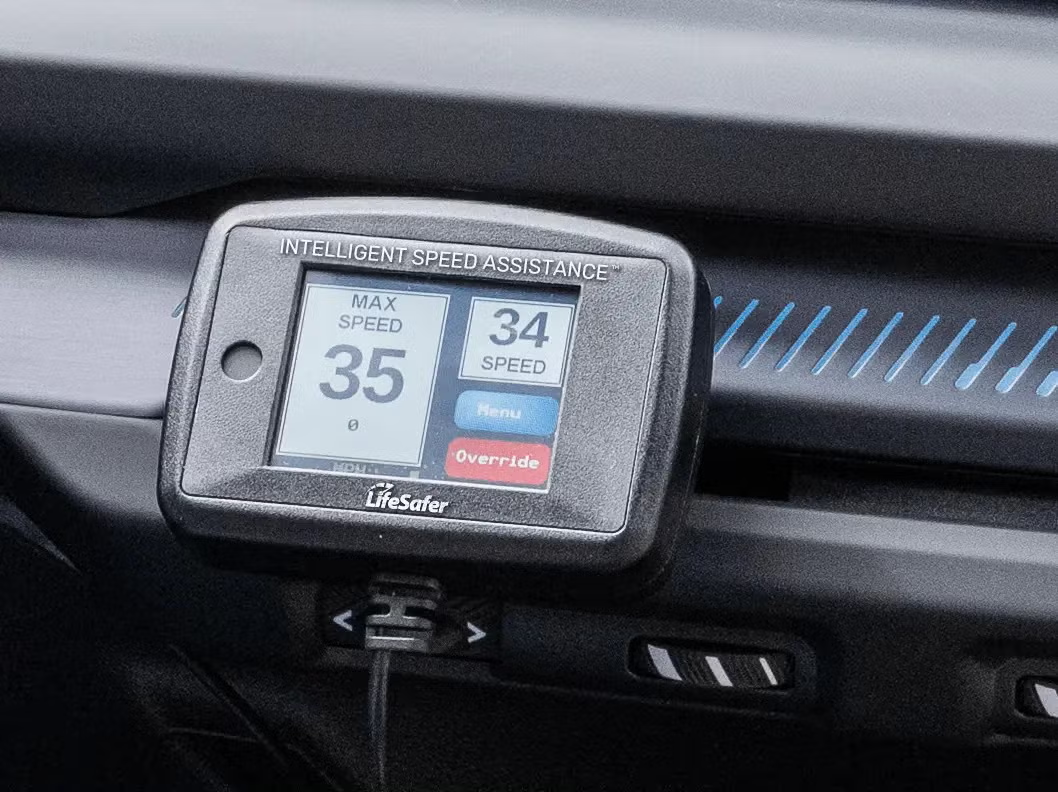
Michael Travars, president of LifeSaver, deserves credit for an unfashionable position: refusing to push his own product onto the entire American driving public. In an era when tech companies lobby aggressively for universal adoption of their solutions, Travars's stance that active intelligent speed limiters should not be mandated in every vehicle—and that he actively opposes the European Union's 2024 mandate requiring all new cars to feature passive ISA systems—reveals a clarity of purpose that should guide future policy decisions.
The distinction Travars draws is crucial. Active ISA devices, which actually prevent vehicles from exceeding speed limits, should serve a corrective function for specific offenders: super speeders convicted of extreme speeding, inexperienced teenage drivers, and fleet operators seeking efficiency gains. States like Virginia, which implemented super speeders laws and now requires certain reckless drivers to install the technology under the Commission on Virginia Alcohol Safety Action Program as of July 2026, have the right idea. Seven states—Hawaii, Illinois, Arizona, Maryland, New York, Virginia, and Georgia—have implemented similar laws, and around 17 states have reached out to LifeSaver. This targeted approach makes sense.
What matters most is Travars's reasoning: these devices should function like ignition interlock programs for drunk driving. They're meant to break bad habits and be removed once drivers prove they've reformed. The technology itself is straightforward—a dashboard screen wired through the vehicle's OBDII port that costs around $6 per day to operate and includes a programmable margin above posted speed limits. The installation process is genuinely sophisticated, requiring car-specific calibration rather than one-size-fits-all programming. But the sophistication doesn't justify universal deployment.
American driving culture genuinely differs from Europe's, as Travars rightly notes. Freedom of the road matters to American drivers in ways that shouldn't be dismissed as mere obstruction. Universal ISA mandates would treat responsible drivers as suspects, eroding trust in transportation systems. Instead, Travars's proposal for federal minimum guidelines on device specifications, accuracy standards, and certification processes—coupled with state-by-state discretion on program design, duration, and participant selection—strikes the right balance.
Perhaps most importantly, Travars insists these programs must not become surveillance infrastructure. Data cannot be sold to third parties or insurers to inflate rates. These are corrective tools, not Big Brother systems. If regulators and technology companies maintain this boundary, targeted ISA programs can work. If they don't, the inevitable scope creep will transform a sensible safety intervention into something far more troubling. Travars understands this. Policymakers should listen.
The real test comes next: whether state legislatures will heed Travars's wisdom and resist the inevitable lobbying pressure to expand these programs beyond their proper scope. They should.