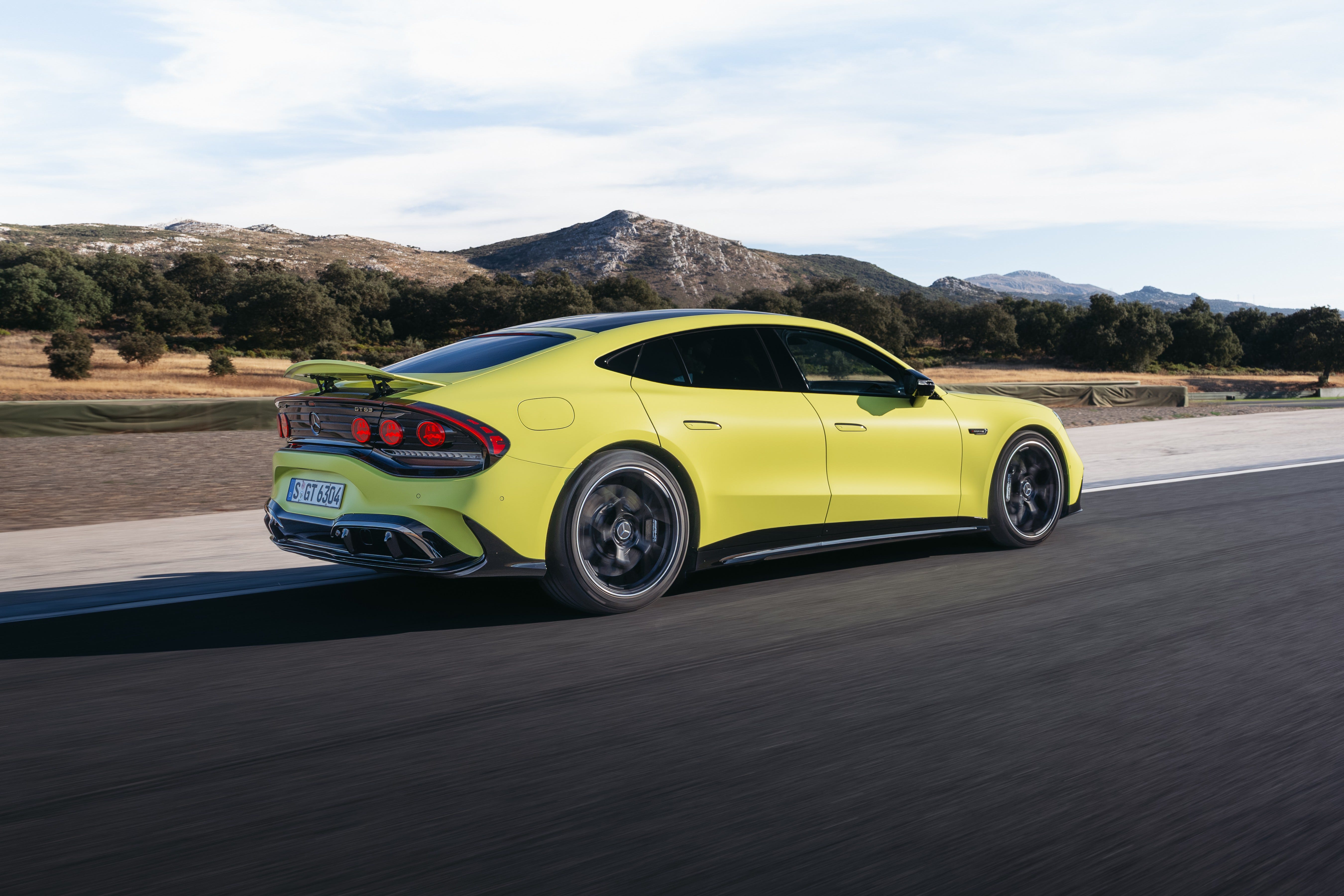
Mercedes launched the 2027 AMG GT 63 4-Door Coupe as a fully electric performance sedan that shares no hardware or software with previous AMG EVs. The car uses three axial flux motors—two rear-mounted and one front—engineered with YASA technology to produce 1,153 horsepower and 1,475 lb-ft of torque in Race or Boost mode. Standard continuous output across other modes is 711 horsepower. The claimed 0-60 time is 2.3 seconds, with an electronically limited top speed of 186 mph.
The powertrain centers on a 106-kWh, 800-volt AMG High Performance Electric Battery developed exclusively for AMG models. The battery uses unique cells with electrically nonconducting cooling oil and supports DC fast-charging at speeds beyond 600 kilowatts. Mercedes demonstrated charging speeds over 630 kilowatts at Ascari racetrack in Spain, claiming 10-80 percent charge in 11 minutes.
The three independent motors lack a center differential or torque-vectoring differential. Instead, software controls each motor independently, simulating differential behavior through positive and negative torque application, brake regeneration at specific corners, and traditional brake torque vectoring. Engineers said dialing in proper drive characteristics was the biggest challenge in development.
The AMG Race Engineer system offers nine adjustable settings across three dials. Response Control adjusts throttle sensitivity. Traction Control ranges from zero slip to full drift mode, with a dedicated Drift setting that disengages the front motor. Agility Control functions as an adjustable yaw controller, ranging from full understeer to adjustable oversteer at the nine setting.
An AMGFORCE Sport+ system simulates the V-8 engine from the previous-generation AMG GT R Coupe. Engineers reconstructed the sound using over 100 measurements from 16 microphone positions and paired it with Burmester 4D seat exciters that produce vibrations replicating engine harshness. The system includes a fully simulated seven-speed transmission with a 7,200 rpm redline and manual paddle shifting, complete with engine braking simulation on downshifts. An exterior speaker system projects V-8 sounds from the rear.
The chassis uses AMG Ride Control air suspension with active roll stabilization and hydraulically interconnected dampers from the two-door AMG GT 63 Coupe, allowing engineers to eliminate anti-roll bars. Active aerodynamic elements include deployable rear spoiler, extendable diffuser, front cooling louvers, and underbody Venturi flow elements. Carbon-ceramic front brakes and steel rear brakes handle stopping, with regeneration capability from the motors.